Présentation
- Durée / Prix:7 days / 890 €
- Langue:English, French, Italian
• Visa on arrival: Not available for this destination (see FAQ).
• Best period / temperatures: Spring (March–May) and autumn (September–November) — ideal for outdoor sites. Summer very hot (35°C+), mild winter with some rain.
• Duration: 7 days / 6 nights — touring circuit through northern Algeria.
• Accommodation: city-centre hotels in each stopover town.
• UNESCO sites visited: Tipaza, Djemila (Cuicul), Timgad (Thamugadi) — three of the world's greatest listed Roman sites.
• The + of this circuit: Algeria is home to the highest concentration of UNESCO-listed Roman sites in Africa — a journey through time from the Roman Empire to the Ottoman era.
Highlights
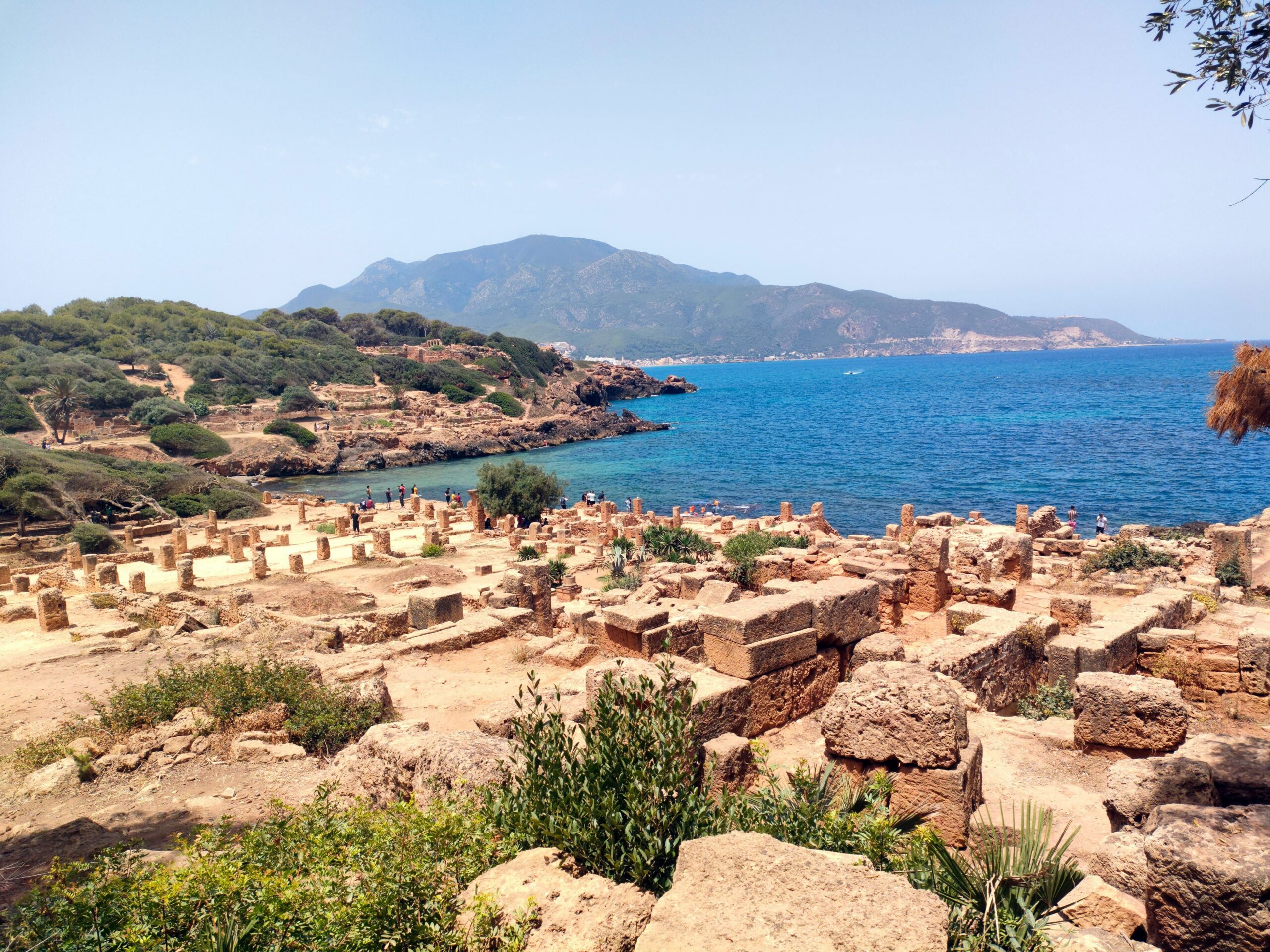
- Tipaza — UNESCO-listed Roman site overlooking the Mediterranean
- Cherchell and its archaeological museum (ancient Caesarea)
- Royal Tomb of Mauretania and Medracen Mausoleum
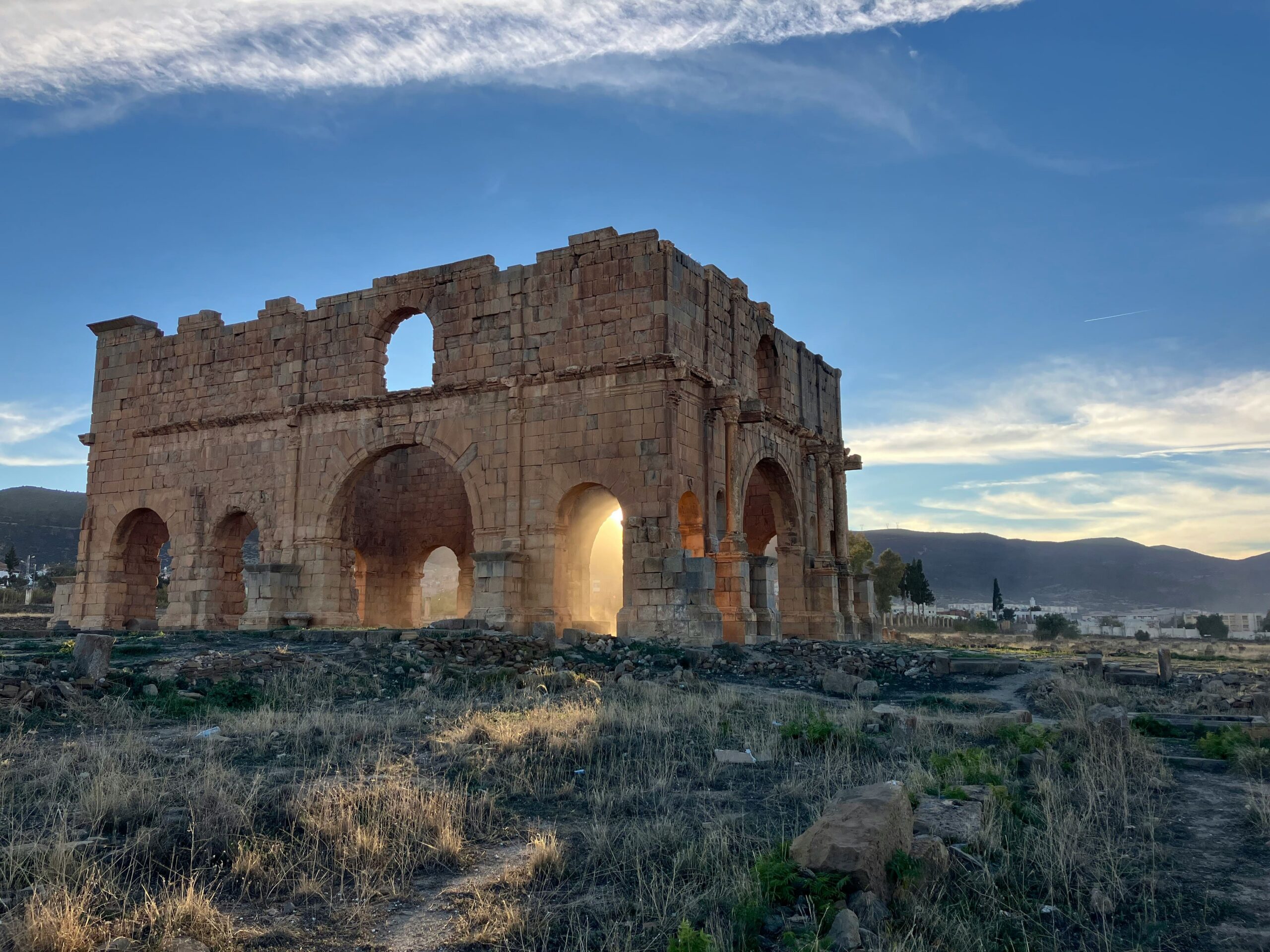
- Djemila (Cuicul) — UNESCO-listed Roman ruins in the mountains
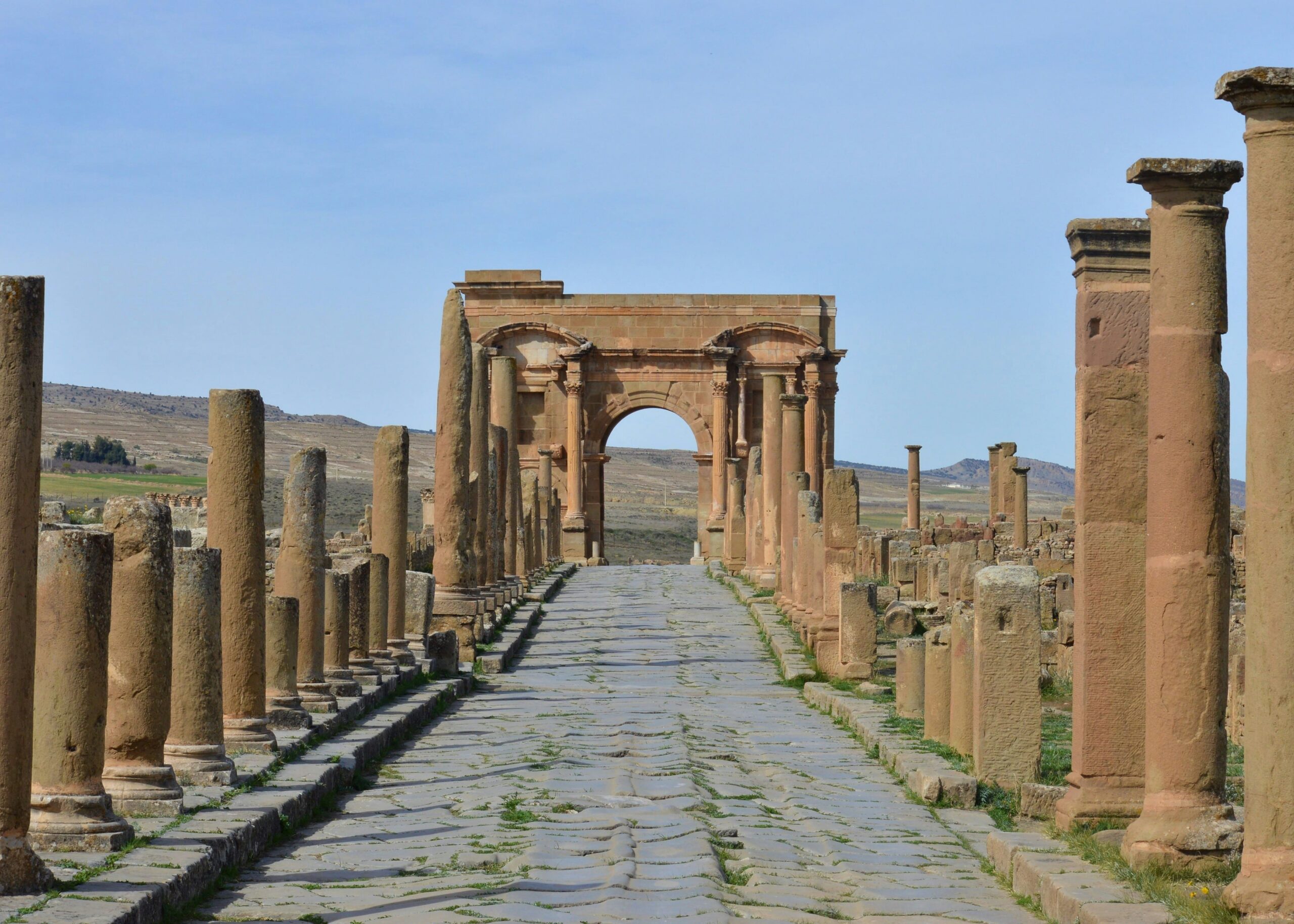
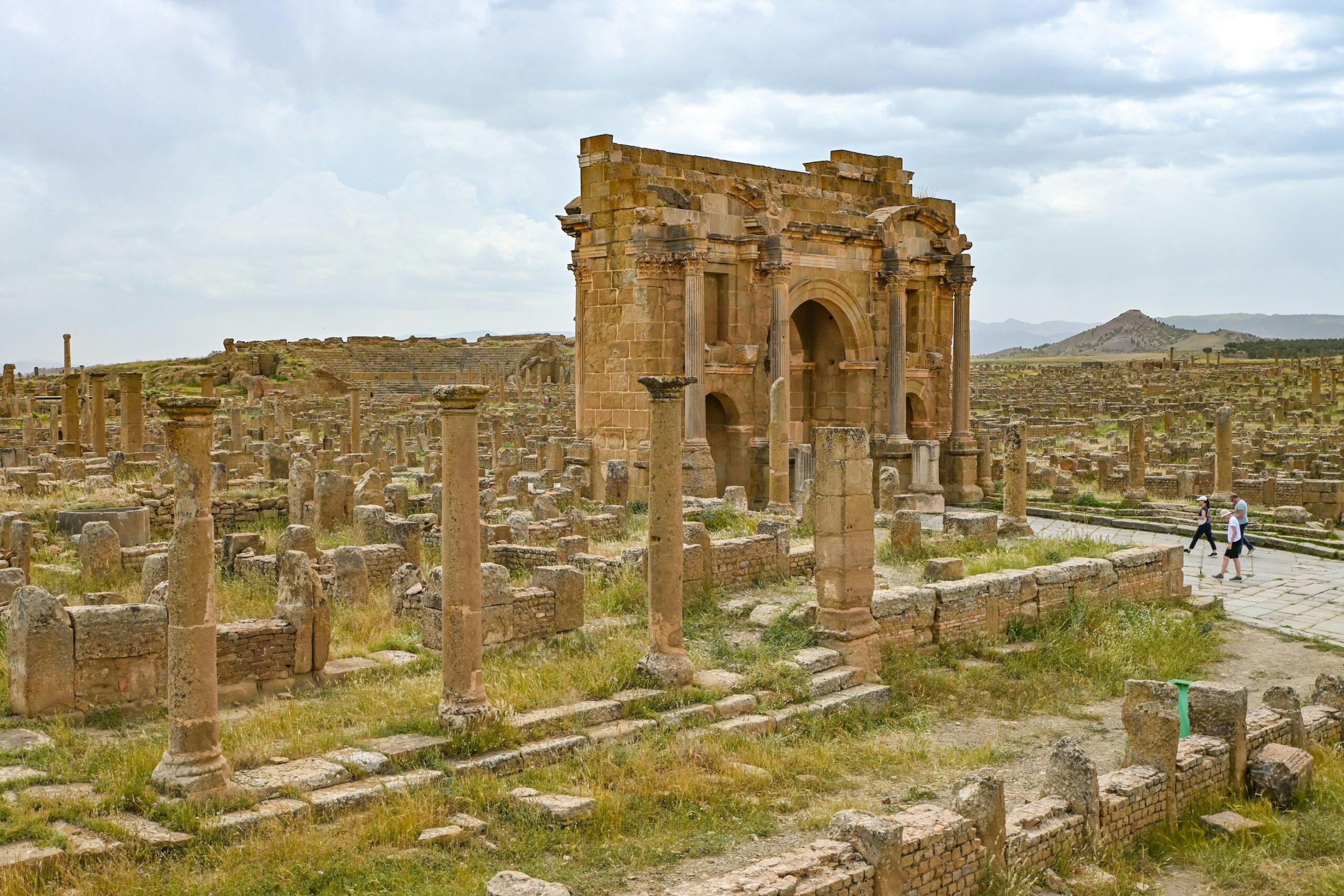
- Timgad — the "Pompeii of Africa", an intact UNESCO-listed Roman city
- Constantine and its suspension bridges over the Rhummel gorges
- Tiddis — a unique fusion of Numidian and Roman cultures
- Hippo Regius (Annaba) and the Basilica of Saint Augustine
Inclus / Non inclus
- Airport assistance and transfers (Algiers departure / Annaba arrival)
- Hotel accommodation (6 nights)
- Full board (breakfast, lunch, afternoon snack, dinner)
- Local French-speaking guide throughout the circuit
- Air-conditioned vehicle transport between all stops
- International flights
- Travel and repatriation insurance
- Personal expenses and souvenir shopping
- Tips for guides and drivers
- Museum and archaeological site entrance fees
Politique d'annulation
Itinéraire
Expand allDay 1 — Arrival in Algiers, Introduction to the Capital
- Welcome at Houari Boumedienne Airport by your local guide
- Transfer to hotel and check-in
- Discovery walk around the main monuments of Algiers city centre
- Afternoon: visit to the Bardo Museum — a showcase of ethnography and Saharan prehistory
- Dinner at restaurant
- Night at hotel in Algiers
Day 2 — Cherchell and Tipaza: Rome on the Mediterranean
- Breakfast and departure for Cherchell (~100 km west of Algiers)
- Visit to Cherchell — ancient city founded in the 4th century BC, former capital of Mauretania Caesariensis — and its museum rich in Roman artefacts and mosaics
- Road to Tipaza: exploration of the UNESCO World Heritage archaeological park, its early Christian basilicas and Roman baths facing the sea
- Visit to the Tipaza Museum and the precious Captives mosaic
- Stop at the Royal Tomb of Mauretania (Kbour er-Roumia) — funerary mausoleum of the Numidian dynasty, 1st century BC
- Return to Algiers, dinner and night at hotel
Day 3 — Djemila (Cuicul) and Medracen: Roman Kabylia
- Breakfast and departure for Sétif (~300 km east of Algiers)
- Visit to Djemila (ancient Cuicul), UNESCO World Heritage — triumphal columns, Arch of Caracalla, baths and forum perfectly preserved in the heart of the Kabyle mountains
- Djemila Museum: collection of dazzling Roman mosaics, among the finest in North Africa
- Road to Batna: stop at the Medracen — circular Numidian tomb among the oldest in the region (3rd century BC), probable model for the Royal Tomb of Mauretania
- Dinner and night at hotel in Batna
Day 4 — Timgad and Constantine: The Pompeii of Africa
- Breakfast and departure for Timgad (Thamugadi)
- Exploration of Timgad — Roman city founded in 100 AD by Trajan, nicknamed the "Pompeii of Africa" for its intact grid plan, its Capitol and its majestically preserved Arch of Trajan — UNESCO listed
- Continuation to Constantine (~100 km north)
- Discovery of Constantine, the "City of Suspension Bridges", suspended above the vertiginous Rhummel gorges
- Visit to the Cirta Museum — archaeological and numismatic collections dedicated to the history of the region since Antiquity
- Dinner and night at hotel in Constantine
Day 5 — Tiddis and Guelma: Numidians, Romans and Hot Springs
- Breakfast and departure for Tiddis (~40 km north-west of Constantine)
- Discovery of Tiddis — archaeological site perched on a rocky crag, a unique illustration of the fusion of Numidian and Roman cultures, with its rock-cut tombs and sanctuary of Mithras
- Road to Guelma (~100 km east)
- Visit to the Roman theatre of Guelma — one of the best preserved in Algeria, still used for cultural performances
- Relaxation at Hammam Debagh hot springs — sulphurous waters among the hottest in the world (~98°C at the source)
- Dinner and night at hotel in Guelma
Day 6 — Annaba: Hippo Regius and Saint Augustine
- Breakfast and departure for Annaba (~60 km north-east of Guelma)
- Exploration of the ruins of Hippo Regius — ancient city where Saint Augustine of Hippo (354–430) lived and taught, one of the greatest Fathers of the Church
- Visit to the Hippone Museum — artefacts, mosaics and sculptures illustrating daily life in Antiquity
- Ascent to the Basilica of Saint Augustine, an iconic 19th-century monument overlooking the city and sea
- Stroll along the Annaba seafront, the "Calla Lily of Algeria"
- Dinner and night at hotel in Annaba
Day 7 — Annaba: Free Morning and Departure
- Breakfast at hotel
- Free morning: personal stroll, shopping or independent visit of Annaba city centre
- Transfer to Annaba Airport (Les Salines)
- Departure assistance
Questions fréquentes
When is this circuit available?
By contacting the travel agency, it will take your availability into account and propose suitable dates, ensuring smooth organisation for this touring circuit.
Note: price calculated on the basis of a minimum of 2 persons.
How does the visa process work?
To benefit from visa on arrival, you must begin your stay at a southern destination eligible for this scheme. Once there, you can then continue your journey northwards (Algiers, Oran, Annaba).
Two options are therefore available to you:
* Either begin your itinerary in the south to obtain a visa on arrival, then continue northwards.
* Or apply for a standard visa at the consulate before your departure.
What should I know before leaving?
• Distances to expect: This is a touring circuit — a new city each day. Plan for active days with long vehicle transfers between stops.
• Walking shoes essential: Archaeological sites have uneven ground, paving and slopes. Appropriate footwear is essential.
• Respect for local customs: The circuit passes through Algerian cities with conservative culture. Respect local traditions, particularly regarding dress.
• Currency: The Algerian dinar (DZD) is the local currency. Exchange money in Algiers on arrival — inland cities have fewer exchange offices.
• Camera: This circuit is exceptional photographically — bring plenty of batteries and memory cards.
What to pack for this circuit?
❄️ In winter (December – January – February)
Temperatures remain generally moderate, but conditions can be damp and cool:
Average temperatures: 8°C to 17°C depending on the city
In Algiers: around 10–15°C during the day
In Annaba: approximately 10–16°C
👉 Key points:
Mornings and evenings can be cold
Often windy and rainy (especially between October and February)
👉 What to pack:
Warm jacket or coat
Jumpers / warm layers
Closed shoes or boots (frequent rain)
Umbrella or waterproof jacket
Light scarf (useful in the wind)
☀️ In spring – summer (April to September)
The climate becomes very pleasant then hot, with plenty of sunshine:
Spring: 15°C to 25°C
Summer: 25°C to 32°C on average, sometimes more
In Algiers: up to 32°C during the day in summer
In Annaba: up to 32°C in August
👉 Key points:
The sun is very strong, especially in summer
Dry and sunny climate, very little rain
👉 What to pack:
Light clothing (t-shirts, dresses, linen, cotton)
Sun cream (essential)
Cap or hat
Sunglasses
Water bottle (heat + rapid dehydration)
Sandals or breathable shoes
Swimwear (pleasant sea in summer)
✔️ Quick summary
Winter: mild but damp → warm clothing + rain gear
Summer: hot and sunny → light clothing + sun protection
This circuit is available year-round. Spring (March–May) and autumn (September–November) are the ideal periods for visiting outdoor archaeological sites in the best conditions. Summer can be very hot at certain stops (Timgad, Djemila), while winter remains mild on the coast.
By contacting the travel agency, it will take your availability into account and propose suitable dates, ensuring smooth organisation for this touring circuit.
Note: price calculated on the basis of a minimum of 2 persons.
Visa on arrival is not available for stays starting directly in northern cities such as Algiers, Oran or Annaba.
To benefit from visa on arrival, you must begin your stay at a southern destination eligible for this scheme. Once there, you can then continue your journey northwards (Algiers, Oran, Annaba).
Two options are therefore available to you:
* Either begin your itinerary in the south to obtain a visa on arrival, then continue northwards.
* Or apply for a standard visa at the consulate before your departure.
• Best period for the sites: Spring and autumn are ideal — sites such as Timgad and Djemila are in the open air and very exposed to the sun. Avoid July–August if you are sensitive to heat.
• Distances to expect: This is a touring circuit — a new city each day. Plan for active days with long vehicle transfers between stops.
• Walking shoes essential: Archaeological sites have uneven ground, paving and slopes. Appropriate footwear is essential.
• Respect for local customs: The circuit passes through Algerian cities with conservative culture. Respect local traditions, particularly regarding dress.
• Currency: The Algerian dinar (DZD) is the local currency. Exchange money in Algiers on arrival — inland cities have fewer exchange offices.
• Camera: This circuit is exceptional photographically — bring plenty of batteries and memory cards.
This list is not exhaustive; your travel agent will give you the complete list of essentials to bring with you.
❄️ In winter (December – January – February)
Temperatures remain generally moderate, but conditions can be damp and cool:
Average temperatures: 8°C to 17°C depending on the city
In Algiers: around 10–15°C during the day
In Annaba: approximately 10–16°C
👉 Key points:
Mornings and evenings can be cold
Often windy and rainy (especially between October and February)
👉 What to pack:
Warm jacket or coat
Jumpers / warm layers
Closed shoes or boots (frequent rain)
Umbrella or waterproof jacket
Light scarf (useful in the wind)
☀️ In spring – summer (April to September)
The climate becomes very pleasant then hot, with plenty of sunshine:
Spring: 15°C to 25°C
Summer: 25°C to 32°C on average, sometimes more
In Algiers: up to 32°C during the day in summer
In Annaba: up to 32°C in August
👉 Key points:
The sun is very strong, especially in summer
Dry and sunny climate, very little rain
👉 What to pack:
Light clothing (t-shirts, dresses, linen, cotton)
Sun cream (essential)
Cap or hat
Sunglasses
Water bottle (heat + rapid dehydration)
Sandals or breathable shoes
Swimwear (pleasant sea in summer)
✔️ Quick summary
Winter: mild but damp → warm clothing + rain gear
Summer: hot and sunny → light clothing + sun protection
Carte du circuit
Open in Google MapsVous aimerez aussi
Login to use
Ghardaïa e la Valle del M’zab: Un Viaggio Culturale Senza Tempo
Location
Durée
5 giorni di immersione culturale nella valle del...
Login to use
Timimoun: L’Oasi Rossa del Sahara
Location
Durée
Immergetevi nel cuore del Sahara algerino con questo...
Login to use
Taghit: Dune Dorate e Vita nel Deserto Senza Tempo
Location
Durée
5 giorni di totale immersione in una delle...
Login to use
Oran: Cultura, Costa e Algeria Occidentale
Location
Durée
Scoprite Oran, la capitale mediterranea dell'Algeria occidentale: Fort...
Login to use
Algeri: Cultura, Storia e Costa
Location
Durée
Scoprite Algeri, la Città Bianca: la Casbah iscritta...
Login to use
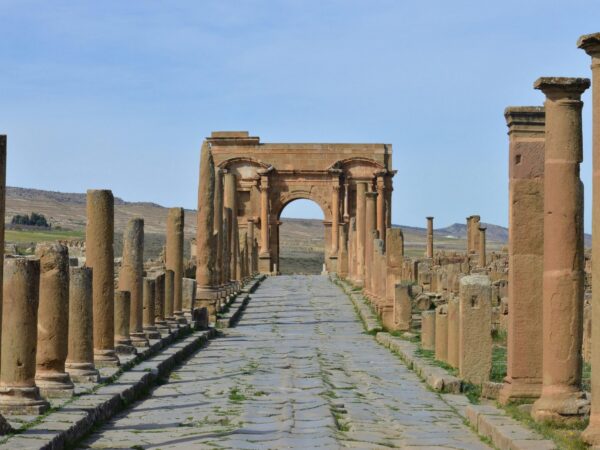
Algeria Romana: Un Viaggio attraverso gli Antichi Imperi
Location
Durée
Da Tipaza ad Annaba via Djemila, Timgad e...
Login to use
Nel Cuore dell’Hoggar: Immersione nel Sahara
Location
Durée
Tuffatevi nel cuore dell'Hoggar per un'immersione totale tra...
Login to use
Avventura nell’Hoggar: Assekrem, Monte Tahat e le Cime del Deserto
Location
Durée
Scalate la vetta del Tahat (2.908 m), il...