
| 📍 Location | Near Djanet, southeastern Algeria — at the heart of the Algerian Sahara. |
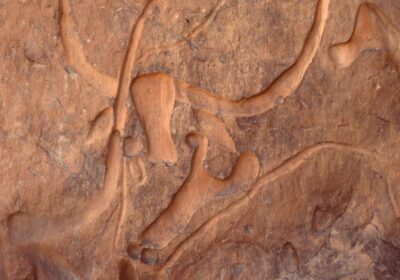
| 🏺 Heritage | Rock paintings and engravings dating back to 6000 BCE — part of the Tassili n’Ajjer UNESCO World Heritage Site. |
| 📆 Best time to visit | October to April — mild daytime temperatures with cool nights. Avoid May to September. |
| 🏕️ Activities | 4×4 expeditions, trekking, prehistoric rock art discovery, Tuareg cultural immersion, desert bivouac. |
| 🎒 Essential | Experienced local guide required. Pack sun protection, warm layers, hiking boots, and ample water. |
Deep within the Algerian Sahara, the Tadrart Rouge stands as a sanctuary of prehistoric history. With rock paintings and engravings — some dating back to 6000 BCE — this region reads like an open book of the past. Each artwork preserved on stone tells a story from the Neolithic era, offering a powerful glimpse into human life across thousands of years.
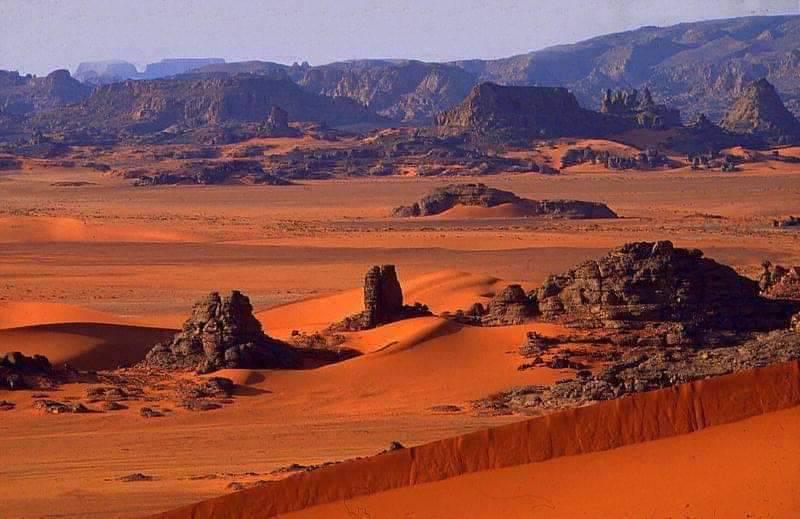
Table of Contents
A Landscape Shaped by Climate Change
Around 10,000 years ago, the Tadrart Rouge was a lush savanna, home to elephants, rhinoceroses, and giraffes. Over time, dramatic climate shifts transformed this fertile land into the arid desert we see today.
Water sources gradually dried up, rainfall declined, and temperatures rose — leading to the disappearance of dense vegetation and the wildlife it once supported. The region’s rock art reflects this transition, with scenes of hunting and pastoral life becoming increasingly rare as conditions grew harsher.
Today, the Tadrart stands as a striking example of how natural climate fluctuations can reshape entire ecosystems — and the human societies that depend on them.
Echoes of Lost Civilizations
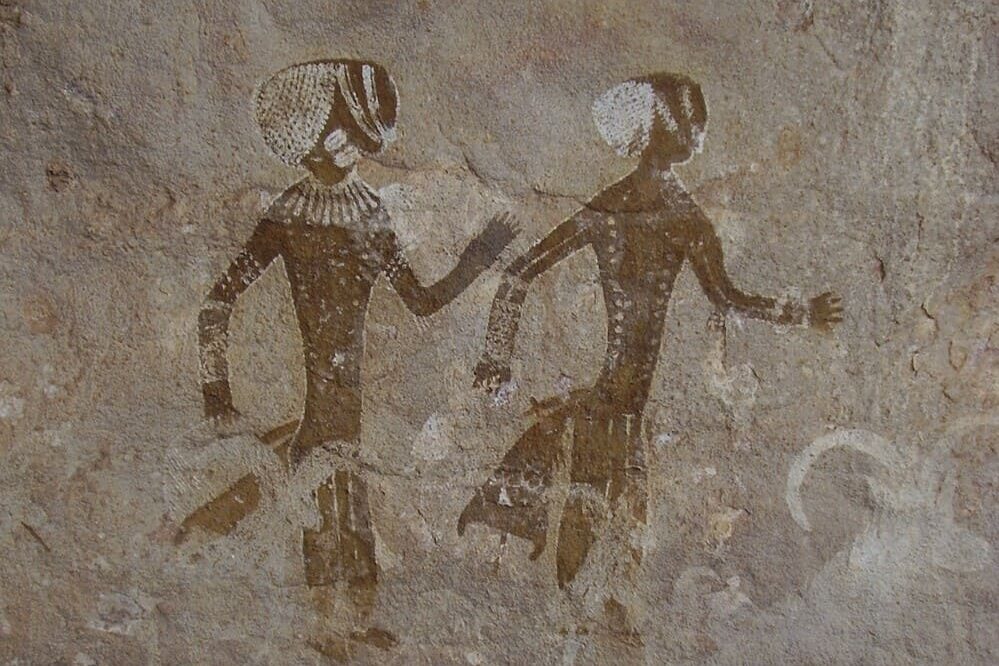
The rock art of the Tadrart Rouge, spanning from 6000 BCE to the early centuries CE, serves as a silent record of the people who once lived here. These paintings depict daily life, spiritual practices, and cultural traditions. Hunting scenes, animals, ritual dances, and symbolic figures reveal both the creativity and the worldview of ancient communities.
More than just artistic expression, these works offer a deep connection to early human history — showing how people understood their environment and expressed their beliefs long before written language.
The Living Heritage of the Tuareg
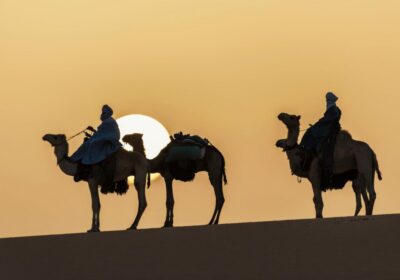
The Tuareg — the region’s ancestral nomads — have preserved a way of life closely tied to the vast desert landscapes of the Tadrart. Their seasonal movements follow the rhythms of nature, shaped by centuries of adaptation. Through oral traditions, music, craftsmanship, and storytelling, they pass down a rich cultural heritage rooted in resilience and freedom.
Even today, the Tuareg remain the guardians of the desert — preserving its memory, protecting its secrets, and keeping its traditions alive.
A Journey Through Time and Spirit
The Tadrart Rouge is far more than a desert — it is an open-air historical gallery. Its rock art, some over 10,000 years old, tells the story of humanity’s relationship with a land that has undergone profound transformation.
Combined with the living culture of the Tuareg, this region creates a rare bridge between past and present — between ancient engravings and songs carried beneath the desert sky.
Exploring the Tadrart means stepping into a powerful chapter of human history. Every step across this stark landscape reveals layers of adaptation, resilience, and creativity — an experience that goes beyond travel, offering a deeper understanding of humanity itself: our ability to adapt, to create meaning, and to preserve our heritage, even in the most extreme environments.
Ready to Experience the Tadrart?
The Tadrart Rouge is not the kind of destination you stumble upon — it is one you choose with intention. Its landscapes are extreme, its silence is absolute, and its history is unlike anything else on Earth. Those who make the journey return changed.
- Walk among rock paintings made by hands 8,000 years ago
- Sleep under skies so clear they feel infinite
- Share tea and stories with Tuareg guides who know every canyon by heart
- Witness sunrises over red dunes that no photograph can fully capture
This is the kind of journey that stays with you for a lifetime. And the best way to experience it — safely, authentically, and without logistical worry — is through a specialist who knows the Algerian Sahara inside out.
Contact us today to design your tailor-made expedition into the Tadrart Rouge. We handle every detail — permits, transfers, Tuareg guides, bivouac — so you can focus on living the experience.