
In Oran, music is not just entertainment — it’s a universal language, a way of life. Every street corner, café, and taxi seems to vibrate to the rhythm of Raï, a genre born in this “radiant city.” At the heart of this musical story stands a legendary place: Disco Maghreb Oran — far more than a record shop, it’s an institution, a symbol, a legend.
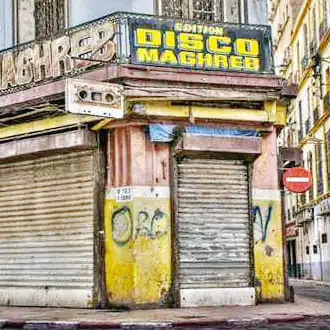
Table of Contents
The Birth of Raï: The Voice of the People
Raï music emerged in the 1930s in the outskirts of Oran. At the time, traditional singers (chioukhs and chikhates) expressed everyday life, love, freedom, and rebellion through a mix of traditional instruments and Andalusian sounds. It was the raw, honest, and often provocative voice of the people.
In the 1970s and 1980s, Oran’s youth reinvented it — electric guitars, synthesizers, and drum machines modernized the genre. A new generation rose to fame: Cheb Khaled, Cheb Hasni, Cheikha Rimitti, Zahouania — all deeply connected to Oran.
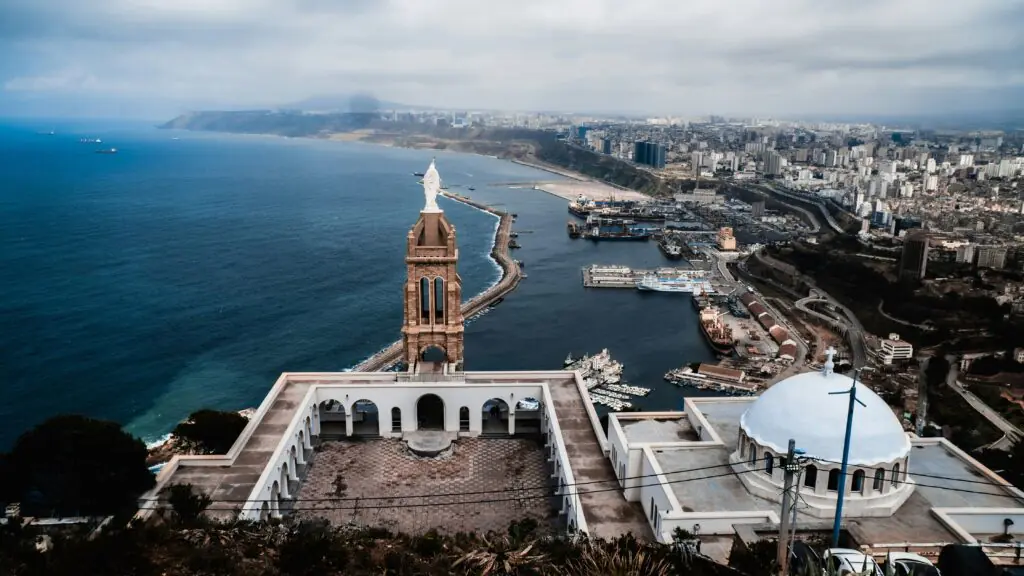
Disco Maghreb Oran: From Local Studio to Global Icon
Located in the popular district of Mdina Jdida, Disco Maghreb Oran was founded in the 1970s by Boualem Benhaoua. It quickly became the beating heart of modern Raï music.
The place is remembered as the starting point of Raï’s international rise. In 2022, DJ Snake paid tribute with his globally successful track “Disco Maghreb”, filmed between the streets of Oran and the Sahara.
The result: a revived symbol and a global showcase for Oranese culture — where tradition and modernity continue to meet.
The Great Voices of Oranese Raï
Behind the legend of Disco Maghreb are iconic voices that shaped history. These artists carried Raï from the streets of Mdina Jdida to the world’s biggest stages.
Cheikha Rimitti — The Mother of Raï
Born near Sidi Bel Abbès, she is the pioneer of modern Raï. With bold lyrics and a raw voice, she sang about freedom, love, and everyday life in a still-conservative Algeria. A symbol of female audacity, she remains the rebellious soul of the genre.
Cheb Hasni — The Voice of Emotion
Born in Oran in 1968, Cheb Hasni brought deep emotion to Raï. His love songs and nostalgic melodies, widely sold through Disco Maghreb, touched an entire generation. His assassination in 1994 shocked the nation, but his soft, melancholic voice still echoes in Oran’s cafés and radios.
Cheb Khaled — The King of Raï
Originally from Sidi El Houari, he is the artist who brought Raï to the global stage. From his beginnings at Disco Maghreb to worldwide hits like Didi and Aïcha, he blended Oranese roots with modern sounds — turning Raï into a universal symbol of freedom and Algerian pride.
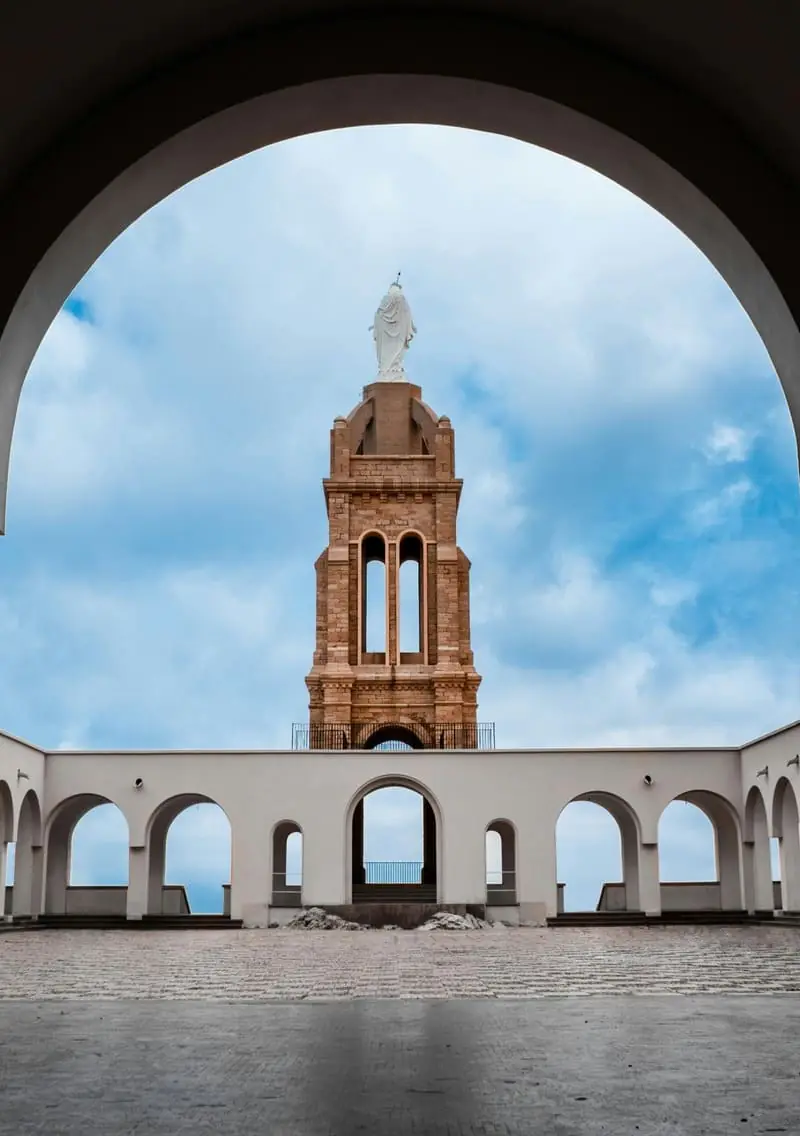
Oran: A City of Art and Freedom
Beyond music, Oran breathes creativity. Colorful walls, street art, galleries, and artisans all reflect a city that never sleeps. Disco Maghreb remains its beacon — a place of memory turned modern icon, where past and future meet.
Here, Raï is not nostalgia — it’s a promise: the voice of a generation that continues to sing its truth, proudly and freely.
Want to feel the pulse of Oran — its music, its streets, its culture? Contact us to design your tailor-made stay, combining Disco Maghreb, Mdina Jdida, the corniche, and everything that makes this city one of a kind.