
In the heart of the Algerian desert, between sand dunes and rocky mountains, lie treasures of history and mystery: the ksour. These ancient fortresses, steeped in legend and tradition, bear witness to the region’s cultural and architectural richness. Through these majestic remains, we are invited on a fascinating journey into the past, where every stone tells a story and every courtyard hides a secret.
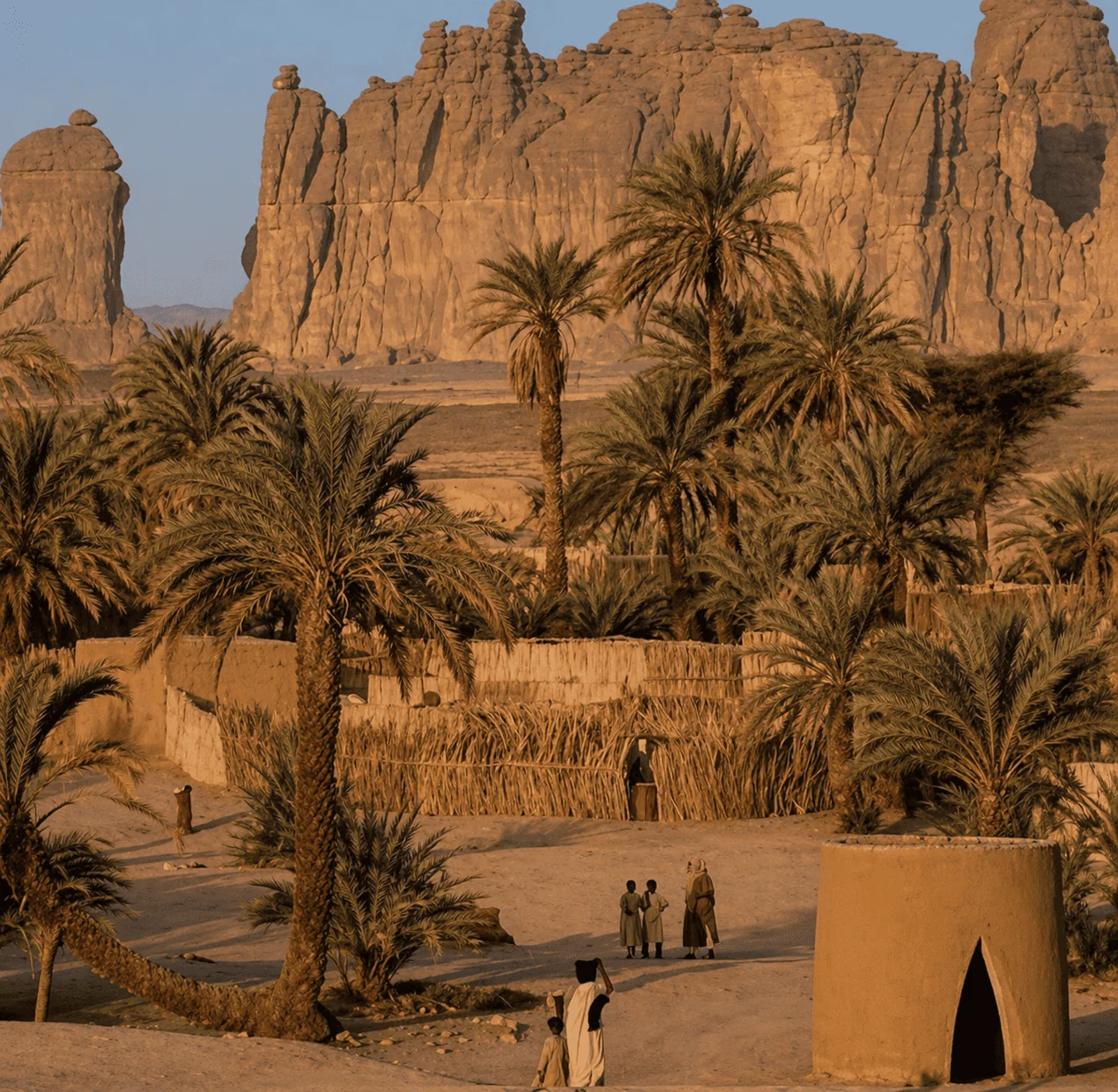
Table of Contents
Itinerary: exploring the ksour and the mysteries of the desert
Let’s follow together a captivating itinerary across the endless expanses of the Algerian Sahara, discovering the ancestral ksour that stand proudly in the desert, inviting us to immerse ourselves in a world of timeless legends and traditions.
Day 1: waking to the mystery of Ksar Draa
- Departure from Timimoun towards Ksar Draa, an oasis steeped in mystery.
- Exploration of the circular structures surrounded by a double defensive wall.
- Immersion in a history shaped by centuries of trade, spirituality and survival.
- Evocation of local legends: fleeing princesses, hidden treasures and ancestral spirits.
Day 2: on the trail of the princess of Ksar El Menea
- Departure towards Ghardaïa, then Ksar El Menea, perched on a hill.
- The ksar’s impressive isolation, overlooking the Oued M’guiden.
- Discovering the story of Princess M’barka Bent El-Khass, a figure of power and mystery.
- Exploring the ksar to connect with the grandeur of a vanished era.
Day 3: immersion in the heritage of Taghit
- Arrival in Taghit, a crossroads of culture, history and natural beauty.
- Exploring the fortified houses, winding lanes and the old mosque of the old ksar.
- Contemplating a heritage where traditions remain alive and are constantly renewed.
- An evening at the Diwan, a vibrant cultural space, with gnawa music celebrating the union of peoples and traditions under the starry desert sky.
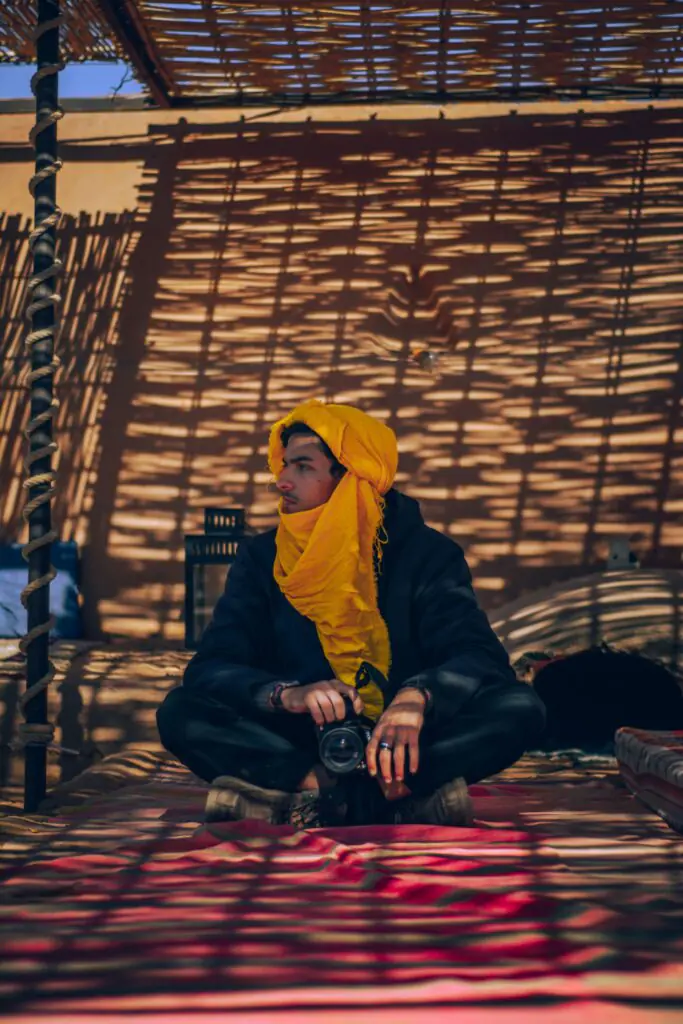
A ksar (Arabic: qasr) is a term for a fortified citadel or fortified village, typical of the desert regions of the Maghreb.
Ksour (plural of ksar) are generally built in pisé (rammed earth), with thick walls and compact structures, ensuring protection both from the climate and from outside attacks.
These constructions are often organised as a cluster of dwellings, narrow lanes and shared spaces, forming a system that is both communal and defensive.
For the more curious, here is a more detailed presentation of the history and unique charm of these three emblematic ksour.
Ksar Draa: a mystery buried among the dunes of Timimoun
| Ksar Draa — Location and architecture | |
|---|---|
| 📍 Location | Near Timimoun, Adrar province, at the heart of the Touat desert. |
| 🏛️ Architecture | Double circular wall about two metres high, three levels, rooms with no visible windows. |
| 🔍 Peculiarity | No external staircases, circular layout allowing optimal control of the surroundings. |
| ❓ Function | Still debated, but its features suggest a place designed for security and protection. |
Located near the town of Timimoun, in the province of Adrar, Ksar Draa stands majestically at the heart of the Touat desert. Immersed among rolling dunes, this enigmatic ksar draws the attention of researchers and curious visitors from around the world.
Its architecture is as fascinating as it is puzzling. Surrounded by a double circular wall about two metres high, the complex has three levels and several rooms with no visible windows. The absence of external staircases suggests the existence of internal passageways, while the circular layout allowed optimal control of the surrounding environment.
While its precise function is still debated, its defensive features suggest a place designed primarily for security and protection.
History
Jews settled in the Touat as early as the 1st century AD, fleeing Roman persecution. Despite difficult beginnings, they became influential and prosperous, specialising in the trade of Saharan gold and jewellery. Tamentit, their capital, was a thriving cultural and commercial centre. However, in 1492, a rising wave of antisemitism led by al-Maghili resulted in violence and the destruction of the city, forcing the Jews to flee for their safety.
Legends
Wrapped in fascinating tales, ksour such as Ksar Draa are surrounded by mysterious legends. It is said that a vanished princess found refuge in the surrounding mountains to escape a forced marriage, while other accounts speak of treasures hidden beneath the old walls or in the caves of nearby mountains.
Abandoned ksour are often thought to be haunted by the spirits of their former inhabitants, adding a mystical aura to these places. Legends also speak of betrayals, power struggles and revenge, breathing life into the story of these once-vibrant ancient cities.
Within the walls of Ghardaïa: Ksar El Menea and its legendary princess
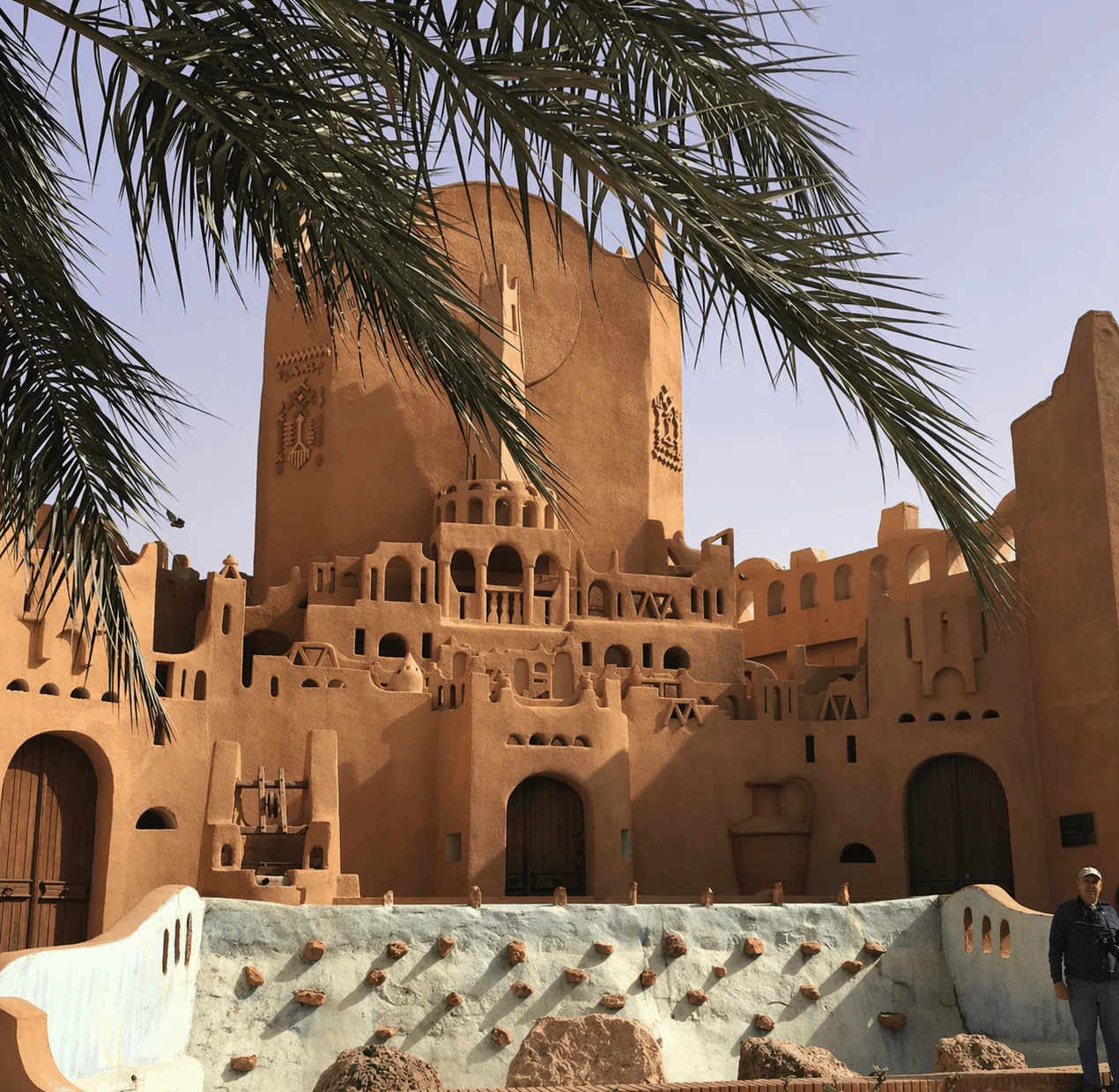
| Ksar El Menea — Location and architecture | |
|---|---|
| 📍 Location | 270 km south of Ghardaïa, in the “Lemmedhi” district of El-Menéa, on a pyramidal hill. |
| 🏛️ Founding | Early 10th century by the Zenata from Timimoun and the Gourara, at an altitude of 835 m. |
| 👑 Emblematic figure | The Saharan princess M’barka Bent El-Khass. |
| 🕌 Buildings | A now-ruined mosque and the palace of the famous princess. |
Located 270 km south of Ghardaïa, in the eastern part of the town of El-Menéa, the old ksar stands majestically in the “Lemmedhi” district. Perched on a pyramidal hill, it overlooks the Oued M’guiden, offering a panoramic view over the palm grove and the access routes to the surrounding regions.
Founded in the early 10th century by the Zenata people from Timimoun and the Gourara, the ksar was built at an altitude of 835 metres. Its name is linked to the enigmatic figure of the Saharan princess M’barka Bent El-Khass. The fortress includes several buildings, including a now-ruined mosque and the palace of the famous princess, witness to a bygone era when she is said to have ruled wisely in place of her elderly father.
The story of M’barka Bent El-Khass
The legend of M’barka Bent El-Khass, though shrouded in mystery, tells of a wise and powerful woman. Originally from the Saharan regions, she is said to have extended her authority to the area of Brezina. Oral tradition remembers her as a just ruler, who governed fairly despite a deeply patriarchal society.
Her renown reportedly attracted the attention of a sultan of the Gharb, captivated by her beauty and charisma. However, M’barka refused every marriage proposal and every form of submission. This refusal unleashed the sultan’s wrath, and he laid siege to the fortress of the princess and her tribe.
Taghit: a cultural journey into the heart of the old ksar
| Taghit — Location and architecture | |
|---|---|
| 📍 Location | Béchar province, between dunes and rocky mountains, on the edge of a desert valley. |
| 🏛️ Construction | About 120 dwellings, façade of stone and earth, reinforced with palm trunks and leaves. |
| 🕌 Facilities | A mosque, a well, three main entrances leading to a maze of lanes and inner courtyards. |
| 📜 Status | Algerian national heritage site since 1999. |
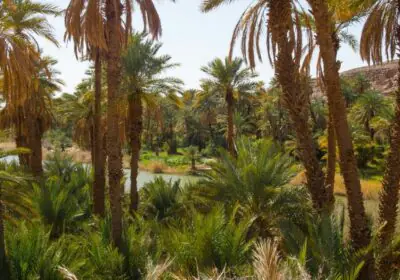
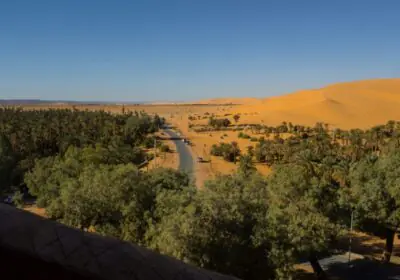
The old ksar of Taghit, located in the province of Béchar, is an architectural gem built between dunes and rocky mountains, on the edge of a desert valley surrounded by a lush palm grove. Its strategic position makes it a fascinating destination.
Made up of about 120 dwellings, the ksar has a façade of stone and earth, reinforced with palm trunks and leaves. It includes a mosque and a well. Its three main entrances lead into a maze of lanes and inner courtyards, offering total immersion in the past.
History
According to historians, the construction of the ksar is attributed to two local saints, Sid Slimane and Merabet Sid Ahmed, of the Amara tribe. Dating back to the 11th century, this ancestral ksar was declared a national heritage site as early as 1999.
Its unique architecture bears witness to meticulous craftsmanship and a rich history. Built as a fortress, it was once inhabited, but was gradually abandoned by its residents in 1986. Restoration work has since revitalised it, turning the old dwellings into tourist spaces, workshops and craft shops.
The Diwan of Taghit
The old ksar of Taghit, an essential stop when crossing the Oued Zousfana, reveals a true cultural treasure: the Diwan. In the palm grove or in the heart of the desert, authentic musical evenings are organised, known as “Kaâdat”.
Local craftsmen proudly display their traditional instruments, while figures such as Abdelkader Aboura of the “Gnaoua Taghit” troupe pass this heritage on to future generations with passion.
Conclusion
Through these fascinating tales of the desert ksour, we are transported into a world where architecture, history and legend intertwine to form a rich and evocative heritage. These Saharan citadels are far more than mere monuments: they are symbols of Algeria’s identity and cultural wealth.
Preserving and promoting these treasures means keeping alive the link between past and present, and passing on this unique legacy to future generations.
” Between the dunes of Timimoun, the hills of Ghardaïa and the walls of Taghit, each ksar keeps the memory of a Sahara where legend and history become one. “