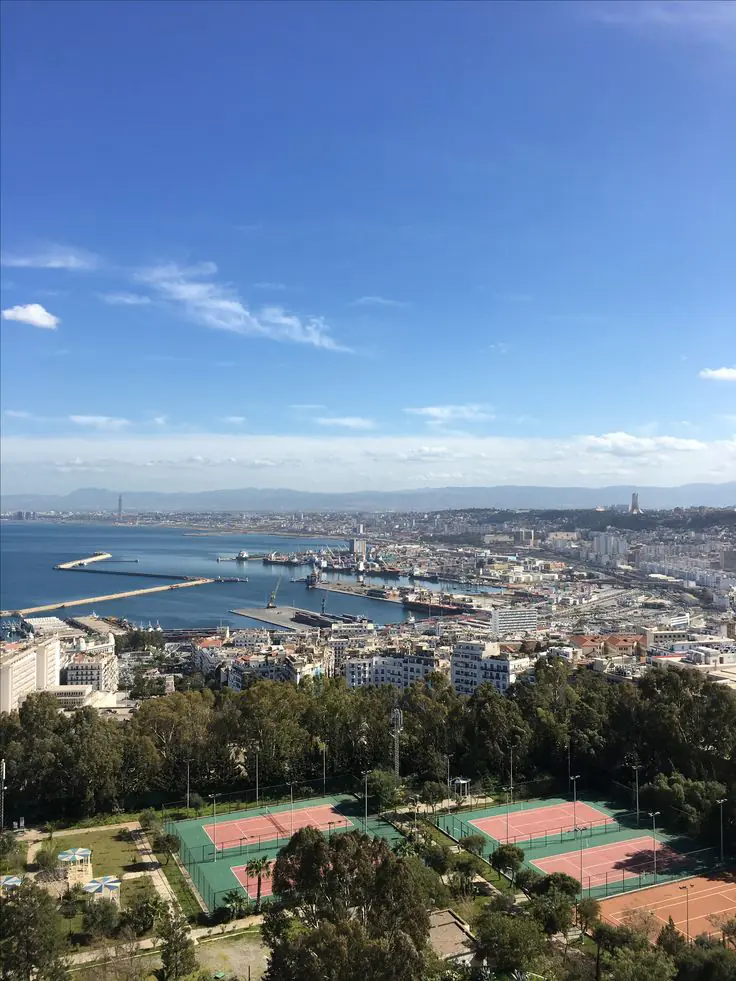
Visiting Algiers means crossing three thousand years of history in a single city: a UNESCO-listed Ottoman medina, neo-Moorish architecture, world-class national museums, one of North Africa’s richest botanical gardens, and Roman ruins facing the Mediterranean less than an hour away. Nicknamed “Algiers the White” for its pale buildings cascading down toward the bay, the Algerian capital is best explored on foot, between sea and hills. Here are the unmissable sights, each with practical information, a ready-made itinerary, and a summary table.
Table of Contents
Why Visit Algiers?
Algiers brings together what most capitals spread across an entire country: a UNESCO World Heritage Site, a seafront promenade, outstanding cuisine, and ancient ruins within easy reach. The city suits a cultural weekend as much as a longer stay combining summer beaches with archaeological sites. Its Mediterranean climate makes it particularly enjoyable in spring and autumn — the ideal seasons for long walks through the Casbah and up into the hills.
👉 To discover the capital with expert guidance, see our Algiers the White circuit (5 days).
When Is the Best Time to Visit Algiers?
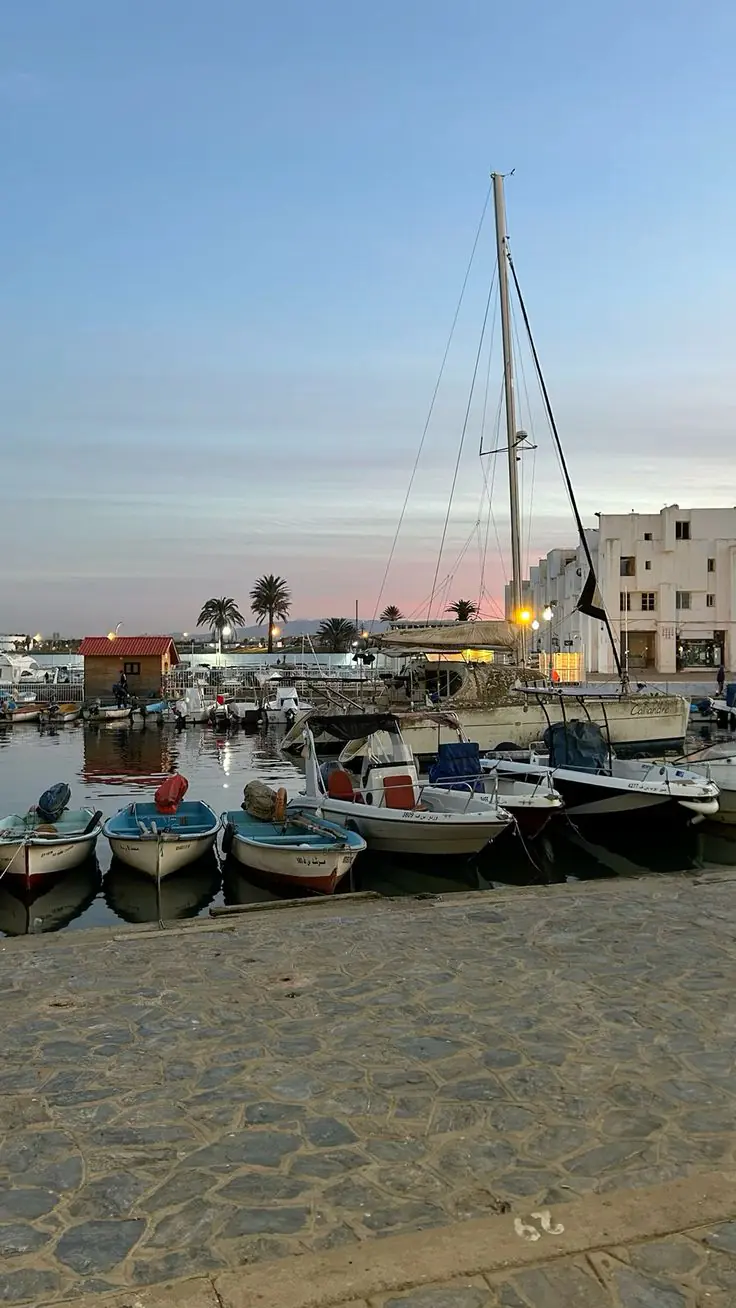
The best times to visit Algiers are spring (April to June) and autumn (late September to October): the Mediterranean climate is mild, sunny, and relatively dry. Algiers receives around 600 mm of rainfall per year, concentrated between November and January.
- Spring (April–June): Pleasant temperatures, blooming gardens, the sea warming up. The most recommended period.
- Summer (July–August): Hot and dry (usually 25–35 °C, sometimes above 40 °C when the sirocco blows). Peak season for beaches and festivals, though August can be sweltering.
- Autumn (September–October): Refreshing after summer, swimming still possible, fewer crowds. An excellent alternative to spring.
- Winter (November–March): Mild but wet (rarely below 10 °C on the coast). Ideal for museums, markets, and lower prices.
Good to know: During Ramadan, many restaurants close during the day and adjust their hours.
The Casbah — Algiers’ UNESCO-Listed Historic Heart
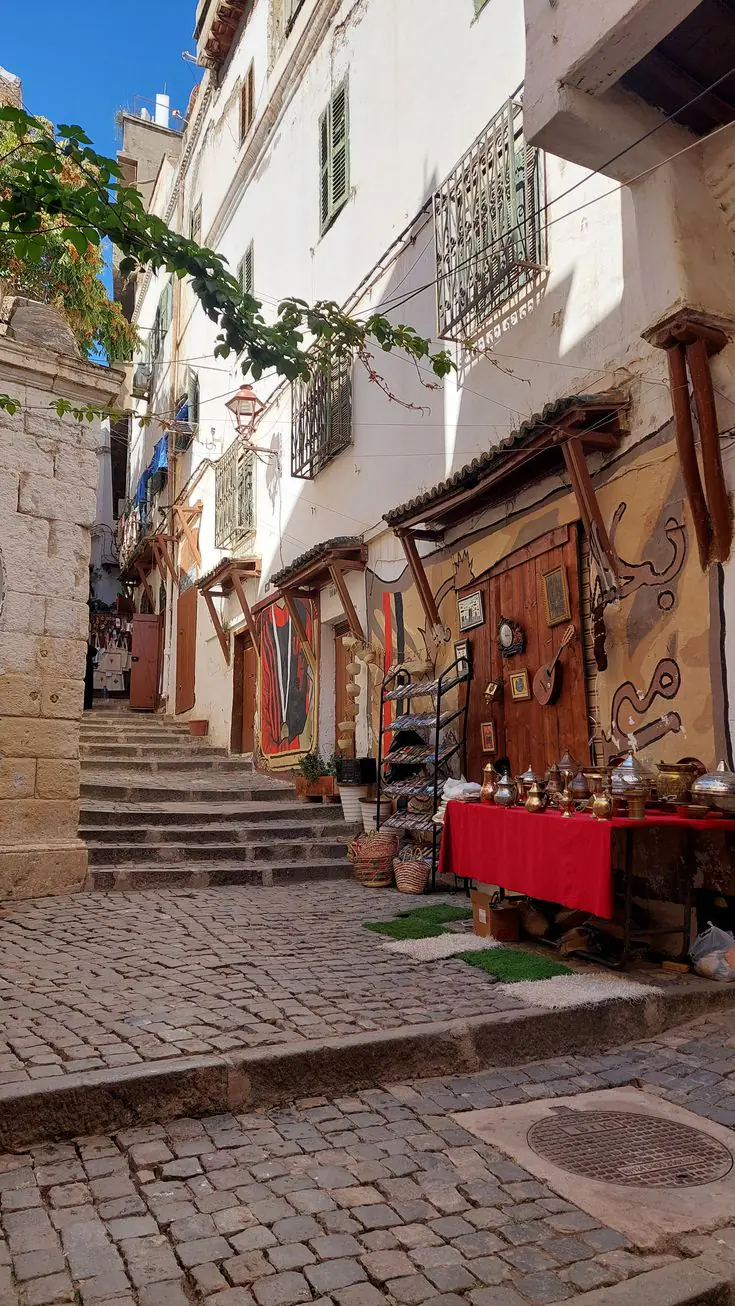
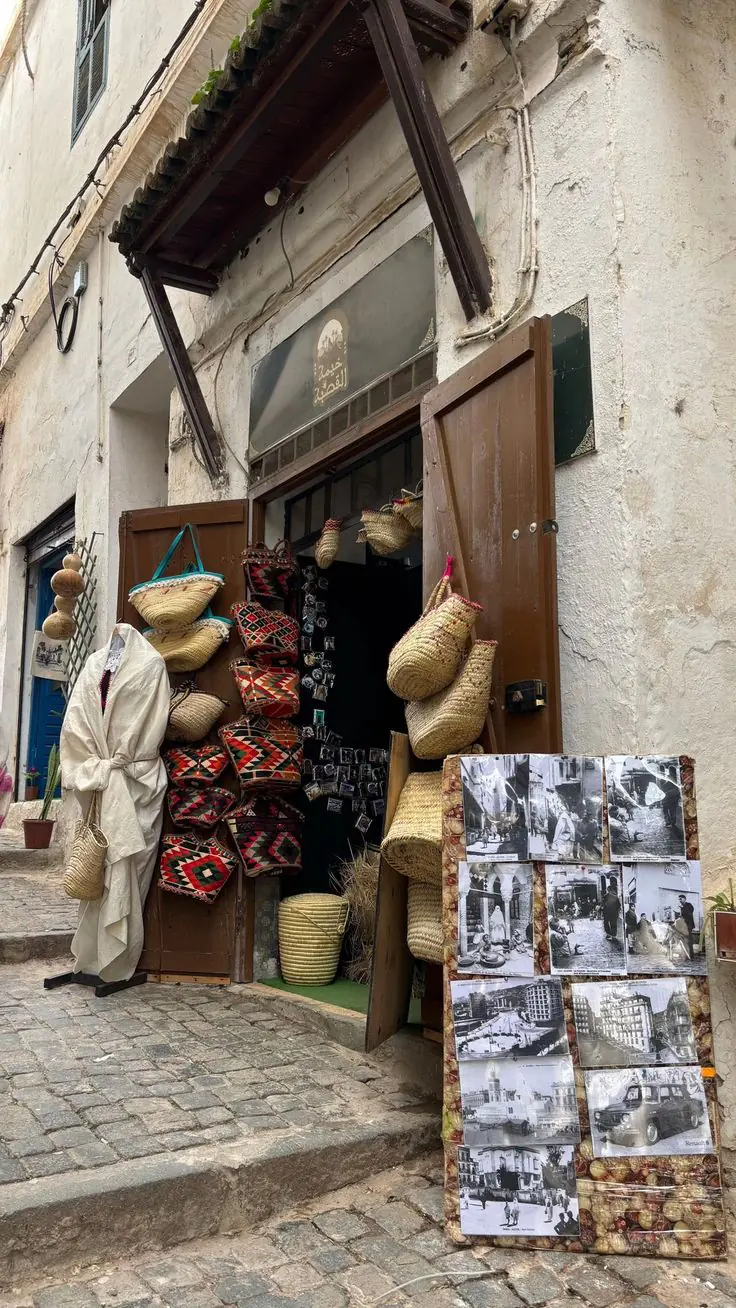
Practical information: Old city (medina) of Algiers, inscribed on the UNESCO World Heritage List since 1992. Freely accessible throughout the day; free entry. Guided tours are paid. Wear comfortable shoes and plan for a morning visit.
The Casbah of Algiers covers nearly 55 hectares between the sea and the hillsides. Its lanes are too narrow for cars — the Casbah can only be experienced on foot, at the pace of its stairways, craft workshops, and bay viewpoints. It is the natural starting point for any visit to Algiers.
The Grande Poste and the City Centre
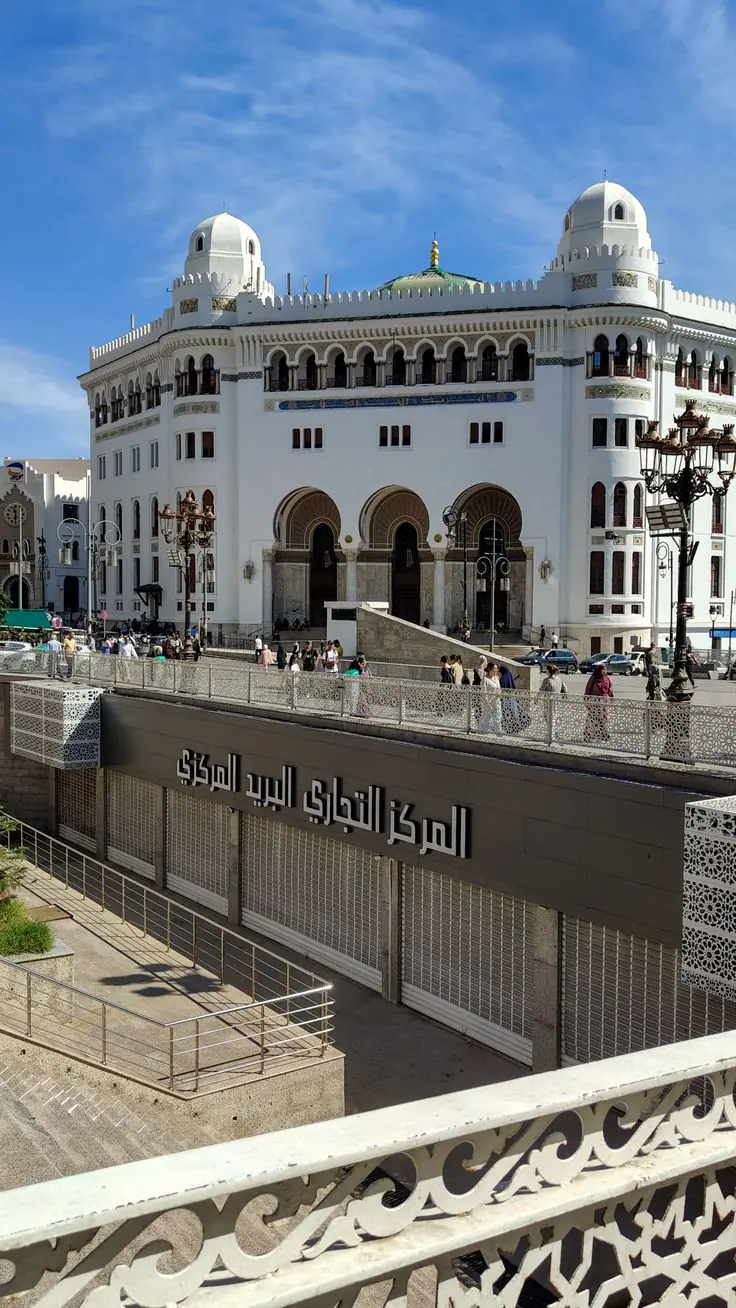
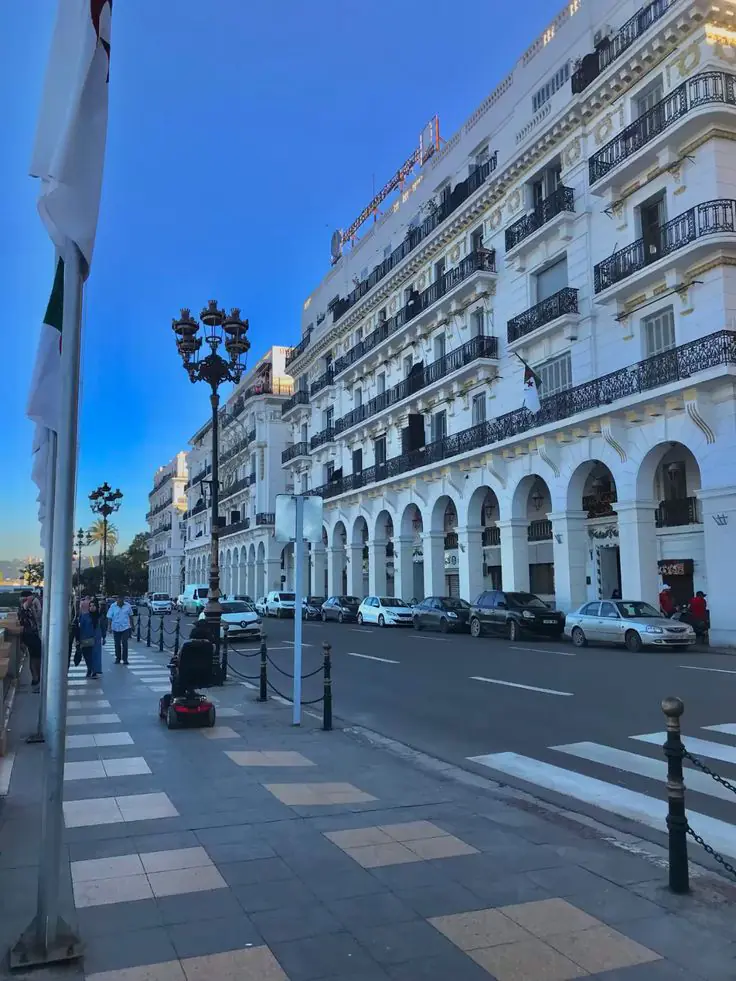
Practical information: Neo-Moorish building constructed from 1910 and inaugurated in 1913. Exterior accessible at any hour; interior during postal opening hours. Free entry. The “Tafourah – Grande Poste” metro station serves the site directly.
Algiers’ Grande Poste was designed by architects Jules Voinot and Marius Toudoire in the neo-Moorish style. The surrounding Martyrs’ Square, broad boulevards, and bustling commercial streets capture the rhythm of everyday Algiers.
The Martyrs’ Memorial (Maqam Echahid)
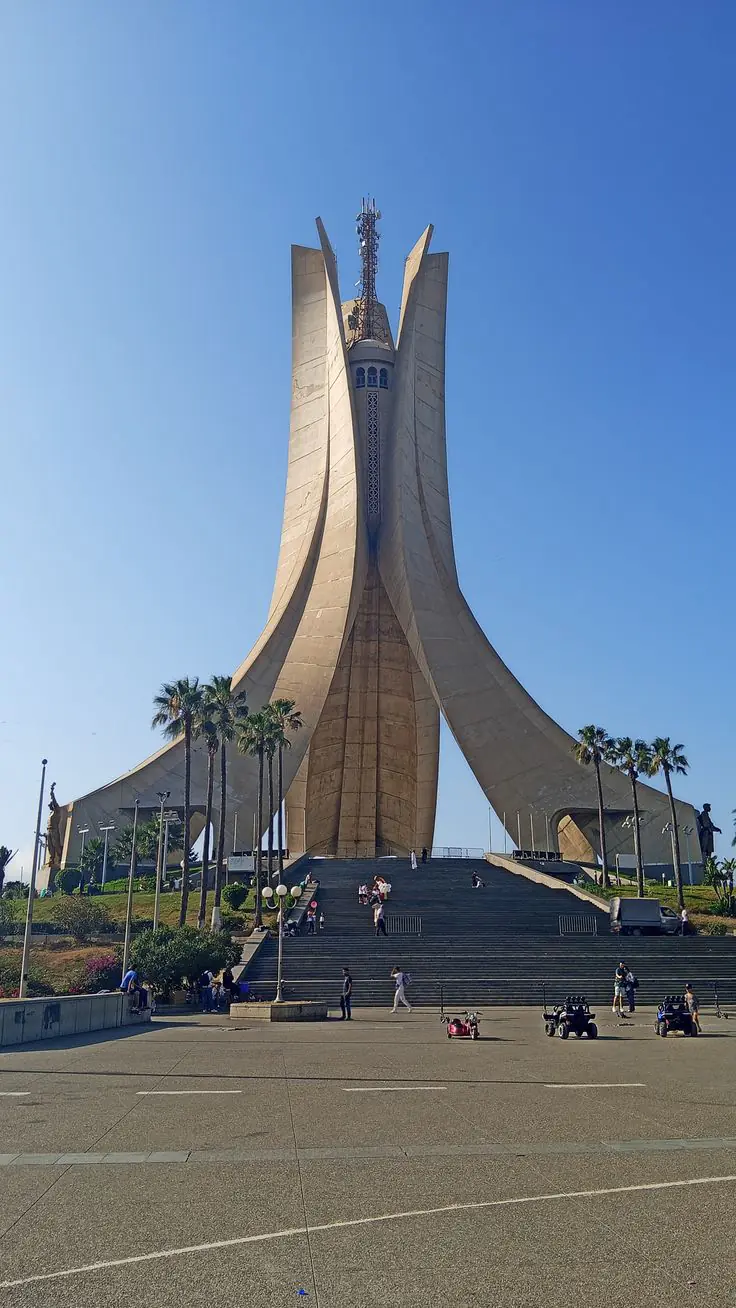
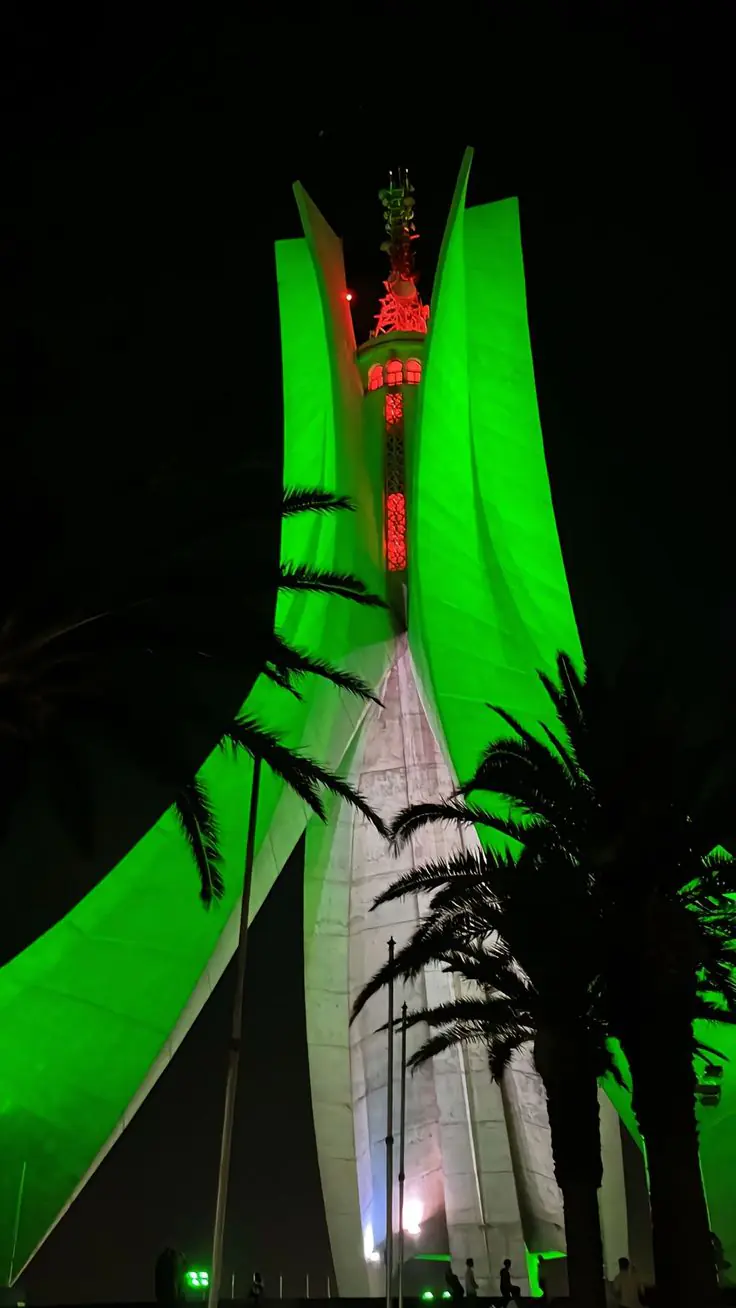
Practical information: Independence monument standing 92 metres tall, inaugurated on 5 July 1982. Esplanade open at all times (free); National Moudjahid Museum: Saturday to Thursday, 9 am–4:45 pm, closed Fridays (~20 DZD). Access by car or by cable car from the Jardin d’Essai.
The Martyrs’ Memorial commands Algiers from the heights of El Madania. At its base, the National Moudjahid Museum brings together weapons, archives, and artefacts from the liberation struggle. The 360° panorama over the bay is particularly striking at sunset.
Notre-Dame d’Afrique — The Best Panorama Over the Bay
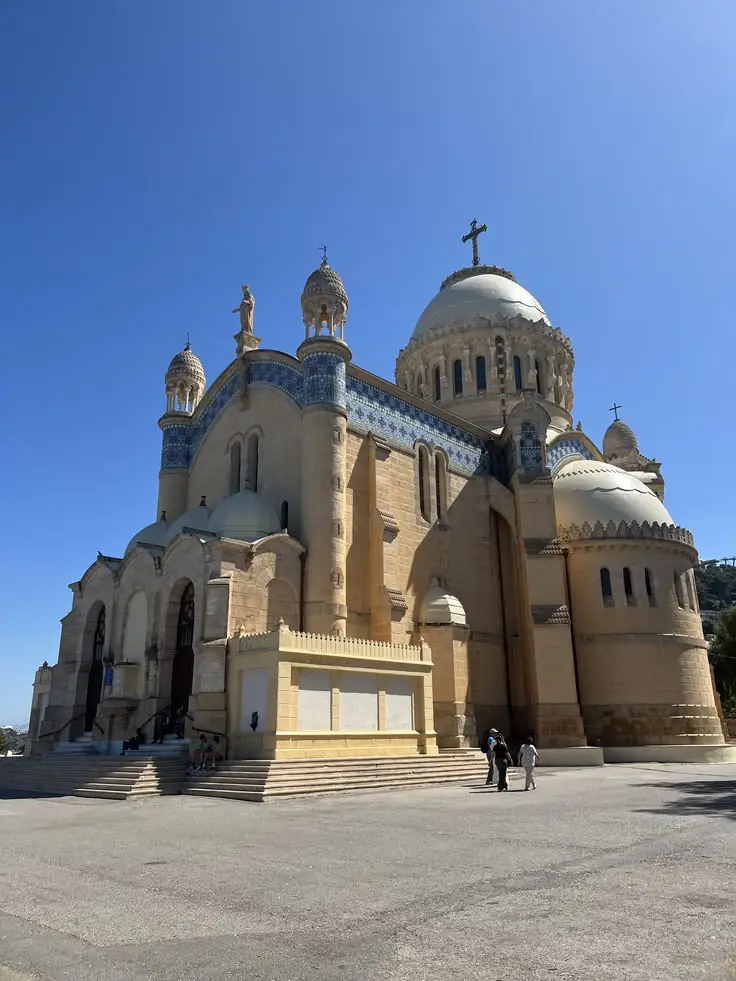
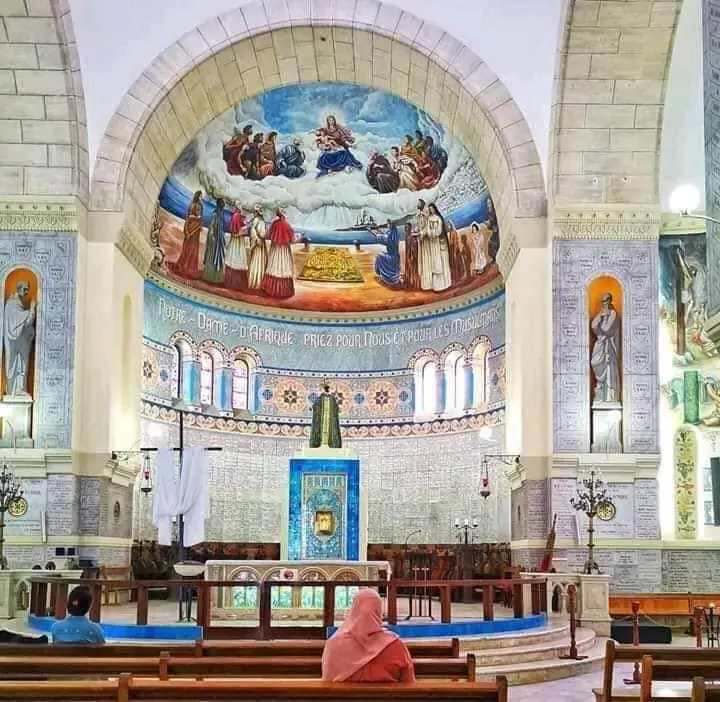
Practical information: Romano-Byzantine basilica (1858–1872), perched 124 metres above sea level in Bologhine. Open daily 11 am–12:30 pm and 3–5:30 pm; closed Friday afternoons. Free entry. Address: 3, avenue Ali Ourak, Bologhine.
Built over fourteen years, Notre-Dame d’Afrique is affectionately known as “Madame l’Afrique” or “Lalla Myriem” by the people of Algiers. Its apse bears a celebrated inscription invoking a prayer shared by Christians and Muslims alike. It can be reached by road, by stairs from Bab El Oued, or by the Bologhine cable car — the most scenic option.
The Jardin d’Essai du Hamma
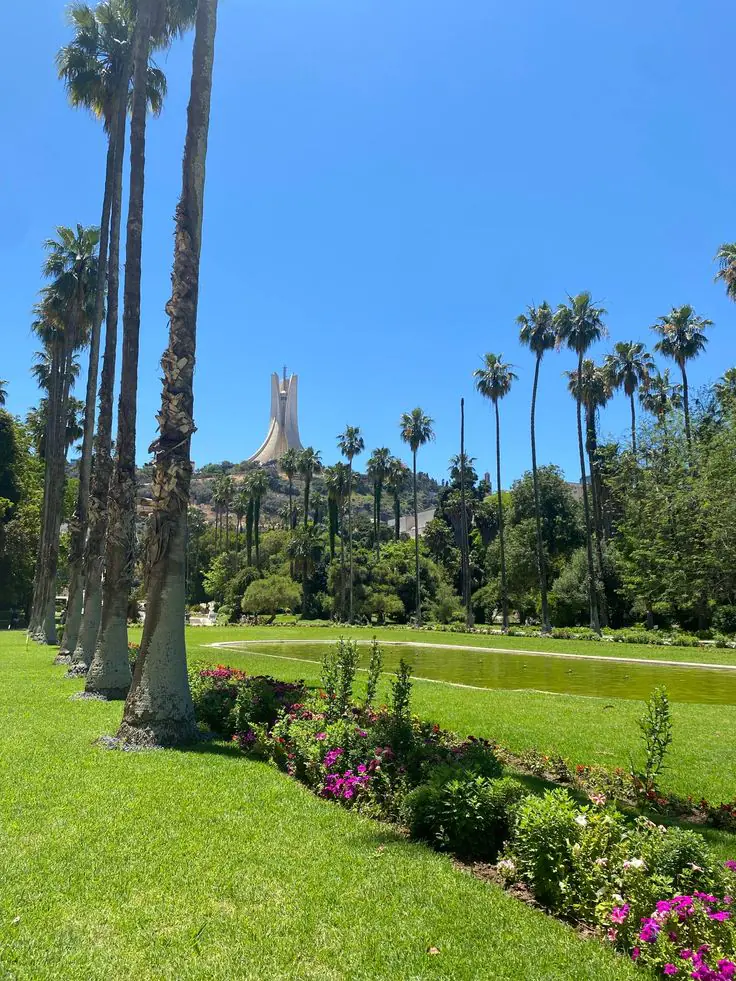
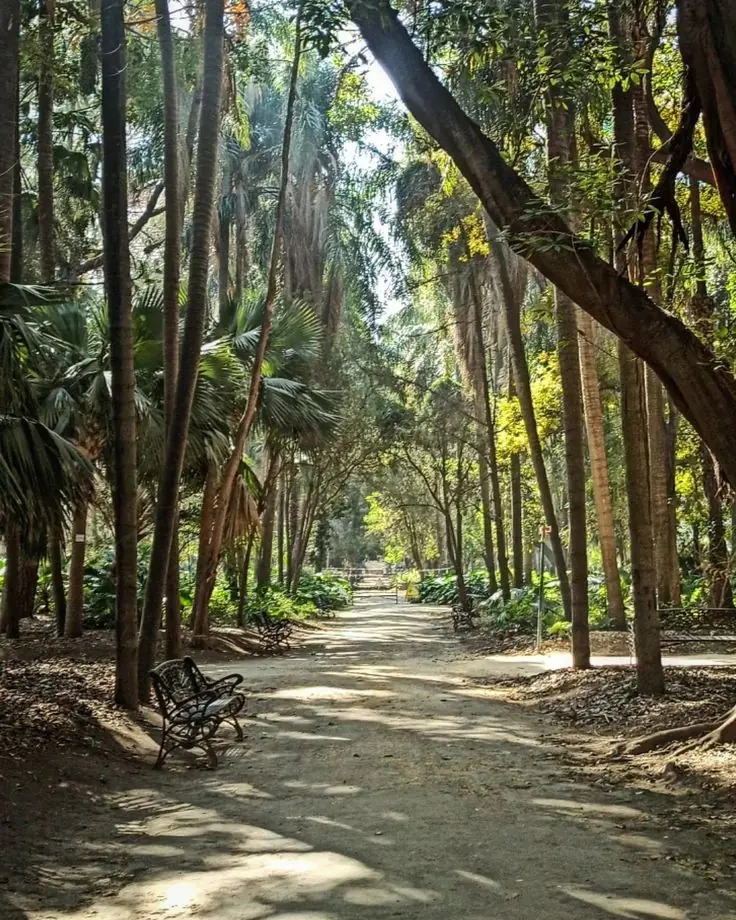
Practical information: 32-hectare botanical garden created in 1832, home to around 2,500 species. Open 7 days a week (approximately 9 am–7 pm in summer, 10 am–6 pm in winter). Around 200 DZD per adult; zoo requires a separate ticket. “Jardin d’Essais” metro station.
Created on former drained marshland, the Jardin d’Essai du Hamma is one of the world’s most significant acclimatisation gardens. Its majestic avenues of ficus trees, palms, bamboo, and dragon trees descend in tiers toward the bay. Combine with the Fine Arts Museum just above.
Museums Worth Visiting in Algiers
Algiers has several complementary national museums. Here are the main ones with practical details.
National Museum of Antiquities and Islamic Arts
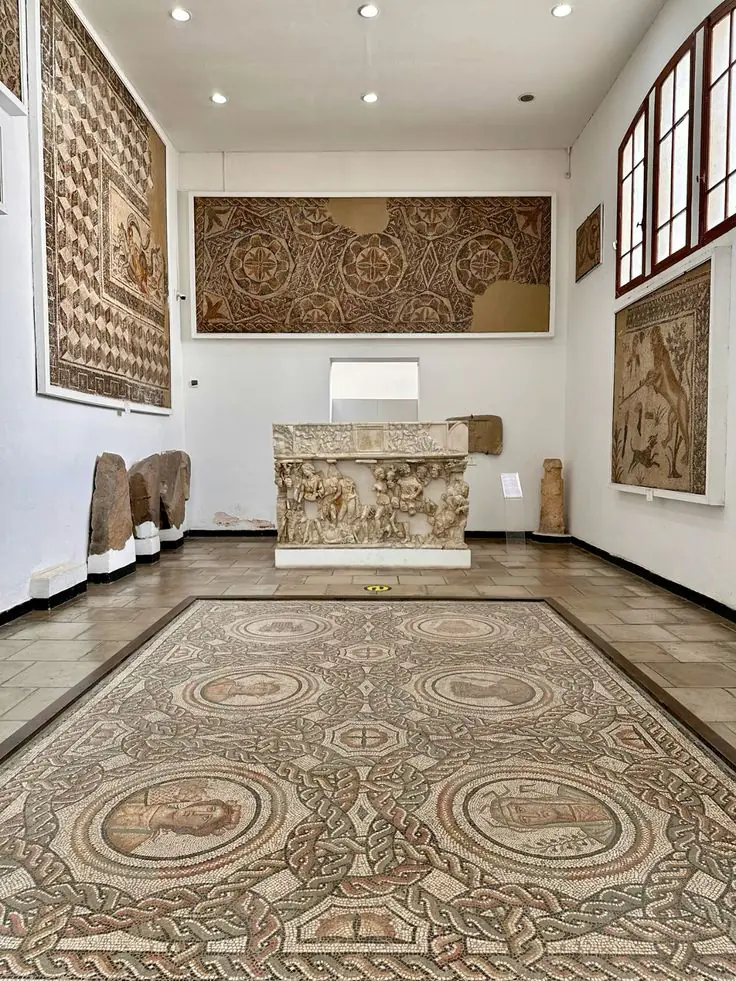
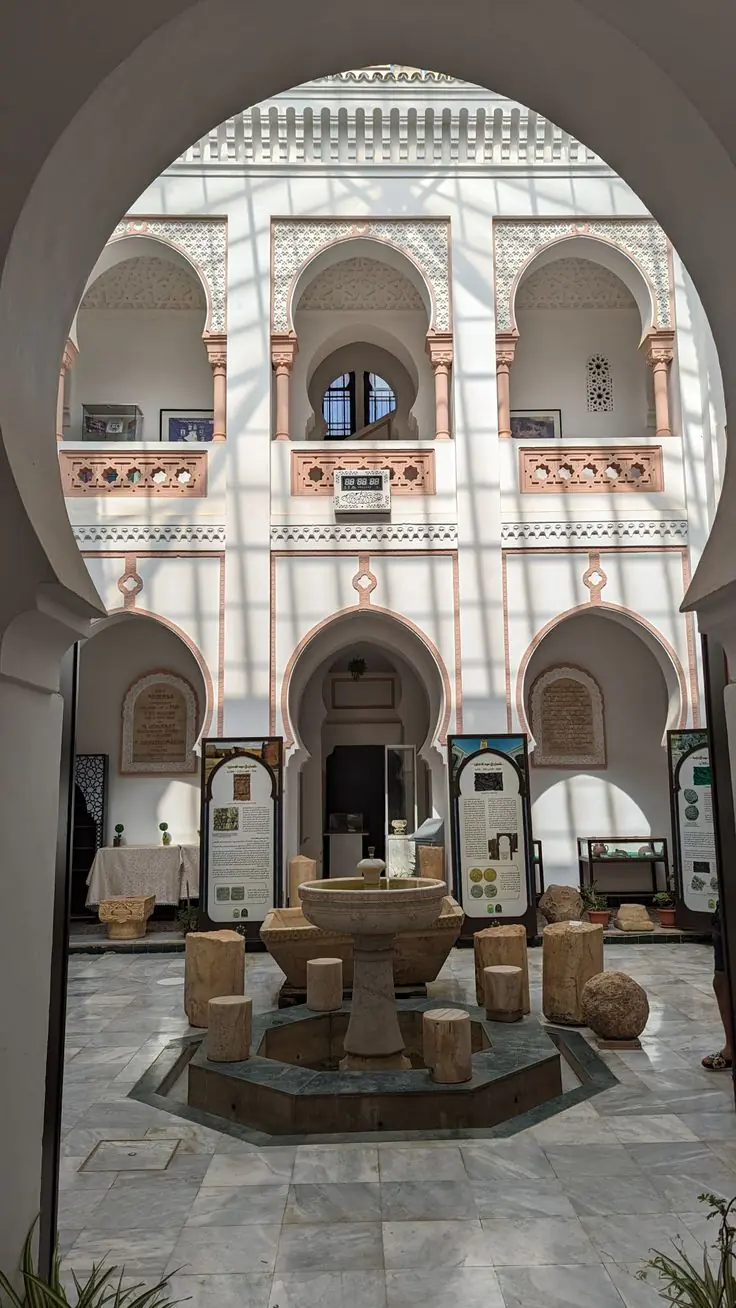
Algeria’s and Africa’s oldest museum, inaugurated in 1897. Classical antiquities (mosaics, bronzes, statues) and Islamic art. Hours: Saturday to Thursday, 9 am–12 pm and 1–4:30 pm (closed Fridays). ~200 DZD. Address: 177, boulevard Krim Belkacem, Parc de la Liberté, Algiers centre.
National Bardo Museum (Prehistory and Ethnography)
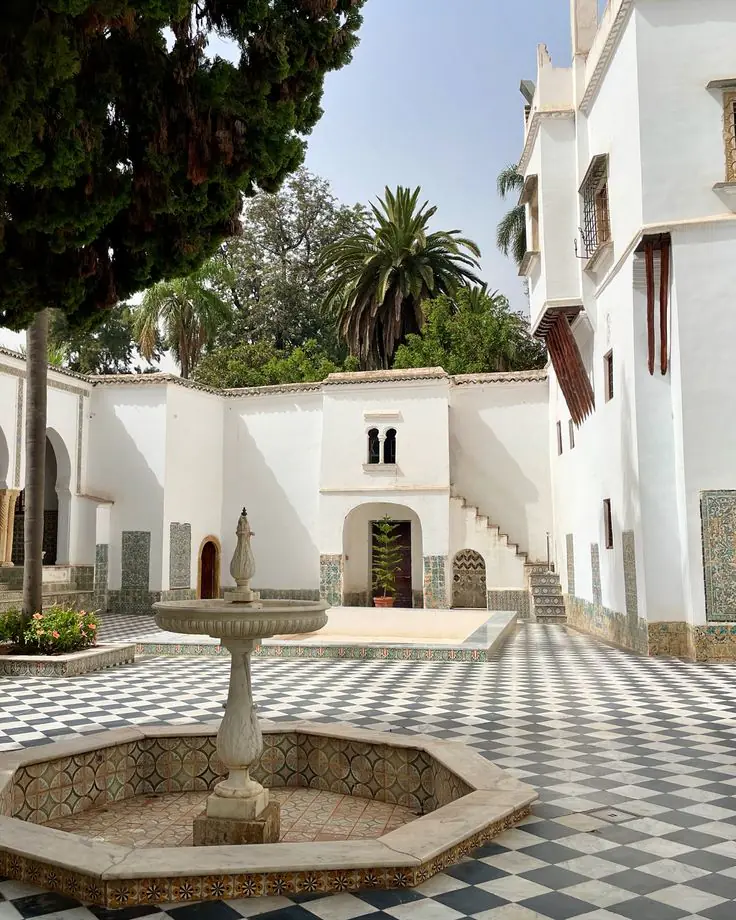
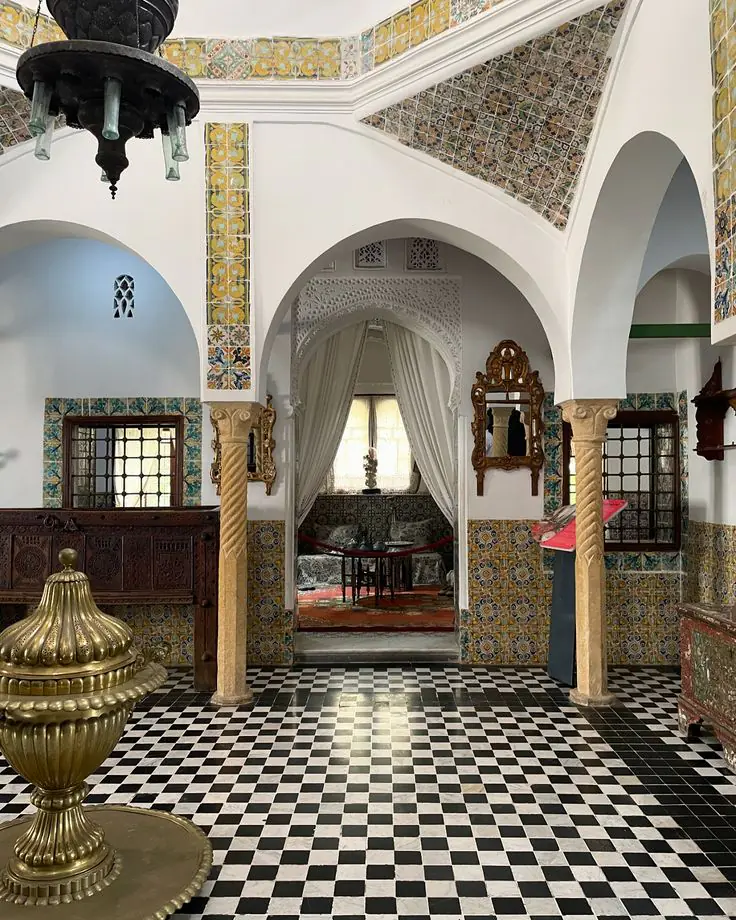
Housed in an 18th-century Moorish palace, a nationally listed historic monument. Notable for its prehistoric and ethnographic collections, and above all for the skeleton of Tin Hinan, legendary queen of the Tuareg. Hours: generally Saturday to Thursday, variable by season. ~200 DZD. Address: 3, avenue Franklin Roosevelt, Sidi M’Hamed.
National Museum of Fine Arts of Algiers
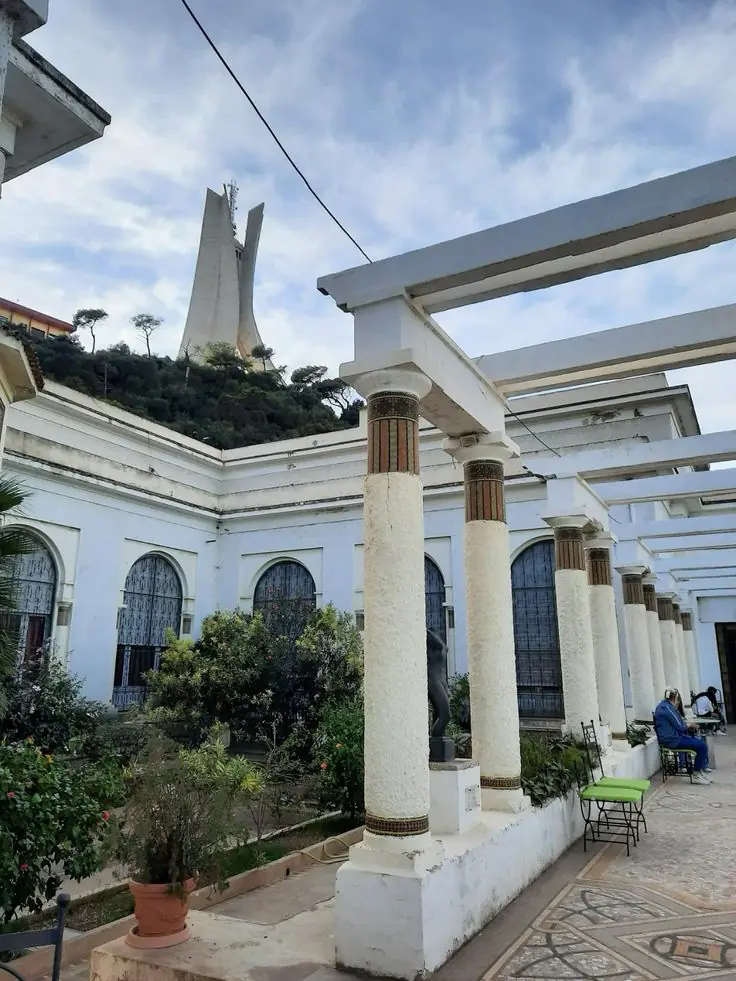
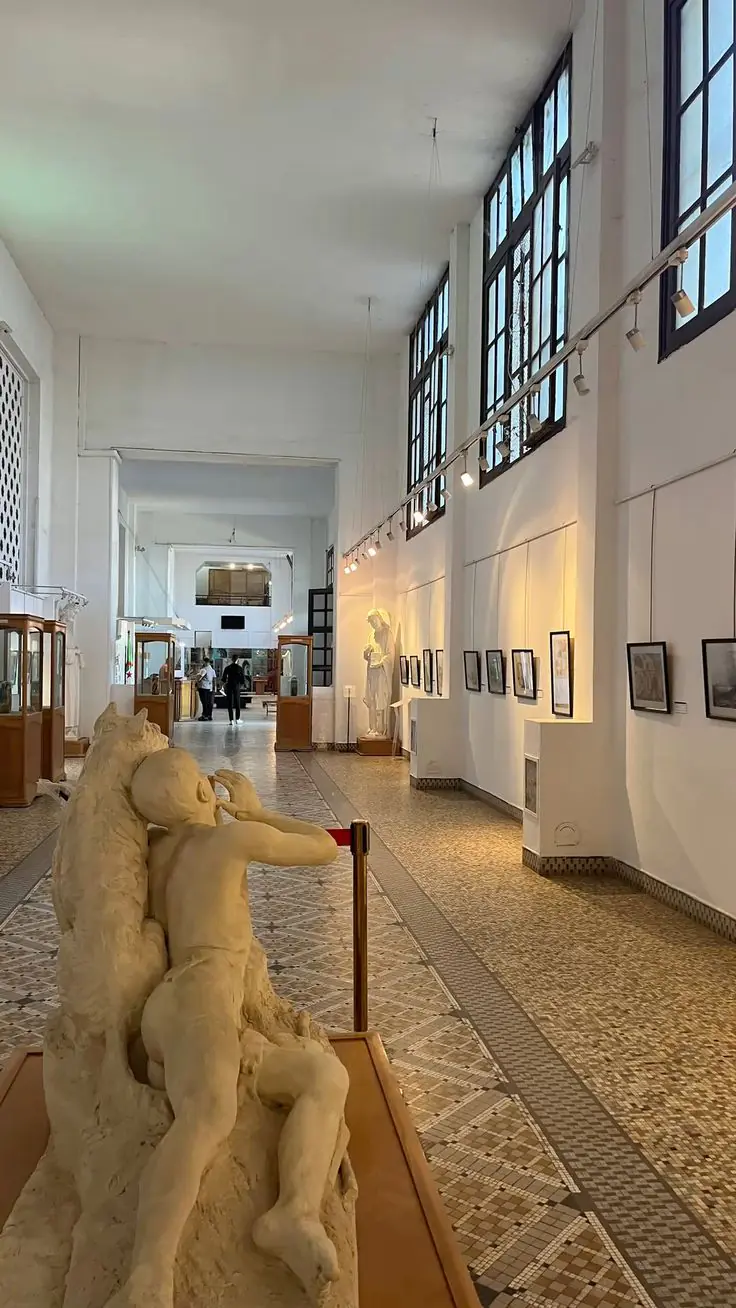
Opened in 1930, one of Africa’s largest art museums, with around 8,000 works. The collection spans European masters (Delacroix, Monet, Renoir, Gauguin, Rodin) and major Algerian artists (Baya, Racim), overlooking the Jardin d’Essai. Hours: variable — check before visiting. ~200 DZD.
Unwinding: The Seafront, Cable Cars, and Beaches
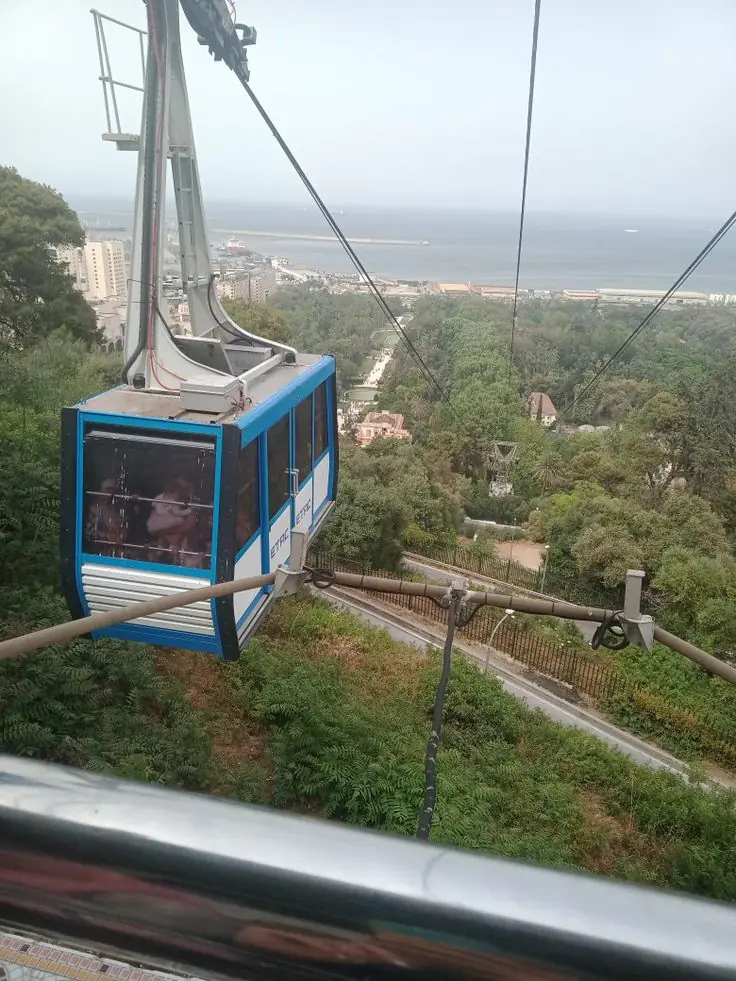
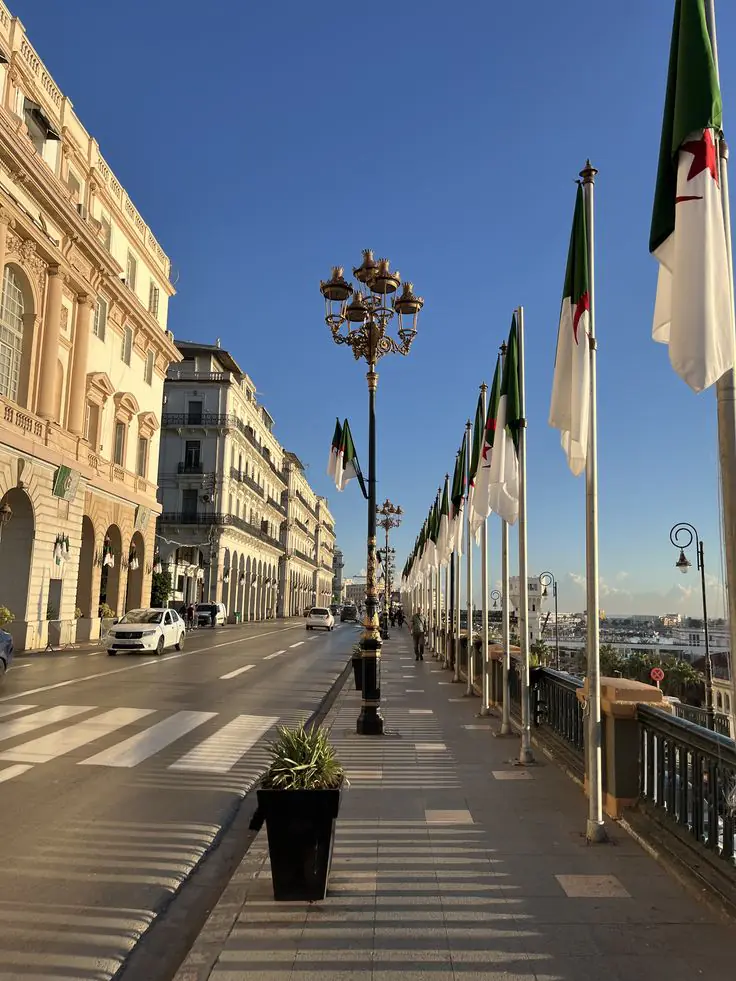
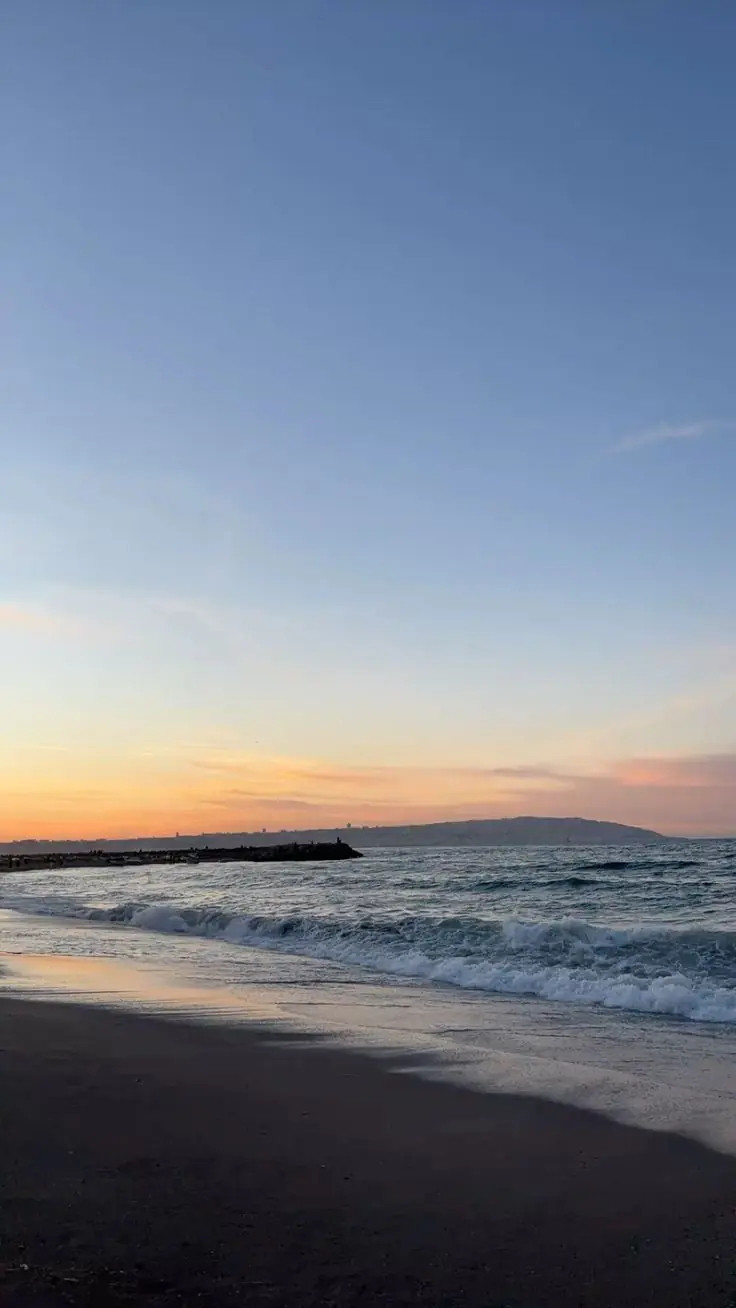
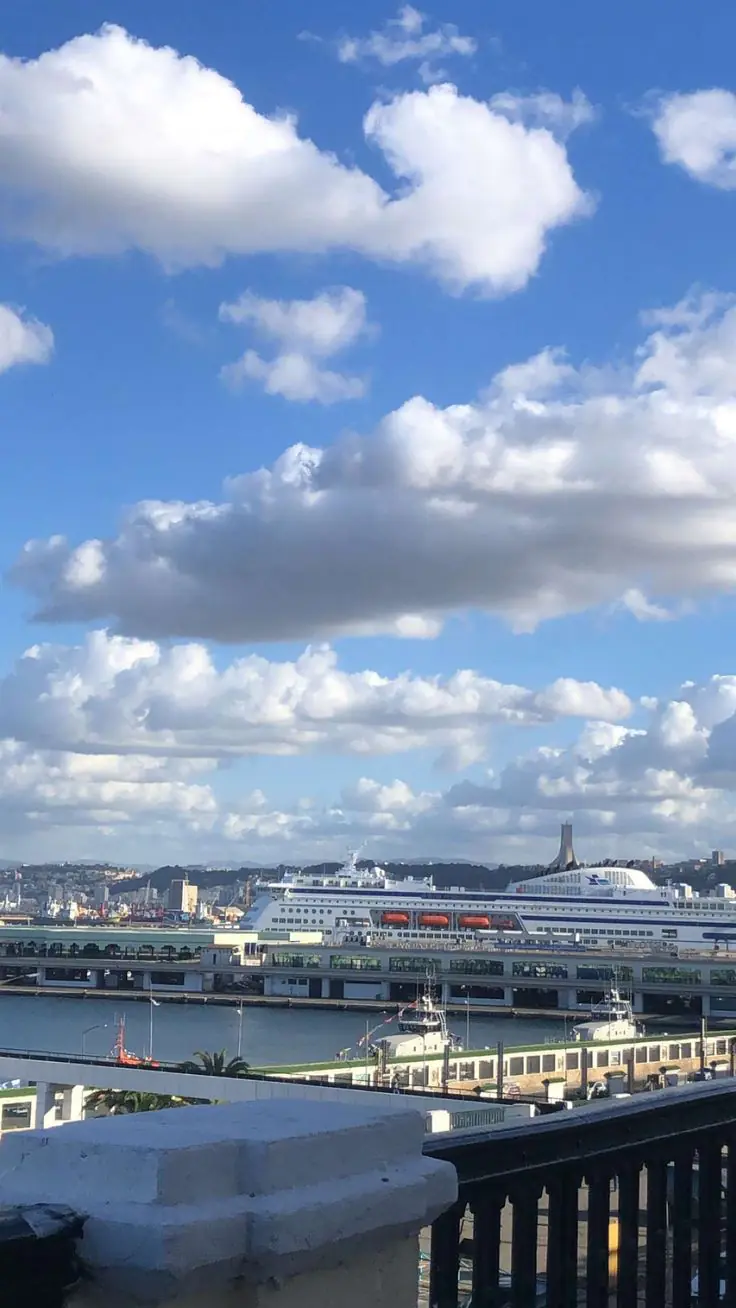
Long walks along the Mediterranean, leisure spaces, and aerial views over the bay: Algiers’ seafront is freely accessible. Urban cable cars connect low-lying districts to the heights. Promenades free; cable cars cost a few hundred dinars.
Beaches around Algiers (summer). Several beaches are accessible from the city: Sidi Fredj, Palm Beach, Aïn Benian, and Club des Pins. Sunset from the Corniche is one of the highlights of any stay in Algiers.
Neighbourhoods Worth Exploring
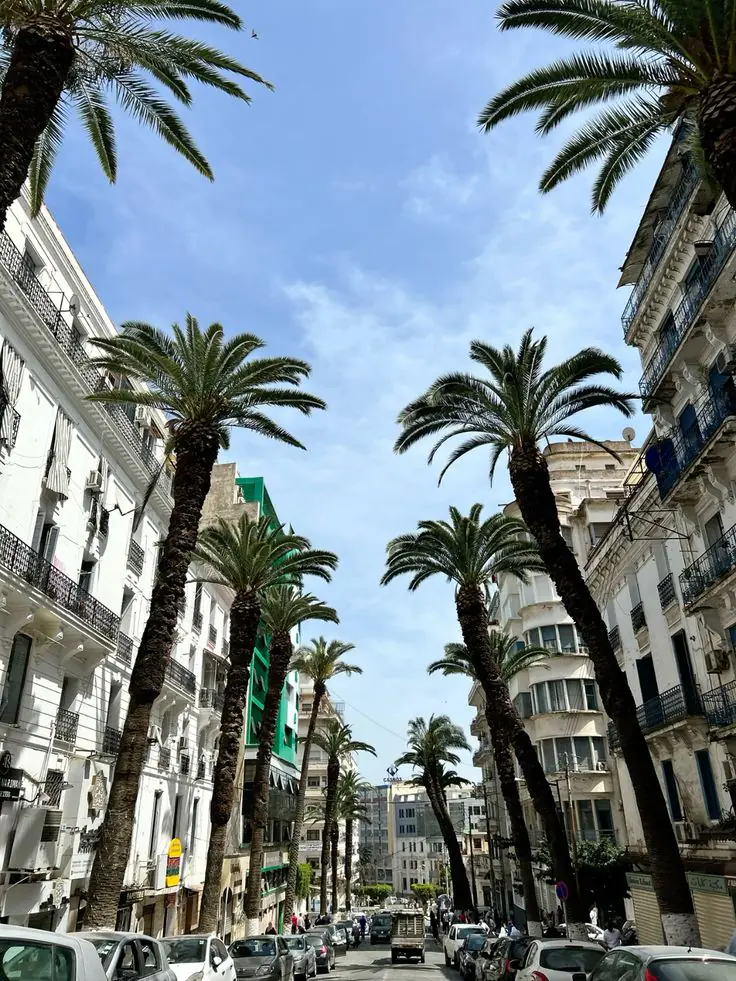
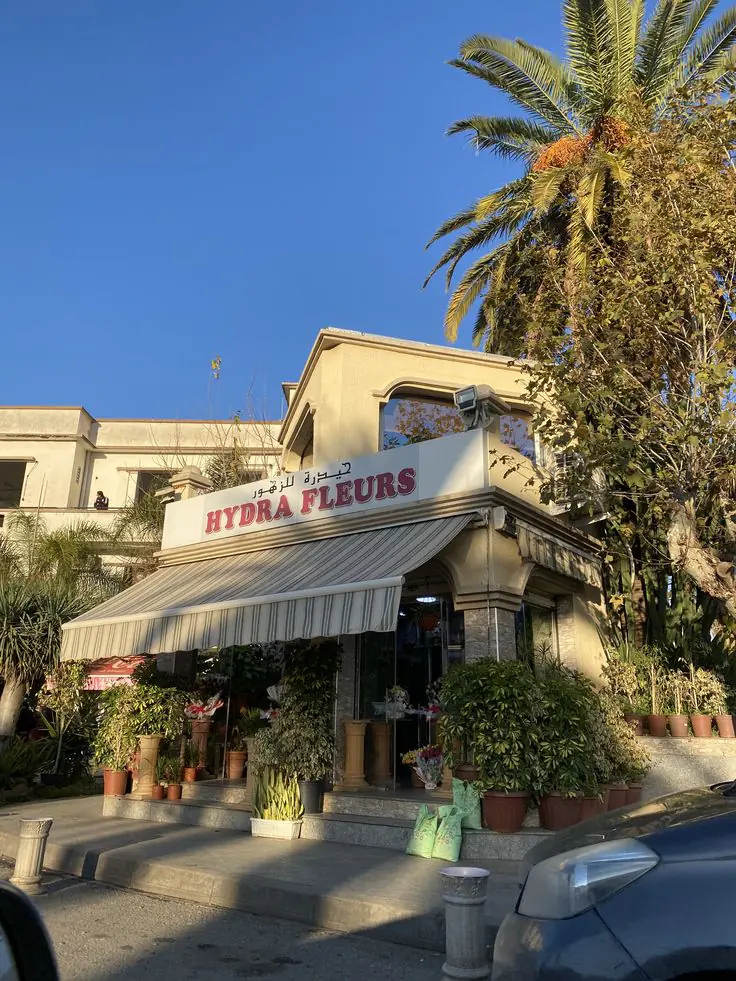
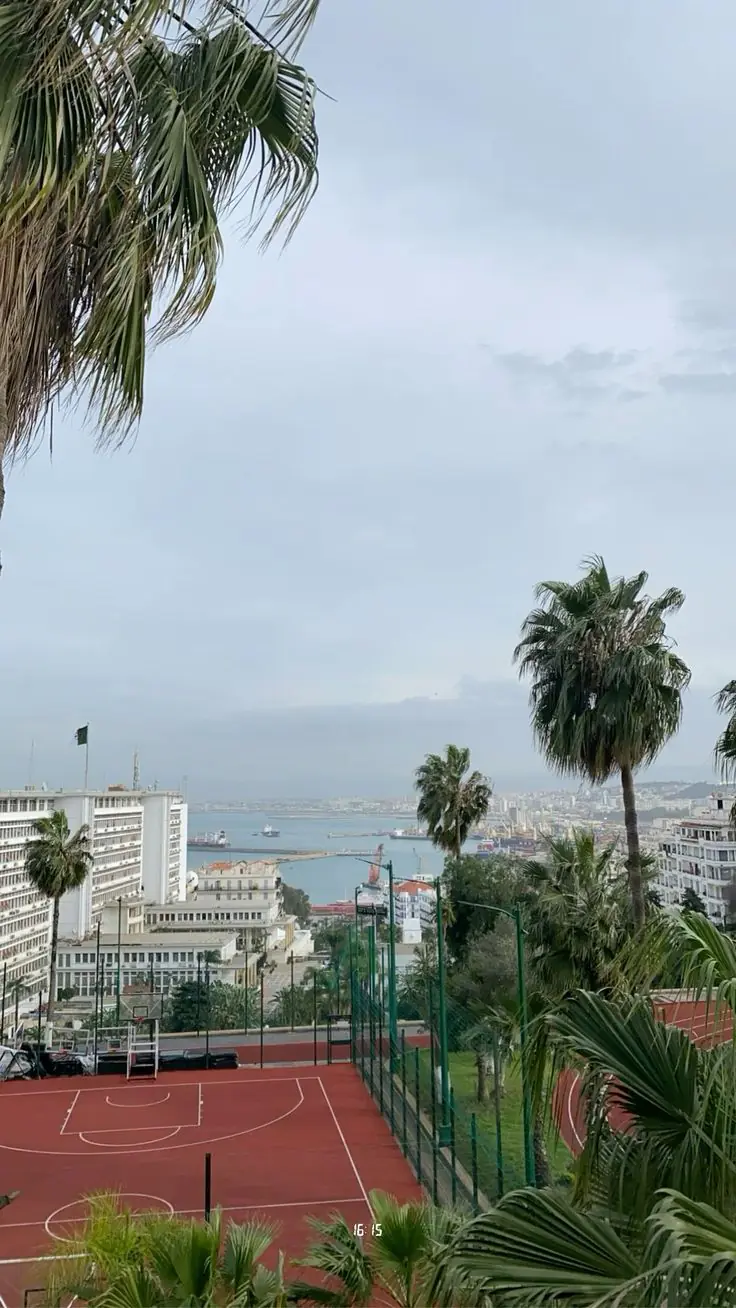
Every district of Algiers has its own atmosphere. To feel the city’s pulse:
- Didouche Mourad: A lively thoroughfare lined with cafés and shops.
- Hydra: Modern restaurants and coffee spots.
- El Biar: Fine views over the city.
- Sidi Yahia: A sought-after area for shopping and dining — perfect for an evening out.
Algerian Cuisine in Algiers: What to Eat


Algerian cuisine is built around generous slow-cooked dishes, fragrant soups, and refined pastries. Ranked as the top cuisine in the Arab world and Africa by TasteAtlas (2024–2025). The must-try dishes in Algiers:
- Rechta: Algiers’ signature dish — delicate fresh pasta served with chicken in a white sauce of turnips and chickpeas.
- Chorba beïda: Algiers-style white soup with chicken and vermicelli; chorba frik is the Ramadan staple.
- Tajine zitoune: A local speciality of chicken with green olives, brightened with lemon and gentle spices.
- Dolma: An assortment of stuffed vegetables, slow-cooked in a lightly lemony sauce.
- Couscous: The national dish, inscribed on UNESCO’s Intangible Cultural Heritage list in 2020.
For street food, try mhadjeb, garantita, and bourek. For something sweet: makrout, baklawa, kalb el louz, gazelle horns, or dziriette — all wonderful with a mint tea.
What to Do in Algiers on a Rainy Day
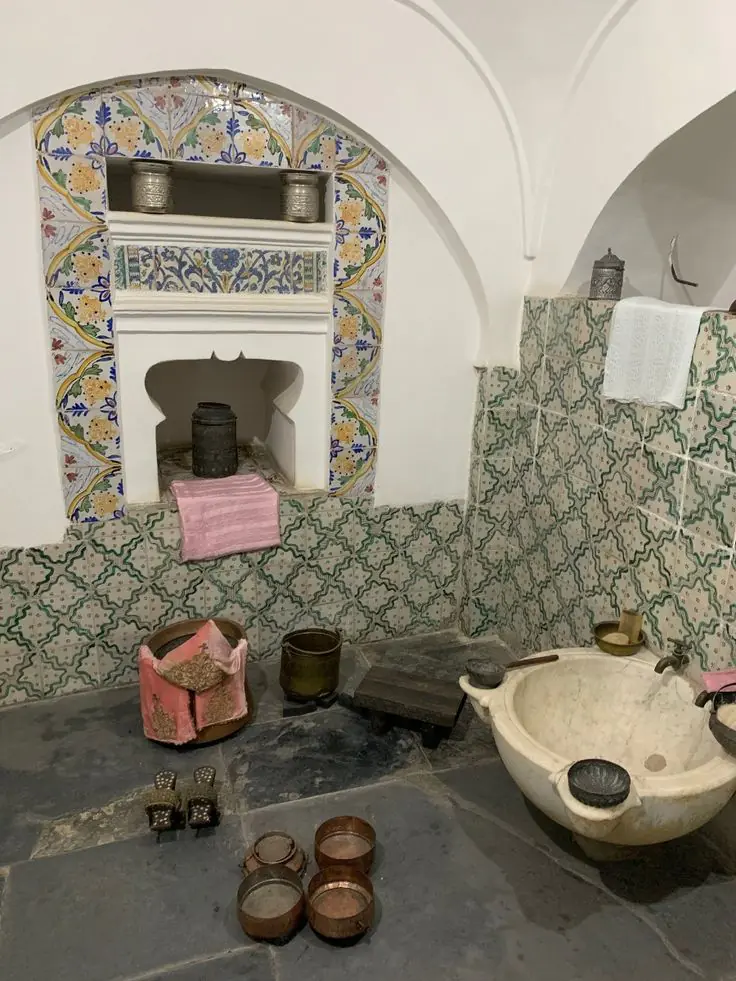
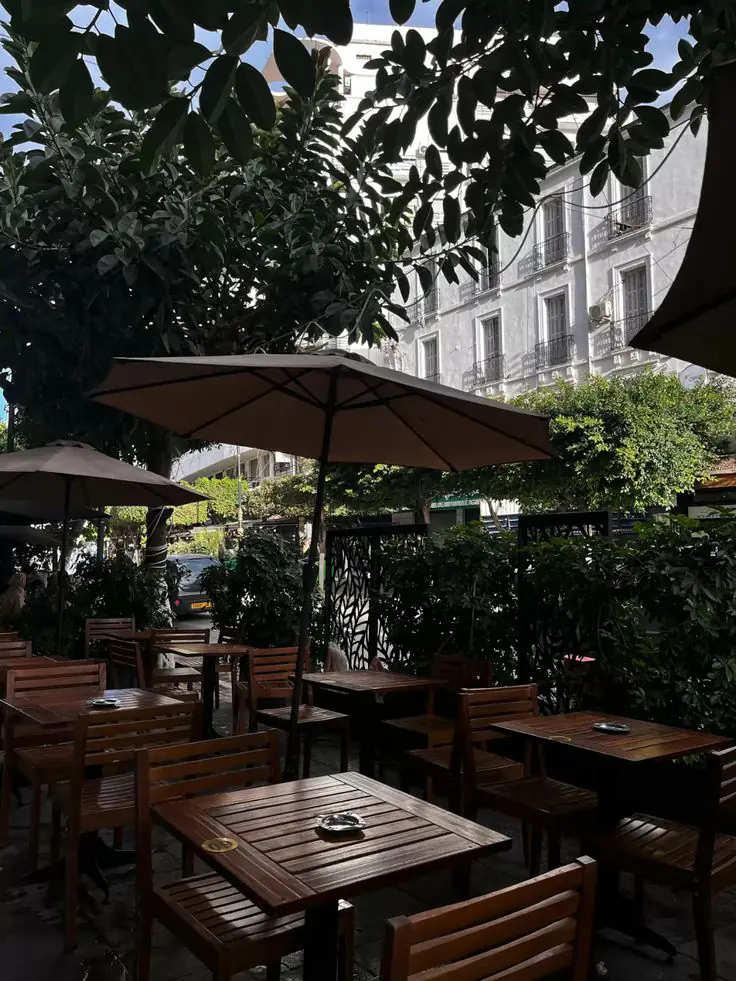
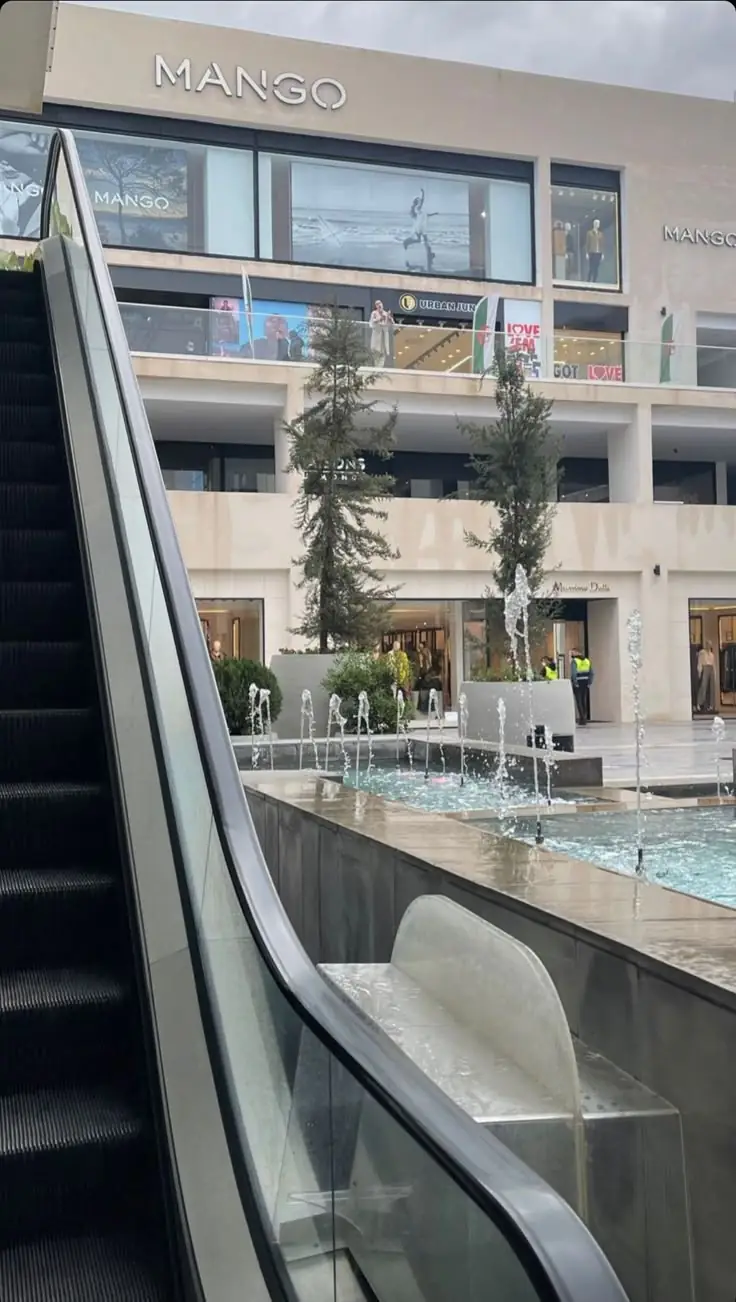
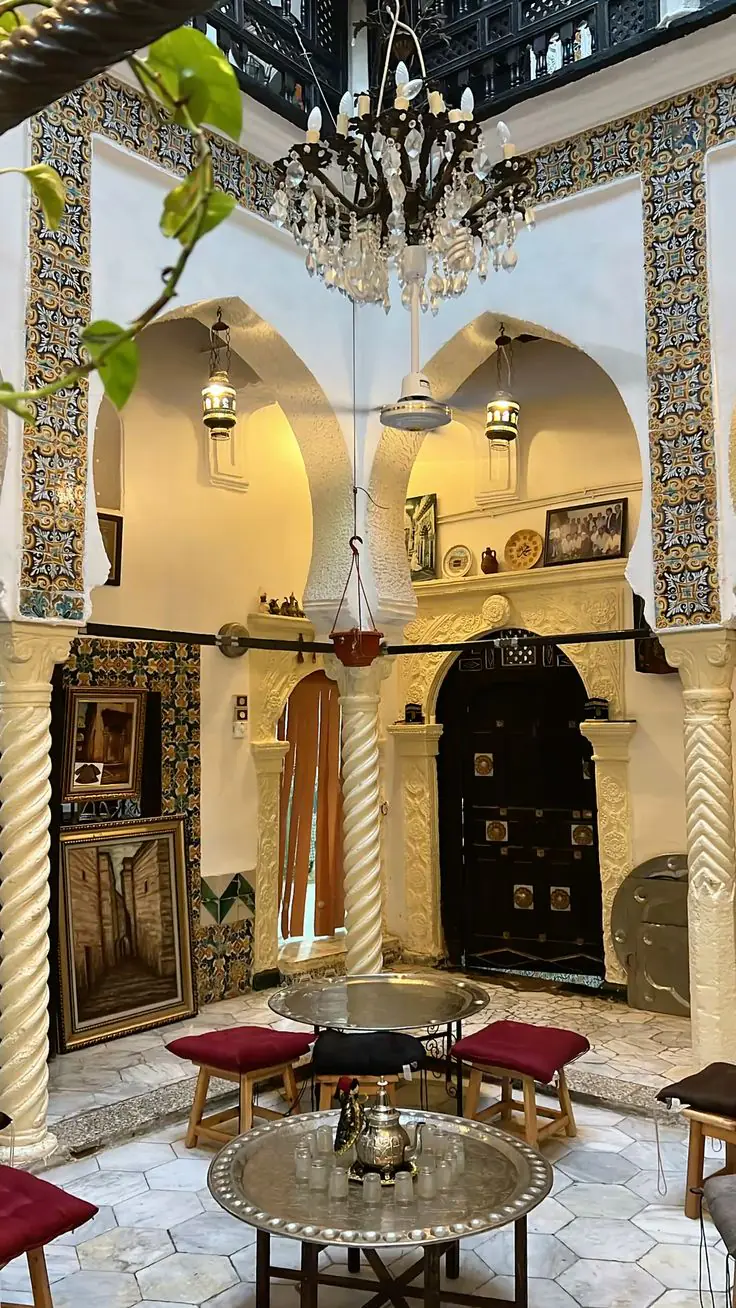
When it rains in Algiers, the city has plenty of sheltered options:
- Museums: The National Fine Arts Museum, the Bardo, the Museum of Antiquities and Islamic Arts, and the National Moudjahid Museum. The MAMA (National Museum of Modern and Contemporary Art) rounds out the list.
- The Grande Poste: Its richly decorated hall can be visited during post office opening hours.
- Shopping centres: The Riadh El Feth esplanade and mall offer shops and restaurants.
- Cafés and patisseries: Rue Didouche Mourad and the Hydra neighbourhood are full of places to sit over a mint tea.
- A hammam: A quintessentially Algerian cultural experience — perfect for a rainy afternoon.
Day Trips from Algiers: Tipaza and Cherchell
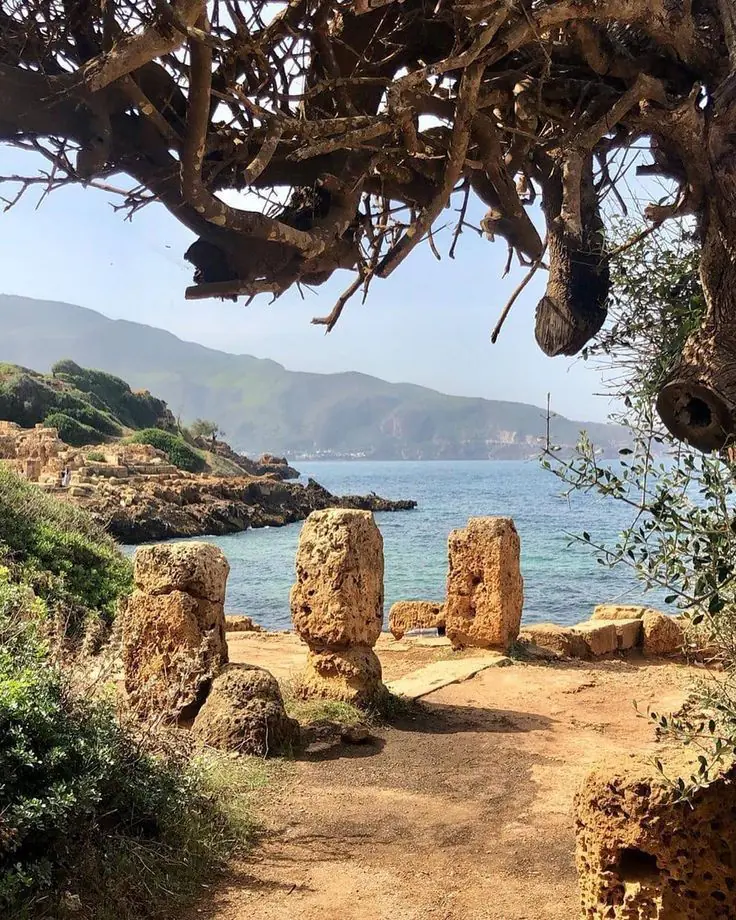
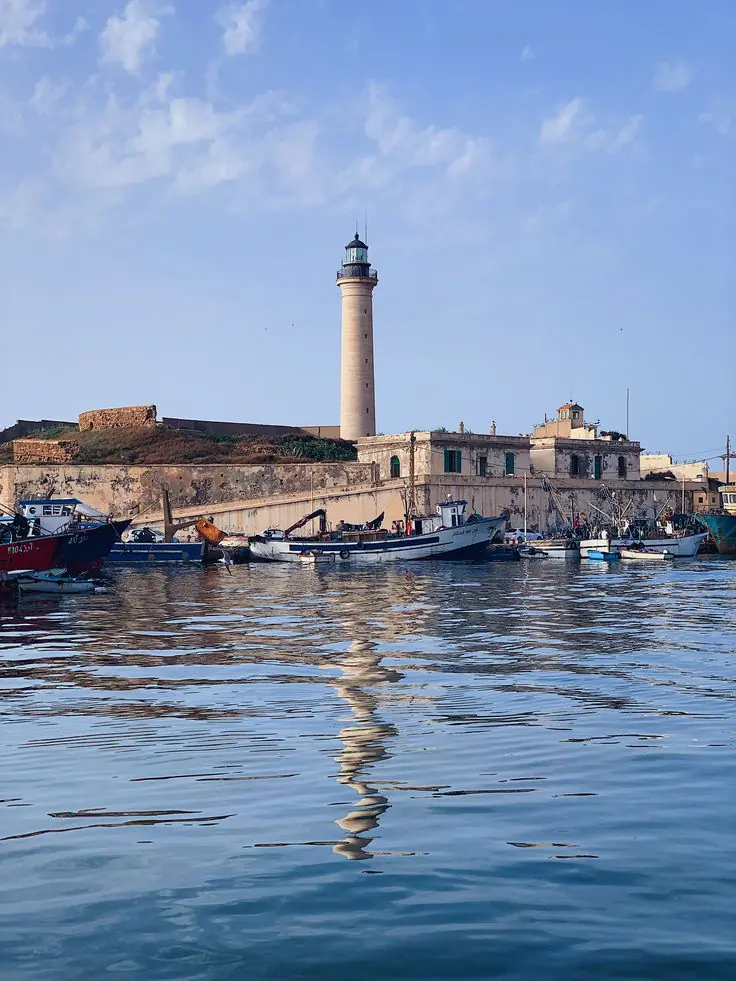
Practical information — Tipaza: Roman and Phoenician ruins facing the sea, UNESCO World Heritage Site since 1982, approximately 70 km west of Algiers (~1 hour by road). Open daily from 8 am until dusk. ~130–200 DZD. Hat and water essential; a guide is recommended for a first visit.
The Tipaza site is divided into two archaeological parks. Nearby, the Tomb of the Christian Woman and the town of Cherchell make for a natural extension. The Tipaza + Cherchell combination is the finest day trip from Algiers, and features in our Roman ruins of Algeria circuit.
Getting Around Algiers and Its Surroundings
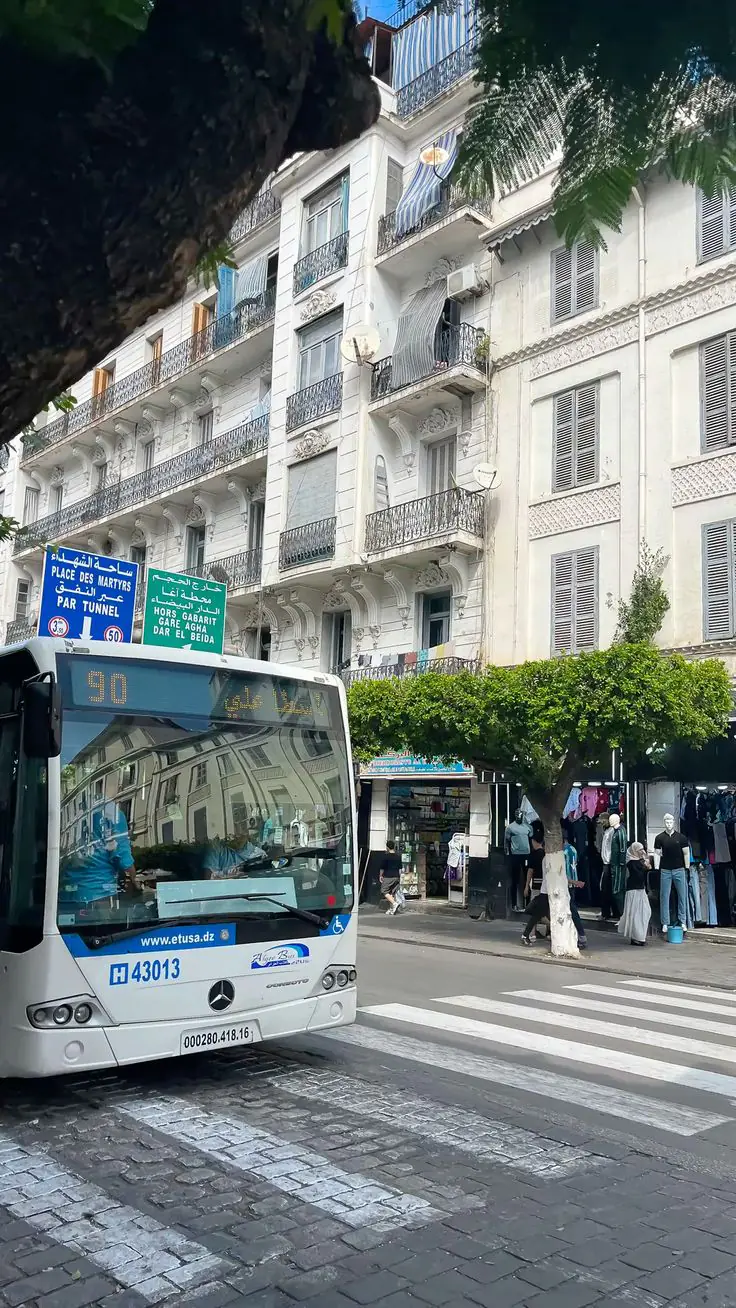
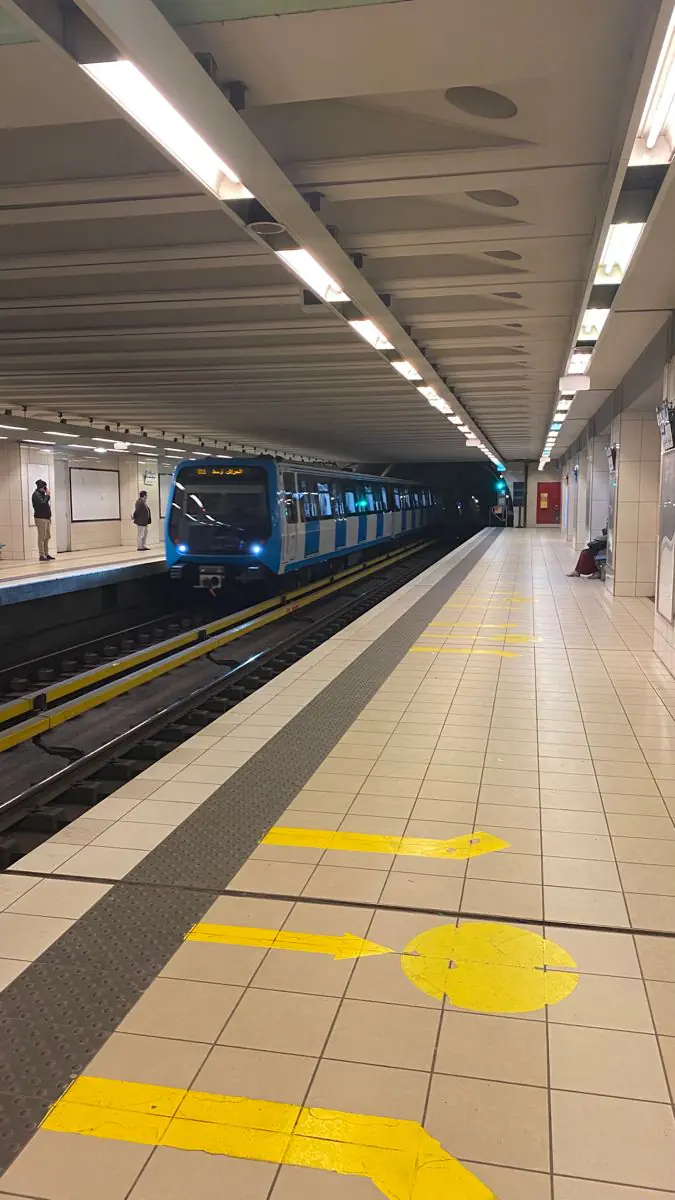
The historic centre of Algiers is best explored on foot; for the rest, the city has a comprehensive network of metro, tram, buses, cable cars, taxis, and ride-hailing apps.
- Metro: A single line (opened in 2011) running from Place des Martyrs in the Casbah to El Harrach. Flat fare regardless of distance.
- Tram (SETRAM): Runs along the eastern bay as far as the Jardin d’Essai and Bordj El Kiffan.
- ETUSA buses: Around 130 routes covering the entire Algiers wilaya.
- Cable cars: Several lines connecting low-lying districts to the heights.
- Taxis and ride-hailing: The Yassir app is the easiest option, with upfront pricing.
From Houari Boumédiène Airport (~16–20 km east): ETUSA bus line 100, SNTF suburban train to Gare Agha (~20 minutes), or a taxi/Yassir (typically 1,500–2,500 DZD).
Summary Table — Algiers’ Top Attractions
| Site | Type | Hours | Price | Good to Know |
|---|---|---|---|---|
| Casbah of Algiers | Medina – UNESCO (1992) | Freely accessible during the day | Free (guided tours paid) | On foot only; guide recommended |
| Grande Poste | Neo-Moorish building (1910–1913) | Exterior 24/7; hall during business hours | Free | Metro: “Tafourah – Grande Poste” |
| Martyrs’ Memorial | Monument (1982), 92 m | Esplanade at all times | Free | Bay panorama; stunning at sunset |
| Moudjahid Museum | Museum (below the Memorial) | Sat–Thu 9 am–4:45 pm | ~20 DZD | Independence war |
| Notre-Dame d’Afrique | Basilica (1858–1872), 124 m | Daily 11 am–12:30 pm / 3–5:30 pm | Free entry | Closed Fri pm; Bologhine cable car |
| Jardin d’Essai du Hamma | Botanical garden (1832), 32 ha | 7 days, seasonal hours | ~200 DZD (zoo separate) | Metro: “Jardin d’Essais” |
| Museum of Antiquities & Islamic Arts | Museum (1897) | Sat–Thu 9 am–12 pm / 1–4:30 pm | ~200 DZD | Africa’s oldest museum |
| Bardo National Museum | Museum / 18th-c. palace | Sat–Thu, variable | ~200 DZD | Tin Hinan skeleton |
| Fine Arts Museum | Art museum (1930) | Variable | ~200 DZD | Overlooks the Jardin d’Essai |
| Tipaza | Roman ruins – UNESCO (1982) | Daily, 8 am to dusk | ~130–200 DZD | 70 km west; hat + water essential |
What to Do in Algiers in 2 Days — Suggested Itinerary
- The Casbah — start early in the medina.
- The Grande Poste and city centre — neo-Moorish architecture and lively streets.
- The Jardin d’Essai du Hamma — a green pause facing the bay.
- The National Fine Arts Museum — just above the garden.
- The Martyrs’ Memorial (Maqam Echahid) — panoramic views and the Moudjahid Museum.
- Notre-Dame d’Afrique at sunset — the finest viewpoint over the bay.
- Dinner in Sidi Yahia or by the seafront — the perfect end to the day.
With a third day, add an excursion to Tipaza and Cherchell.
👉 Want to discover Algiers without the hassle of planning? See our Algiers the White circuit (5 days), or contact us for a tailor-made stay. You can also explore more of Algeria’s cities with our guide to visiting Oran.
FAQ — Visiting Algiers
How many days do you need to visit Algiers? Two days are enough to cover the main monuments and museums. A third day allows for the Tipaza and Cherchell excursion.
What is the best time to visit Algiers? Spring and autumn offer the ideal climate for walking the Casbah and the hilltop sites.
What is Algiers’ most iconic site? The Casbah, a UNESCO-listed medina since 1992, alongside Notre-Dame d’Afrique and the Grande Poste.
Can you visit Roman ruins near Algiers? Yes. Tipaza, around 70 km west, offers UNESCO-listed Roman ruins right by the sea, reachable on a day trip.
Are Algiers’ monuments expensive to visit? Many sites are free — the Casbah, the Martyrs’ Memorial esplanade, the Grande Poste, and the seafront. Museums and the Jardin d’Essai generally cost around 200 DZD.
How do you get around Algiers? The historic centre is best explored on foot. The city also has a metro, buses, and several cable cars connecting the hilltop districts.