
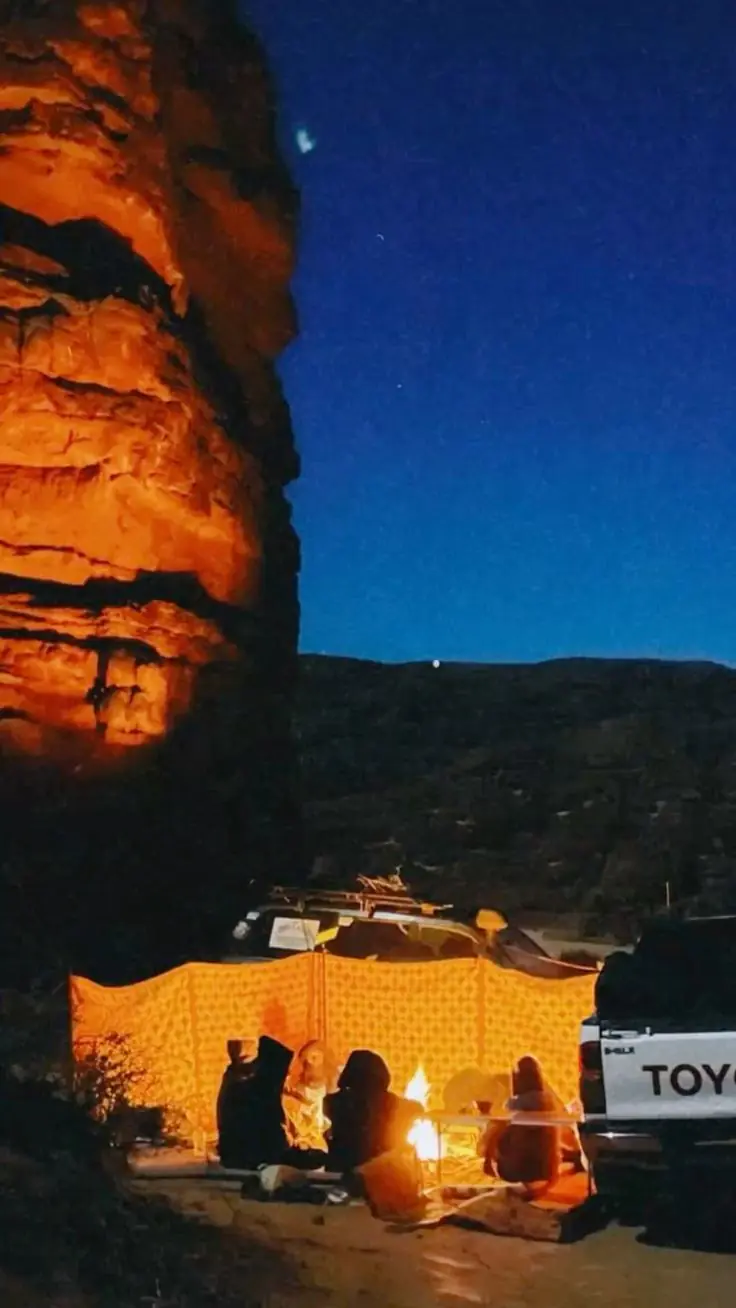
Some New Year’s Eves are forgotten by the next morning. And then there’s this one. No car horns, no screens, no fireworks. A campfire at the foot of a thousand-year-old natural arch, a lamb slow-cooked in the embers, Touareg guides playing traditional music, and a sky so heavy with stars you no longer know where to look. That is New Year’s Eve in Djanet.
Table of Contents
Djanet in December: the desert at its finest
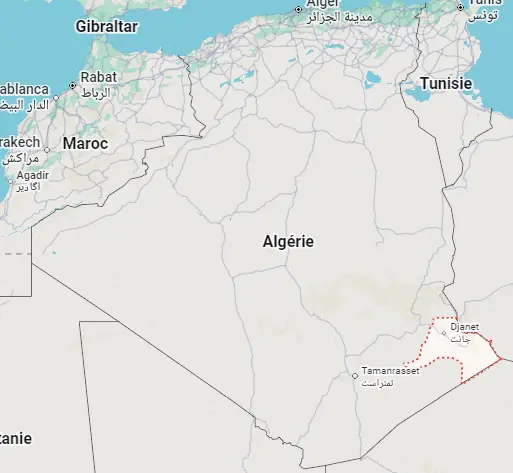
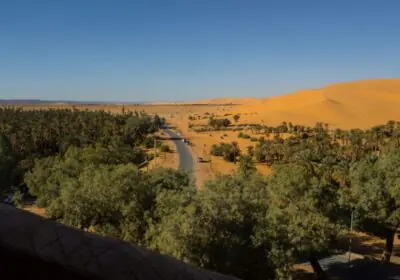
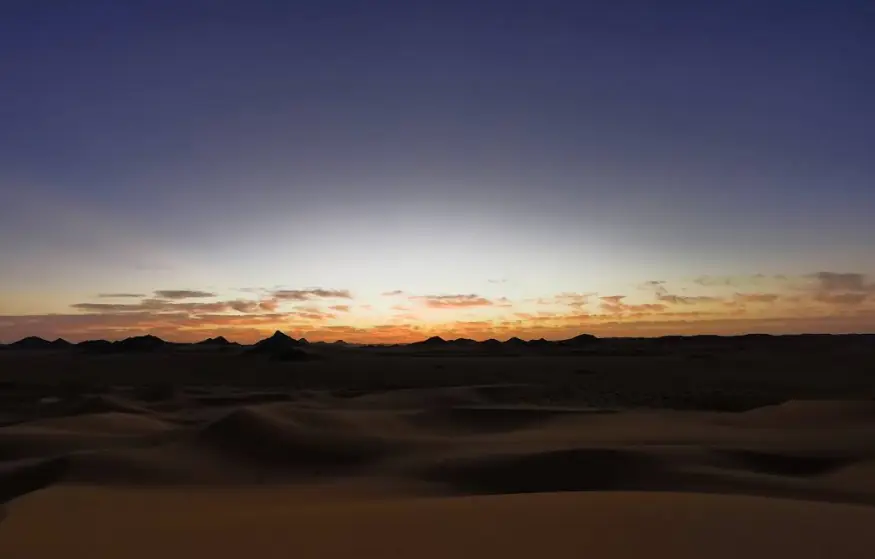
2,300 km from Algiers, in the far south-east of the Sahara, Djanet enjoys its finest season in December: mild days (18–28 °C), cool and crystal-clear nights, and a sky untouched by light pollution. The Milky Way stretches from one horizon to the other. Travellers come home with the same words: “I had never seen so many stars in my life.” December’s light is also what shows the Tadrart Rouge at its most beautiful — low and warm, it sets the dunes ablaze in a red that deepens to burgundy before the black sky takes over.
The Tadrart Rouge: a New Year’s backdrop beyond anything you imagined
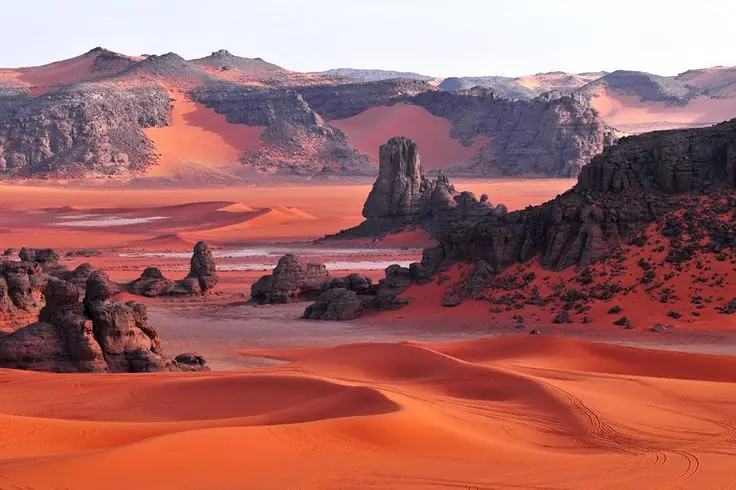
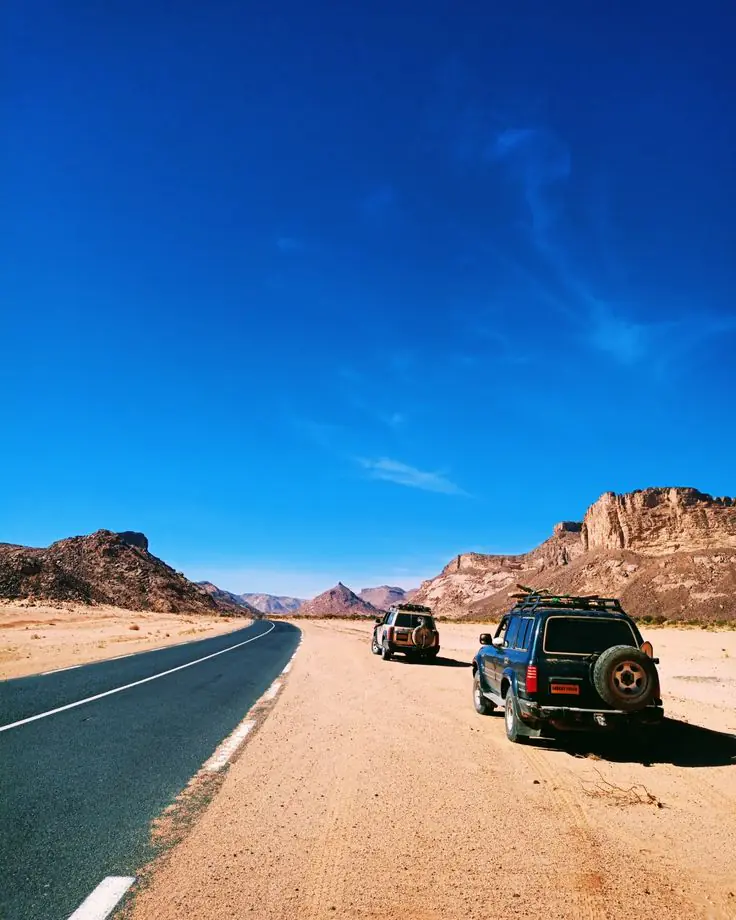
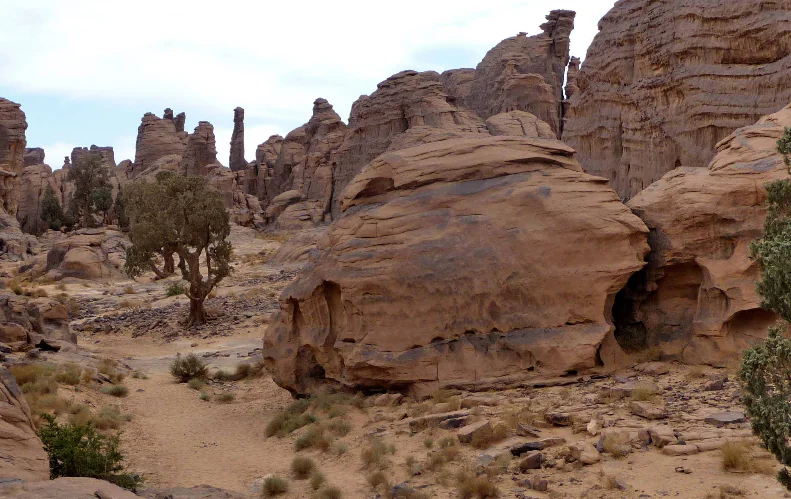
A sandstone massif of the Tassili n’Ajjer, listed by UNESCO, the Tadrart Rouge owes its colour to the iron oxide in its rock. This is no desert of uniform dunes: it is a labyrinth of dizzying canyons, colossal natural arches — including the famous Tamezguida arch, nicknamed “the cathedral” by Touareg guides — and rock engravings 7,000 to 10,000 years old. Reachable only by 4×4 with a licensed guide, far from mass tourism, here you walk in a silence broken only by the wind.
New Year’s Eve night: an experience found nowhere else
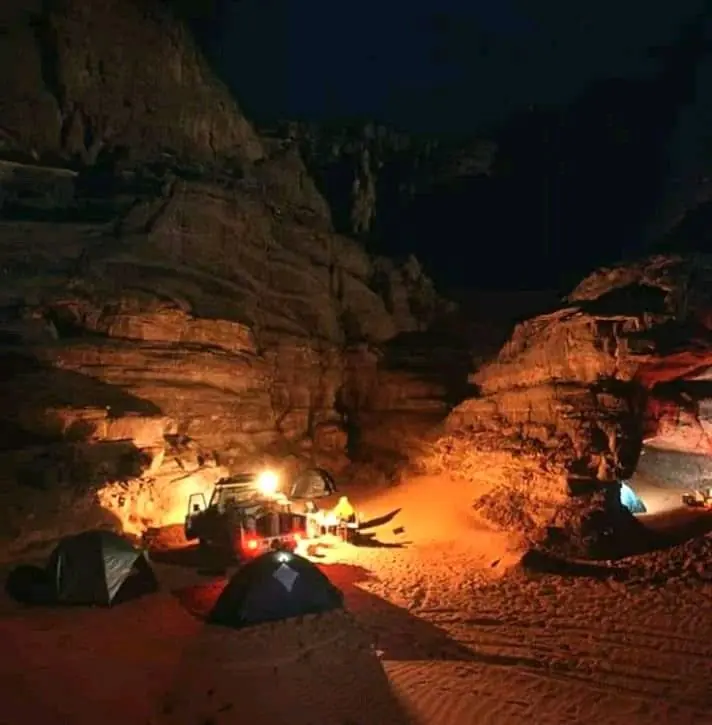
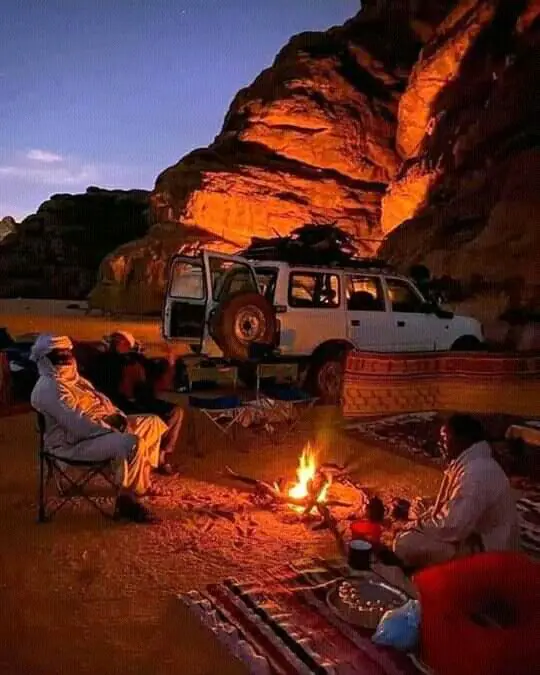
New Year’s Eve in the desert is something else entirely.
The camp is set up at the foot of a natural arch. The fire is lit. A whole lamb cooks slowly in the embers — the desert méchoui, prepared the old way. Dates, flatbread baked in the hot sand, tea poured three times in keeping with Touareg tradition. And when the meal begins, the guides bring out their instruments — the tinde, the imzad — and the music rises into the cold Saharan night. A music thousands of years old, born in these very sands.
Midnight arrives with no countdown, no notification. You look up and the stars are all there, every single one. No signal. No screen. Just the voice of the desert, the fire, and the people you walked beside in the days before.
That is the promise of this New Year’s Eve: a complete disconnection, in the most beautiful sense of the word. A night you don’t share with the whole world online, but keep for yourself — and that stays with you for a long time.
What you experience beyond New Year’s Eve
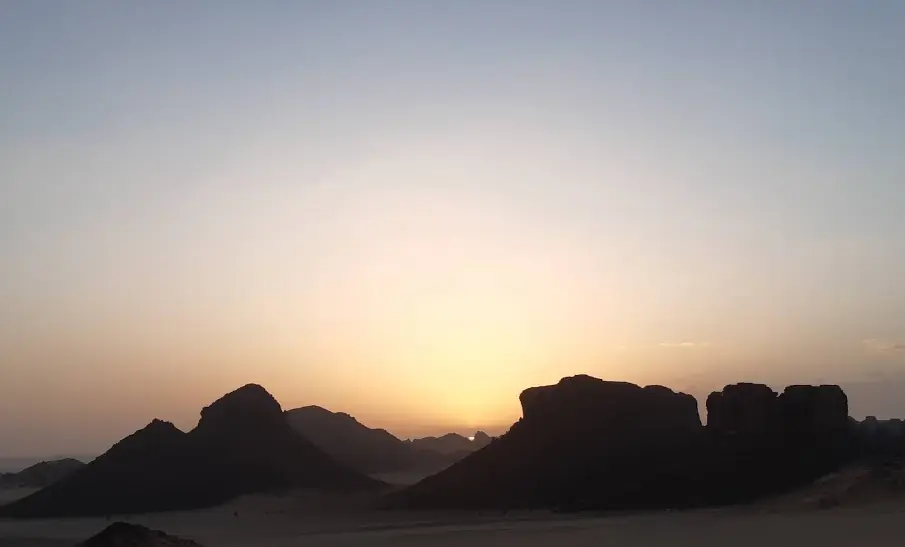
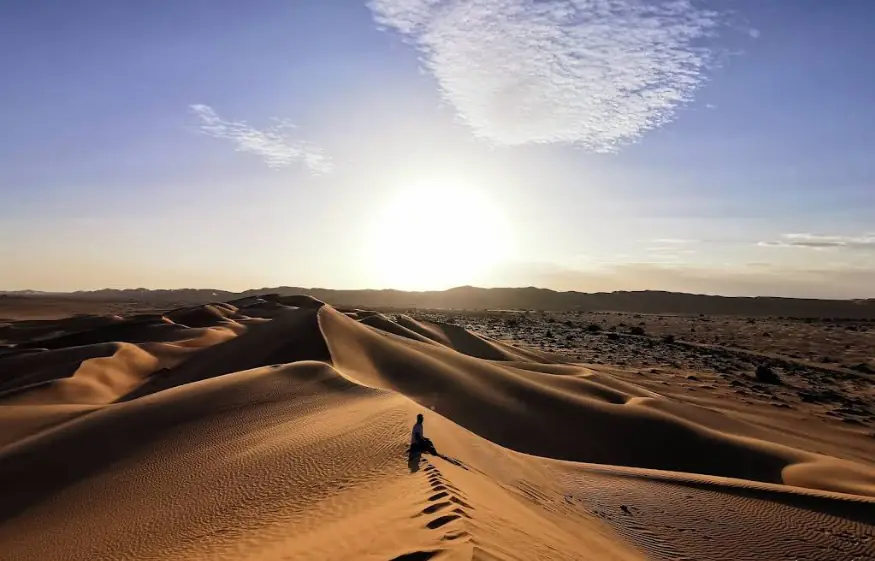
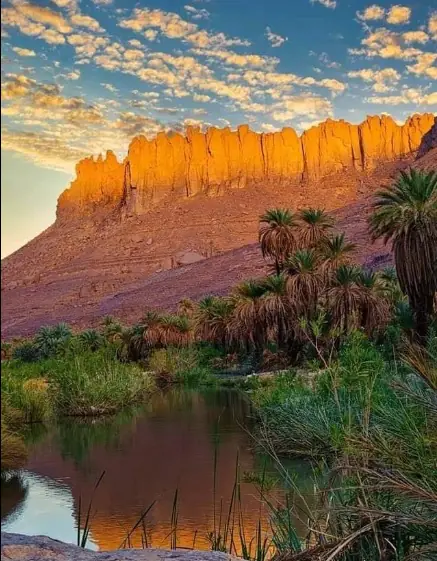
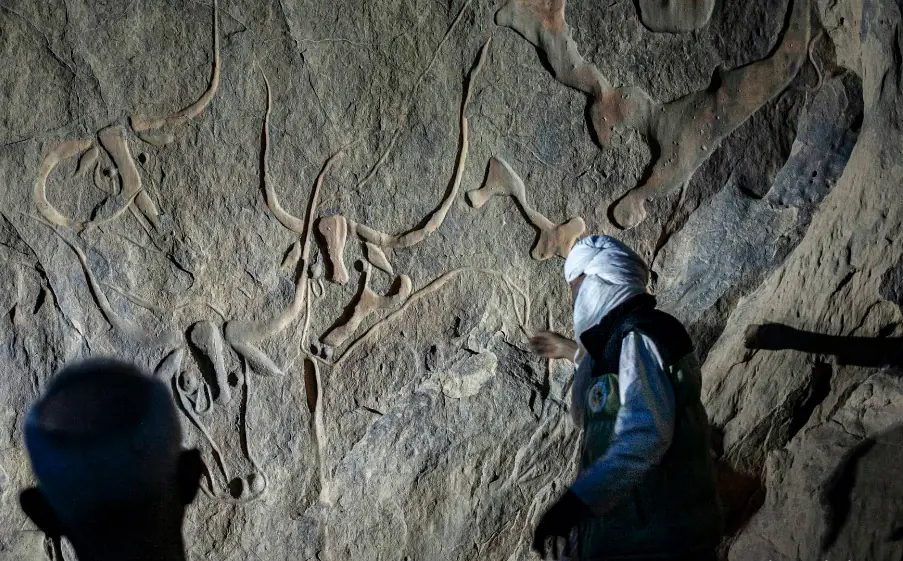
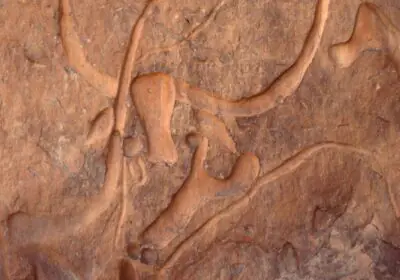
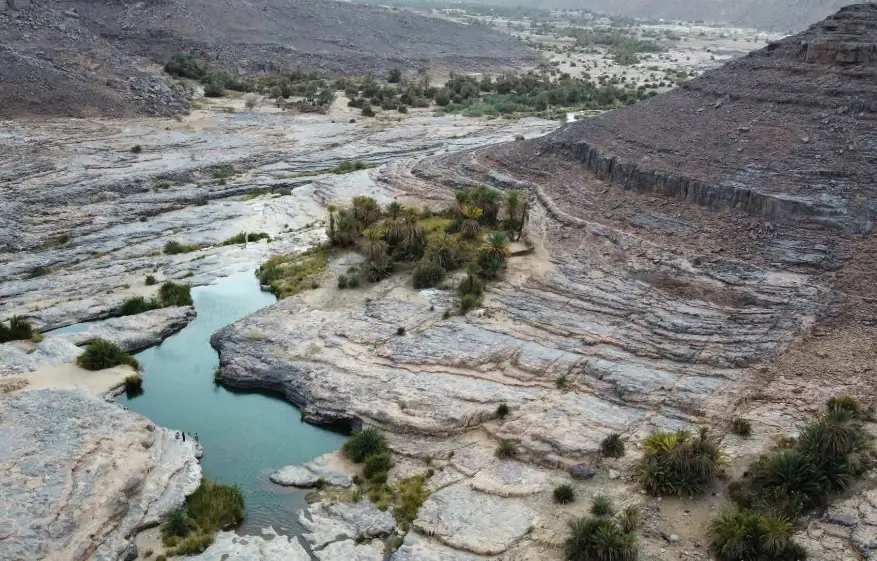
The circuit is far more than the night of the 31st. The days around it are just as intense: a trek through the Issendilène canyon to its legendary guelta, sunset over the dunes of the Erg Admer, a night in traditional huts at the Iherir oasis, the discovery of the “Crying Cows” rock engraving at Tigharghart — a Neolithic masterpiece over 7,000 years old — and a visit to Djanet’s craft market before the journey home.
Seven days in one of the most unspoilt places on earth, led by Touareg guides who have known every dune and every engraving since childhood.
Key information before you book
| Dates | 27 December 2026 → 2 January 2027 |
| Price | From €780 per person |
| Visa | On arrival in Djanet — the agency handles all formalities |
| Network | None on the circuit — let your family know beforehand |
| Night temperature | 5–10 °C — warm clothing essential |
| Places | Limited — fixed small-group departure |
The full circuit — day-by-day programme, inclusions, packing list and visa procedure — is available on the booking page.
→ See the full programme and book the Djanet New Year 2027 circuit
For any questions, contact our team. Want to extend the adventure? Discover our Tadrart Rouge circuit — 6 days or our complete guide to the Algerian Sahara.
FAQ
Do you need to be fit for this circuit?
The treks are of moderate length — around 2 hours — over sandy and rocky terrain. Good general fitness is enough. No mountaineering, no technical skills required.
Is it really cold at night in Djanet in December?
Yes. Nights drop to between 5 and 10 °C, sometimes lower in the massifs. The bivouac kit is provided. Bring a proper jacket, base layers and a hat — especially for New Year’s Eve, which is celebrated in the open air.
Is there any network on the circuit?
No. Once you leave Djanet, there is no phone or internet signal for the entire circuit. It is one of the conditions of the experience — and one of its greatest strengths.
How does the visa on arrival work?
The agency handles all formalities as soon as you book. You receive a travel permit within about 15 days, with no consular procedures. The visa is paid on arrival at Djanet airport (€96 or 14,000 DA).