



Last updated: 2026. Opening hours and prices are indicative and subject to change — please verify before your visit.
Among Algeria’s Roman ruins, two sites stand apart as among the most remarkable in the entire Mediterranean world: Timgad, the colonial city nicknamed the “Pompeii of North Africa”, and Djemila, the ancient Cuicul perched in the mountains of Petite Kabylie. Both inscribed on the UNESCO World Heritage List since 1982, they together offer an unparalleled panorama of Roman urban genius in North Africa. This complete guide will help you plan your visit.
Table of Contents
Why Visit Algeria’s Roman Ruins?
Algeria is one of the best-endowed countries in the Mediterranean basin for Roman archaeological sites — and yet one of the least visited. That is precisely the advantage: Timgad and Djemila can be explored without crowds, in a silence rare for sites of this importance. You walk through ancient cities spanning several dozen hectares — forum, theatre, baths, library, triumphal arch — with no companion but millennia-old stones and, occasionally, a local guide who knows every column.
These two cities also illustrate two complementary aspects of Roman urbanism: the geometric rigour of the grid plan at Timgad, and the adaptation to mountainous terrain at Djemila. Two ways of being Roman, two landscapes, one shared ambition of civilisation.
Timgad, Algeria: The Best-Preserved Roman Colony in the World
What Is Timgad?
Timgad (or Thamugadi), nicknamed the “Pompeii of North Africa”, is an ancient city founded in 100 AD by Emperor Trajan on the northern slopes of the Aurès massif, in the present-day wilaya of Batna. Its full name is Colonia Marciana Traiana Thamugadi: Marciana is the name of Trajan’s sister, Thamugadi the Berber name for the site.
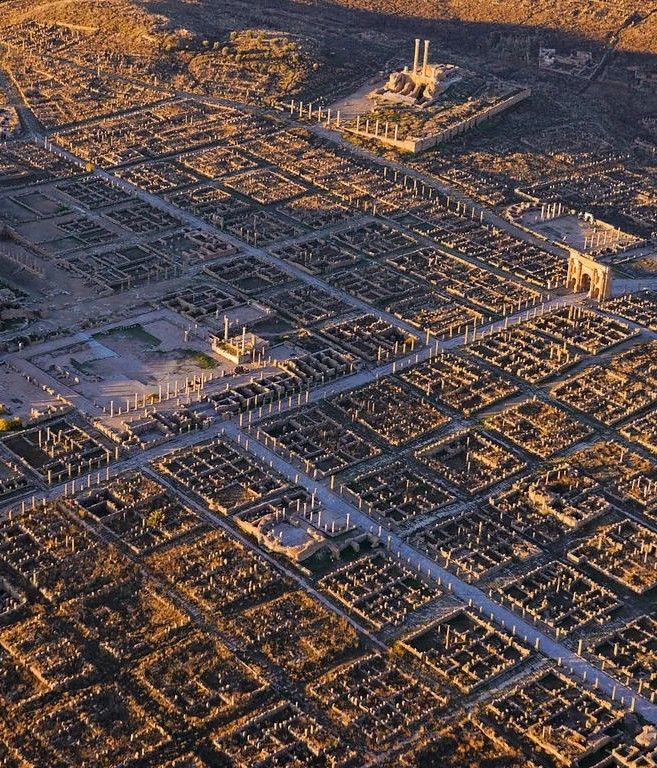
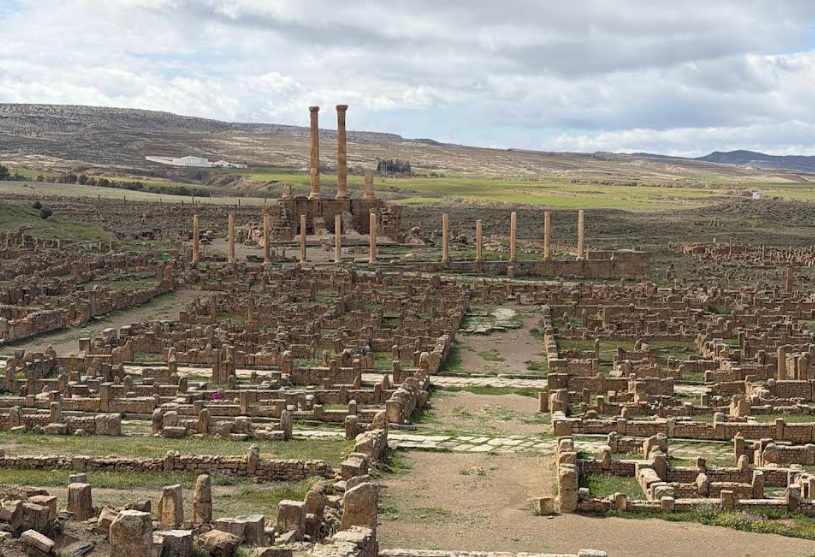
Created ex nihilo — literally from nothing — as a military colony for veterans of the Third Augustan Legion, the city still presents today an orthogonal plan of startling clarity, commanded by the cardo maximus (north-south axis) and the decumanus maximus (east-west axis). This perfect grid, drawn up by Roman engineers, makes Timgad one of the most complete and best-preserved examples of Roman urban planning in the world.
Initially covering 12 hectares, the city gradually expanded to over 90 hectares at its height under the Severan dynasty (late 2nd – early 3rd century), when it housed around 15,000 inhabitants. It was inscribed on the UNESCO list in 1982 (criteria ii, iii, iv).
What to See at Timgad
The Forum
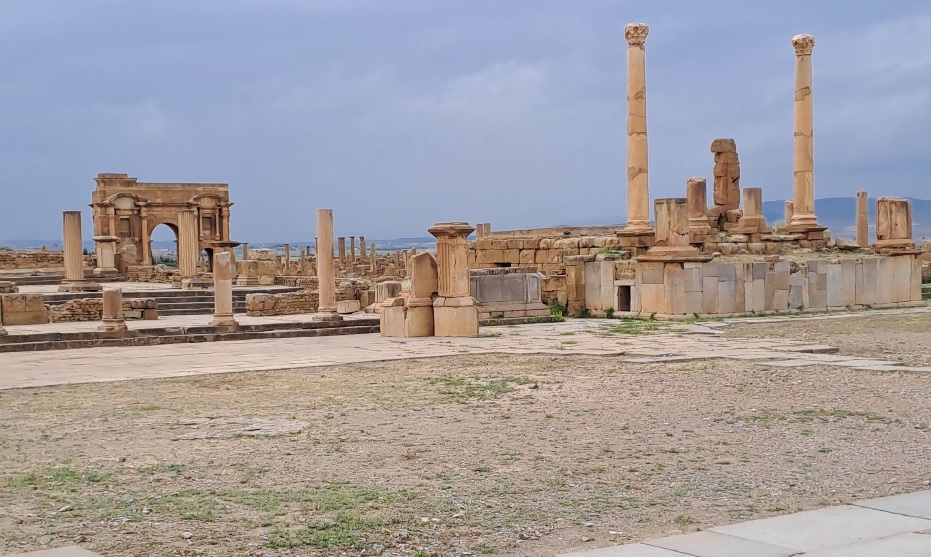
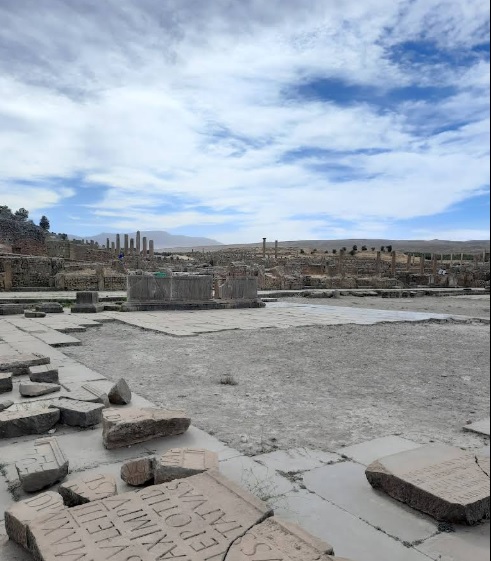
The central hub of all civic life, Timgad’s forum is a vast paved square measuring 50 × 43 metres, surrounded by Corinthian-columned porticoes. It once housed the curia (local senate), a civil basilica and a temple. On one step of the forum, an engraved inscription neatly summarises its inhabitants’ philosophy: Venari, lavari, ludere, ridere, occ est vivere — “To hunt, to bathe, to play, to laugh — that is living!”
The Theatre
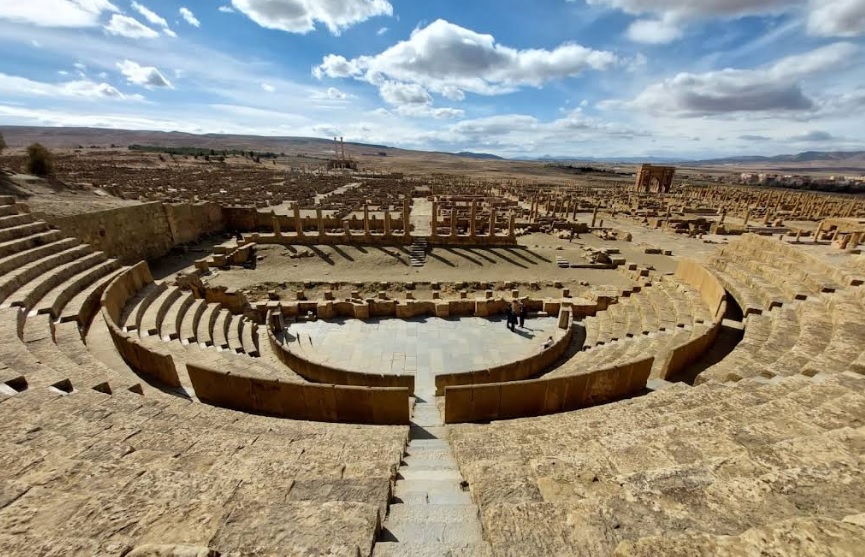
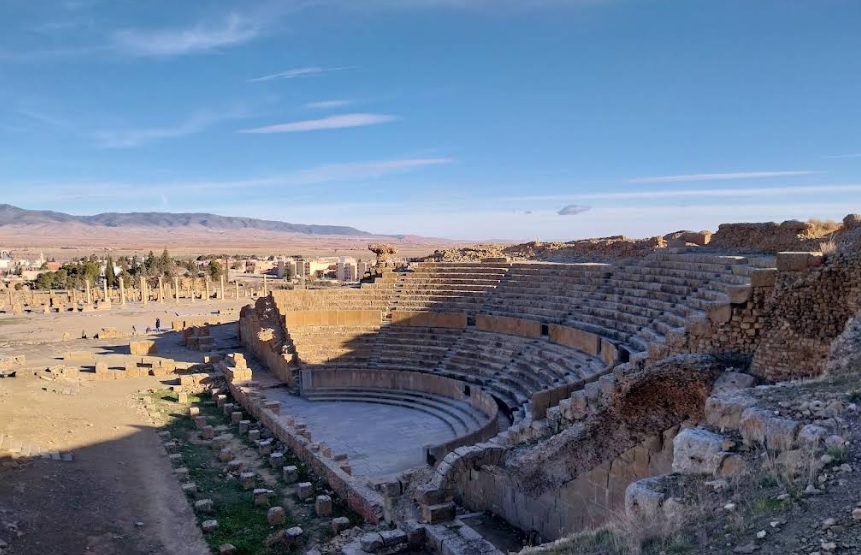
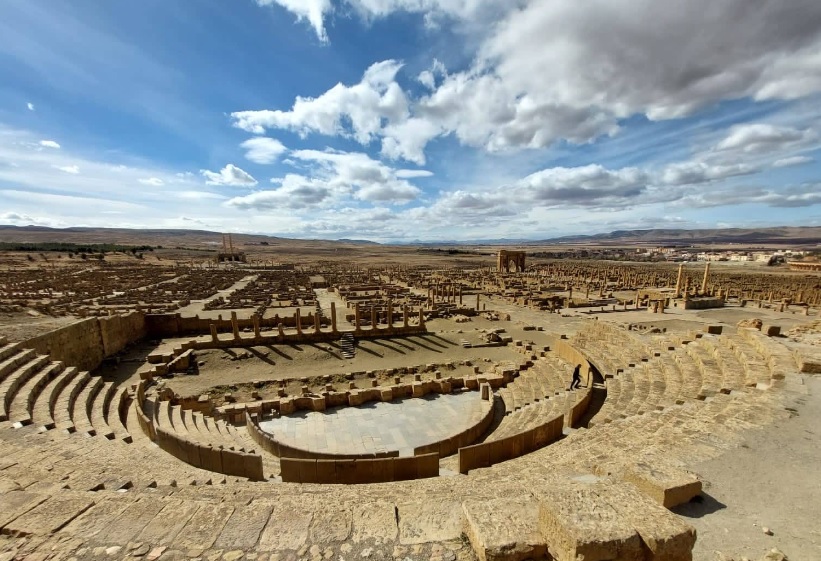
Carved into a hillside south of the forum, Timgad’s theatre was built around 160 AD and could seat 3,500 spectators across 24 tiers of seats. It is still used for performances today.
The Arch of Trajan
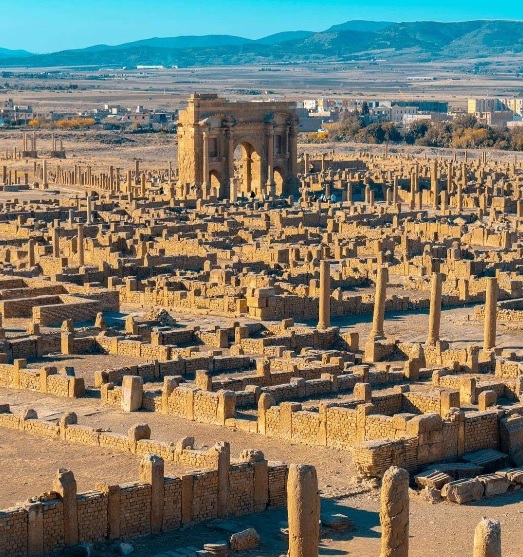
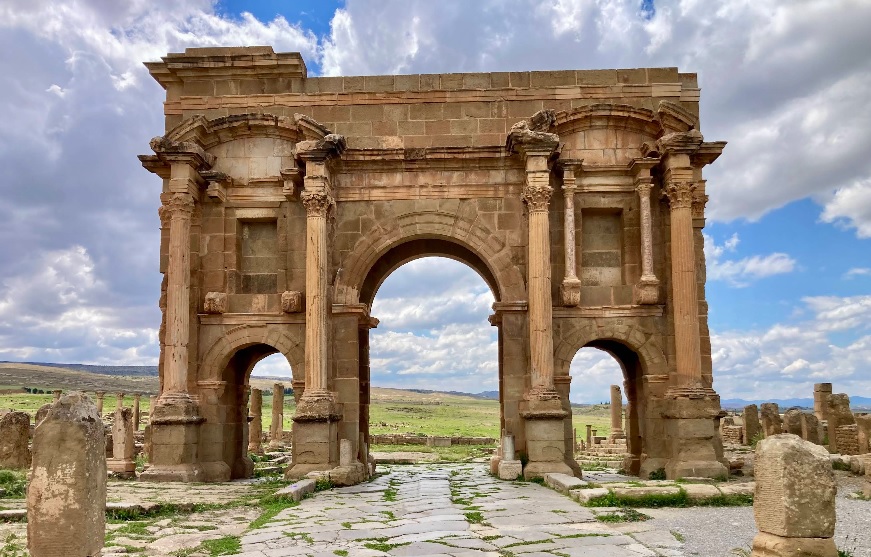
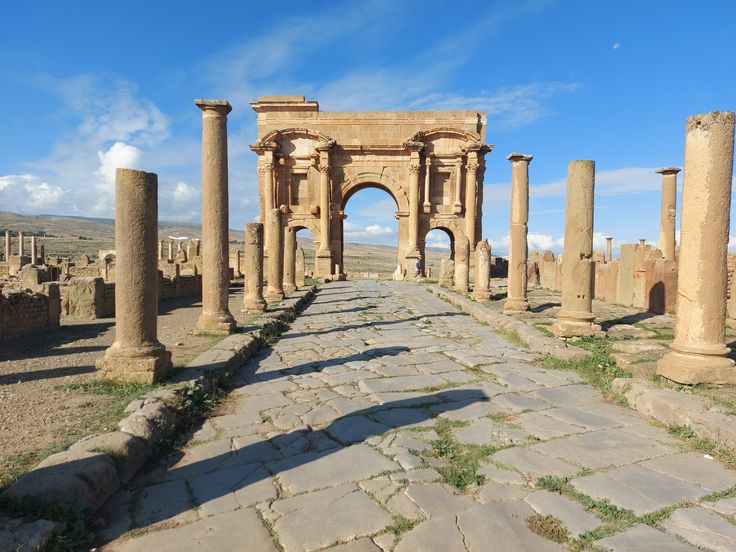
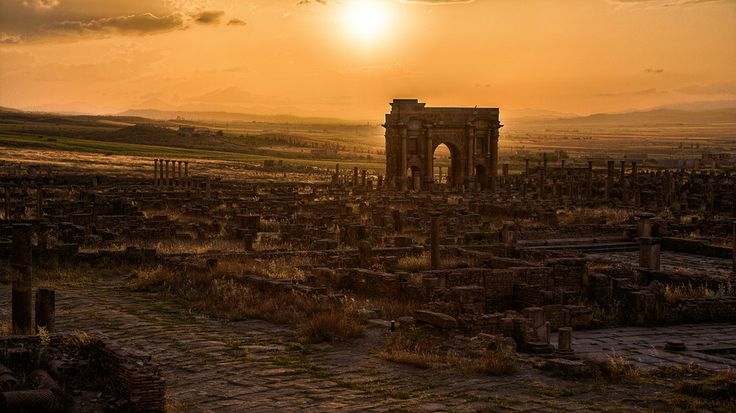
The best-preserved monument on the site. Erected in the late 2nd century, this triple-bayed triumphal arch marks the city’s western exit towards Lambaesis. It is Timgad’s iconic photographic symbol.
The Library
One of only two public libraries from Roman antiquity ever found anywhere in the world, alongside that at Ephesus (Turkey). Reached by a five-step staircase, it was arranged around a porticoed courtyard whose walls were faced with blue and green marble. A white-marble-columned niche once housed a statue of Minerva.
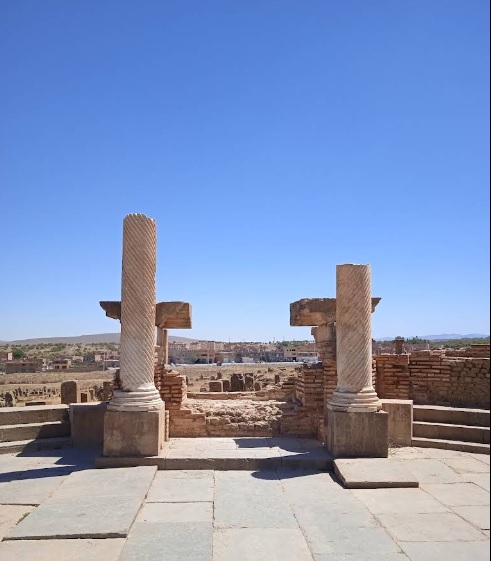
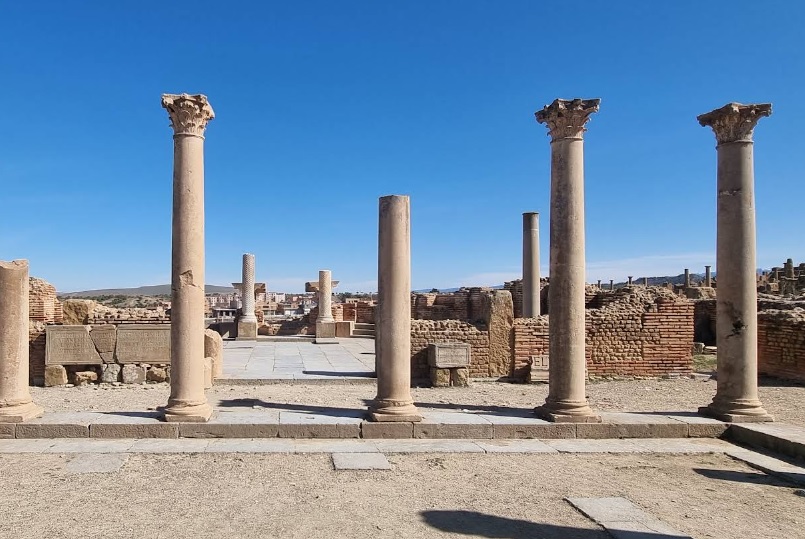
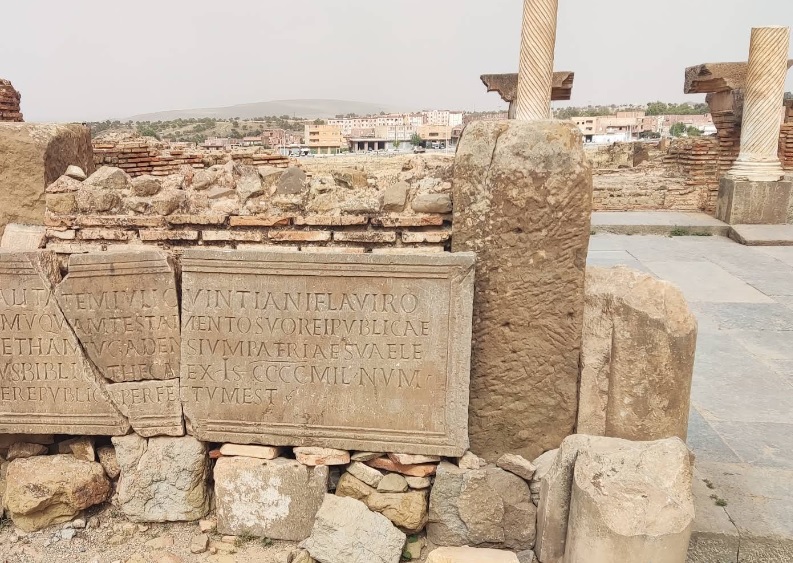
The Capitol
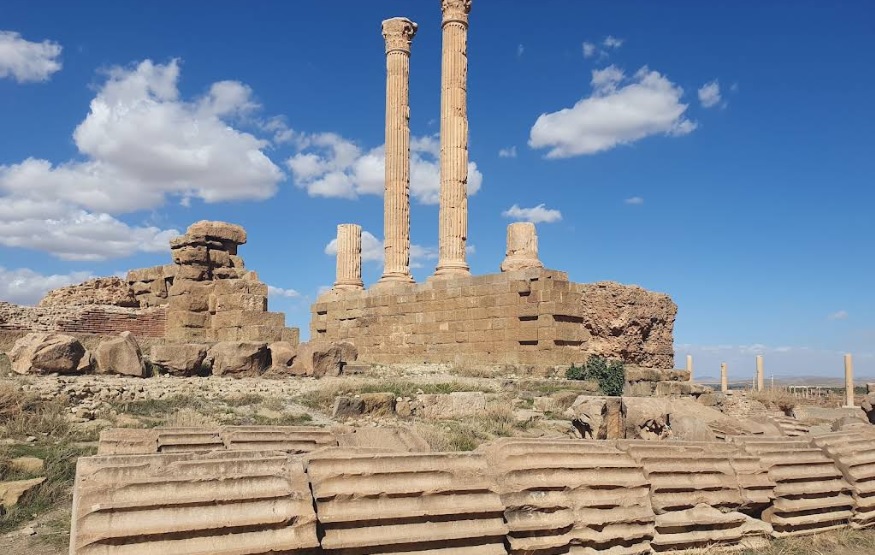
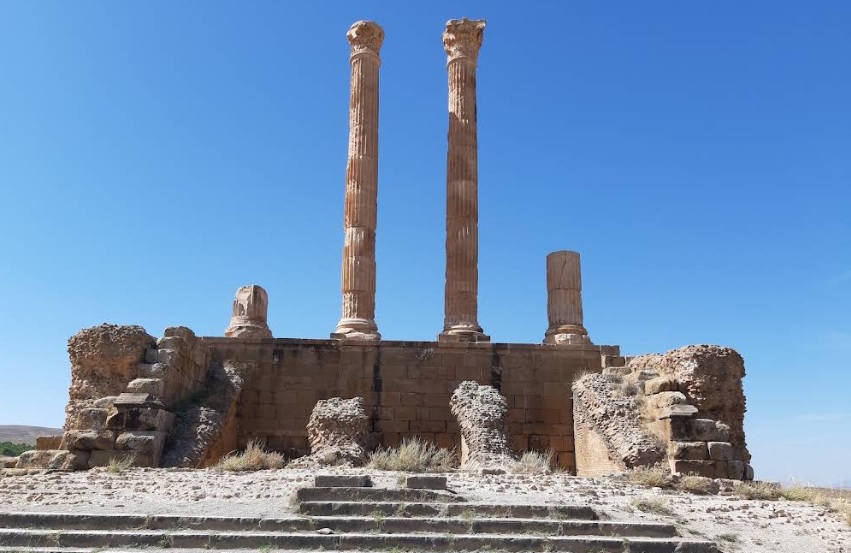
The largest monument at Timgad, recognisable by its two majestic columns, located in the western suburbs. Its temple stood on a platform reached by a 38-step staircase, with a facade of 12 Corinthian-capital columns.
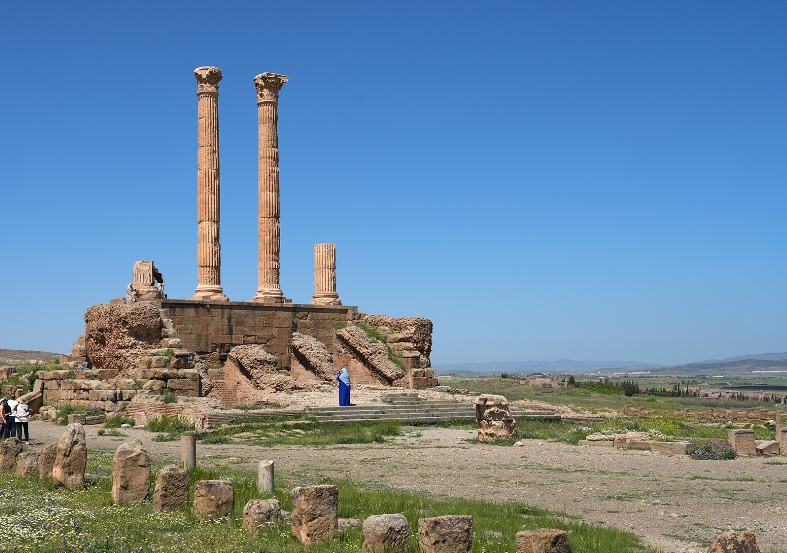
The Baths
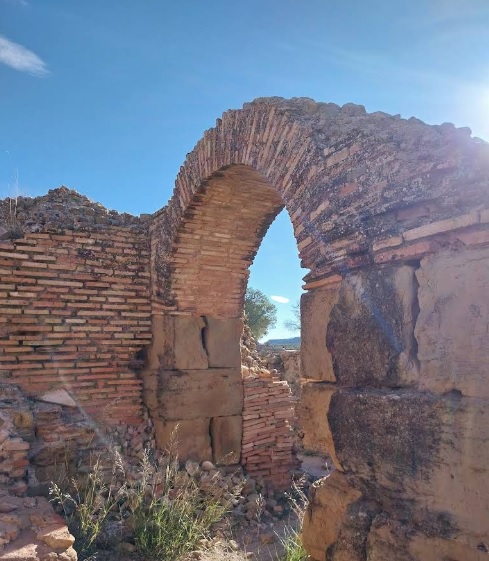
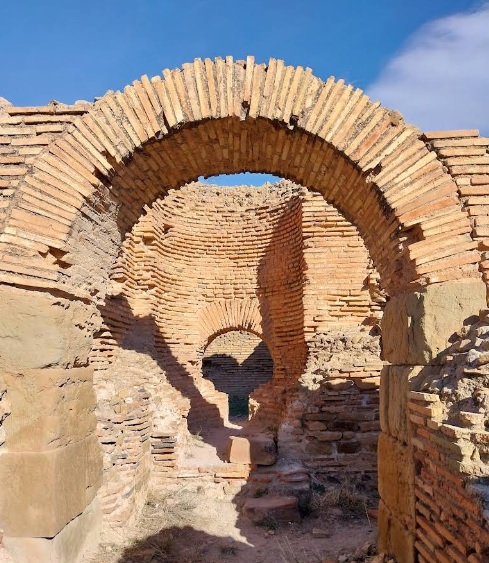
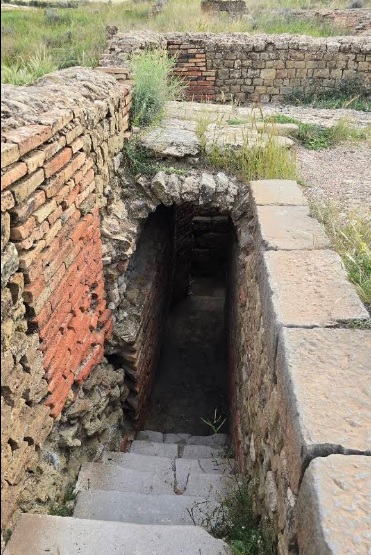
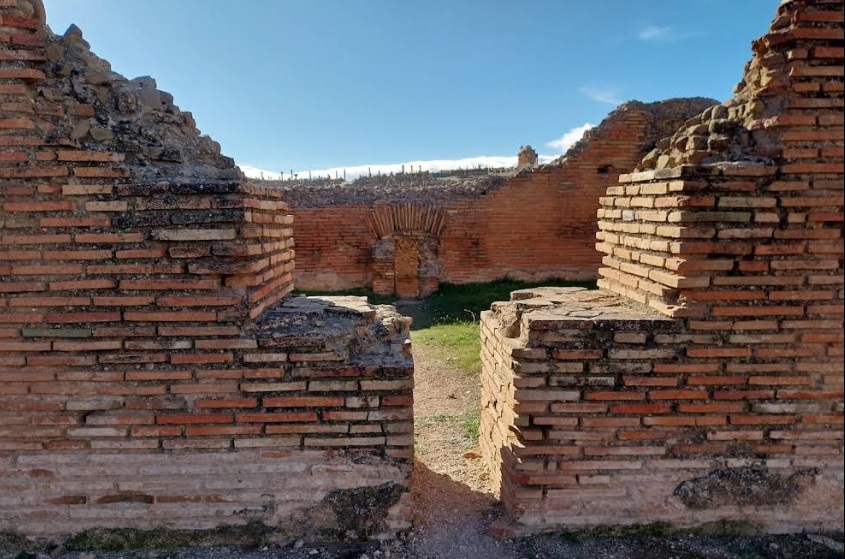
Timgad had no fewer than 14 public bath-houses — an exceptional number for a city of its size, reflecting the central role of bathing in Roman social life.
The Cardo Maximus
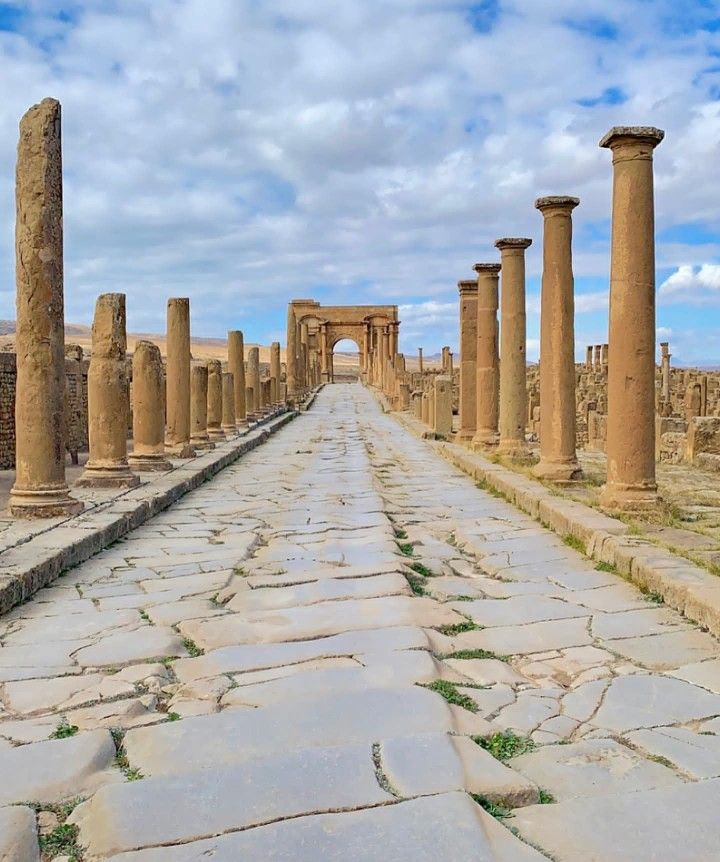
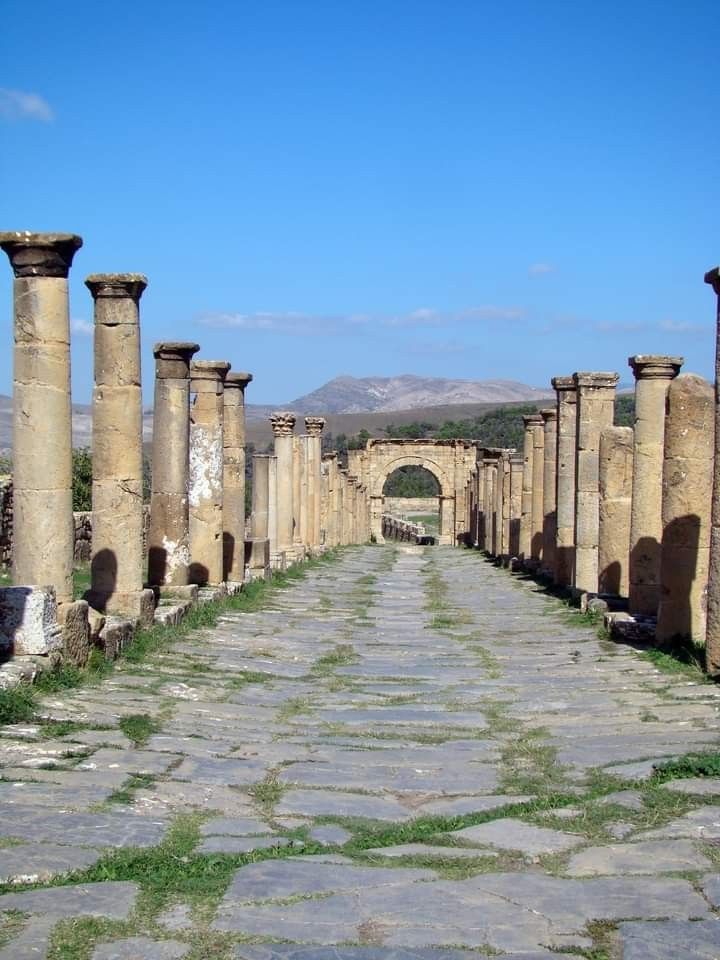
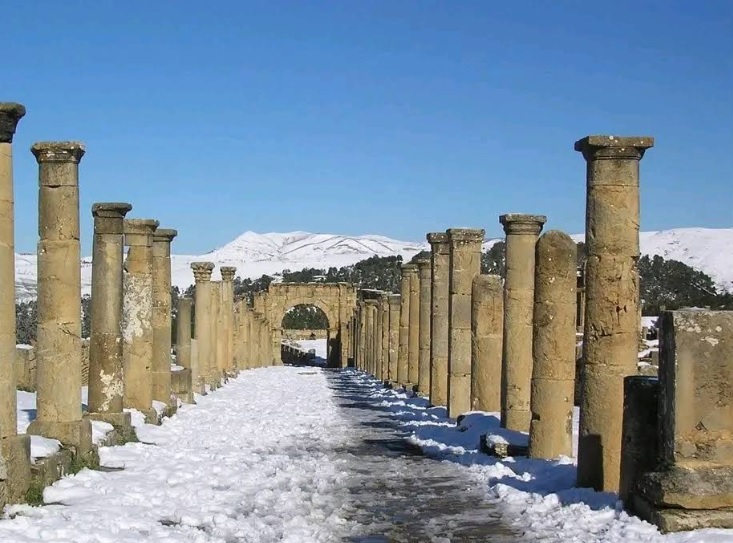
A great avenue paved in blue limestone slabs, lined with colonnaded porticoes sheltering passers-by from sun and rain. The ruts carved by four centuries of cart traffic are still visible today.
The Timgad Museum
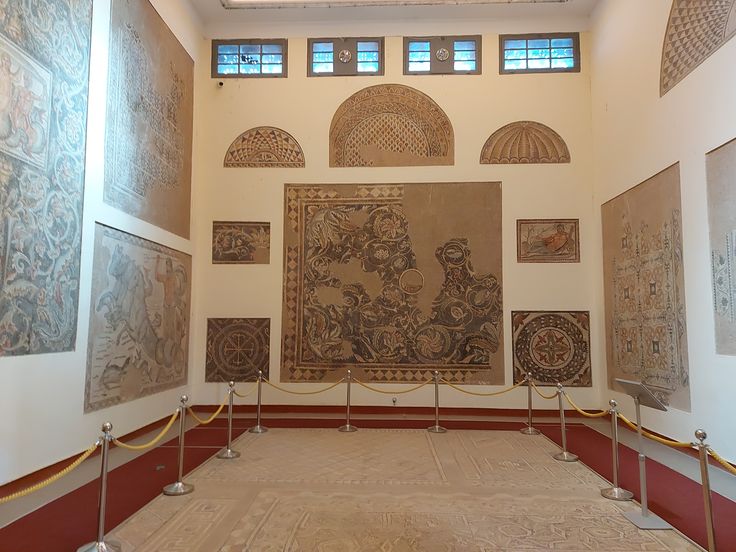
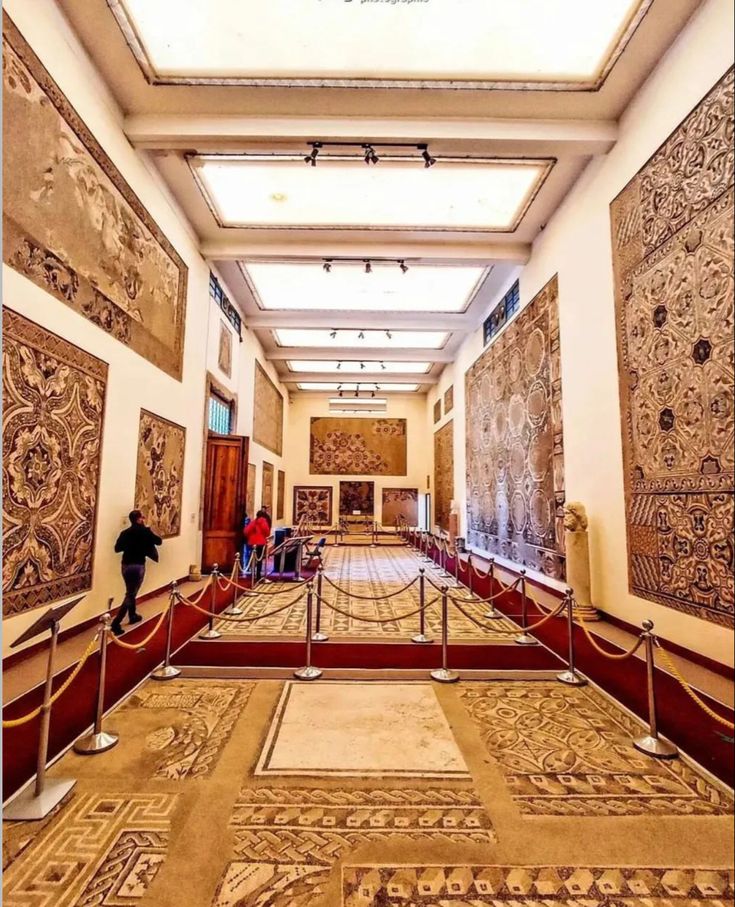
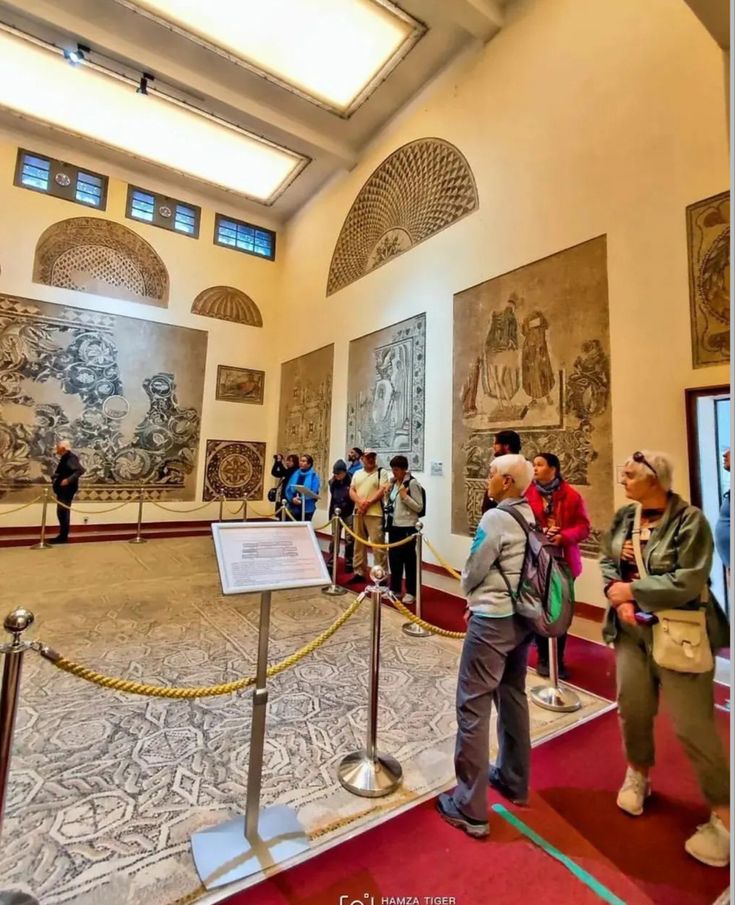
Built in 1930 at the entrance to the site, it houses one of the finest collections of Roman mosaics in Algeria, featuring geometric, floral and mythological designs produced in local workshops at the beginning of the 3rd century. Byzantine mosaics dated between the 4th and 6th centuries round out the collection.
Practical Information — Timgad
- Address: Commune of Timgad, wilaya of Batna
- Distance: ~480 km south-east of Algiers, ~120 km south of Constantine
- Access: By car from Constantine (approx. 1h45) or Batna (~20 km)
- Opening hours: Wed–Sun 9 am–5 pm (closed Tuesdays) — verify before visiting
- Entry fee: Modest (~200 DZD)
- Recommended duration: 3 to 4 hours for the site and museum
- Altitude: 1,040–1,080 metres
- Guide: Recommended for a first visit — available on site
- What to bring: Water, hat, good shoes (paved and uneven ground)
- Tip: Avoid July–August (extreme heat, potentially exceeding 40 °C); spring and autumn are far more pleasant
Djemila, Algeria: The Mountain Roman City
What Is Djemila?
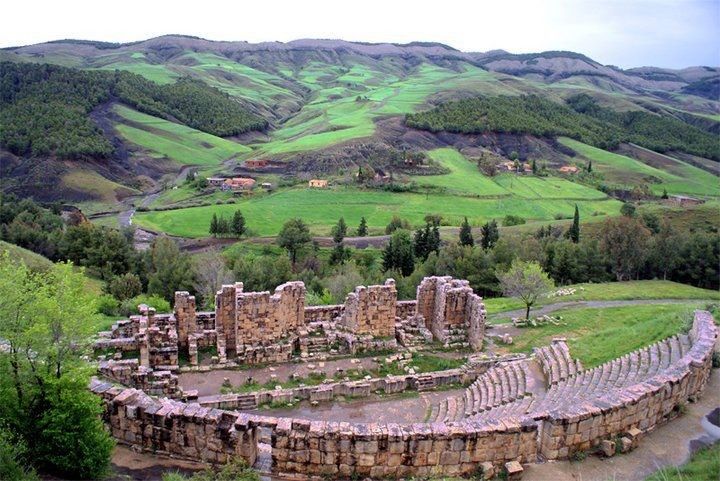
Djemila — its Arabic name means “the beautiful” — is the ancient Roman city of Cuicul, perched at 900 metres above sea level in the mountains of Petite Kabylie, approximately 50 km north-east of Sétif in the wilaya of the same name. Founded at the end of the 1st century AD, probably under the reign of Nerva or Trajan, the Roman colony was strategically placed on a rocky spur ringed by ravines — a naturally defensive and near-impregnable site.
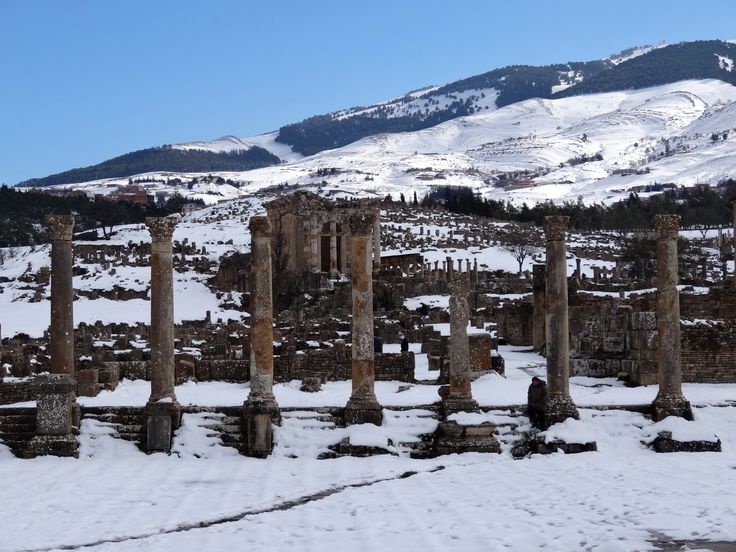
What makes Djemila utterly unique in the Roman world is the remarkable way its urban plan adapts to a turbulent mountain relief. Unlike Timgad’s perfect grid, Djemila takes on an approximately triangular form that follows the contours of the ridge, with gently sloping streets and public spaces cleverly arranged in successive terraces. UNESCO describes it as “a remarkable example of Roman urban planning adapted to a mountainous site”. It was inscribed on the World Heritage List in 1982 (criteria iii, iv).
What to See at Djemila
The Roman Forum and the Old Forum
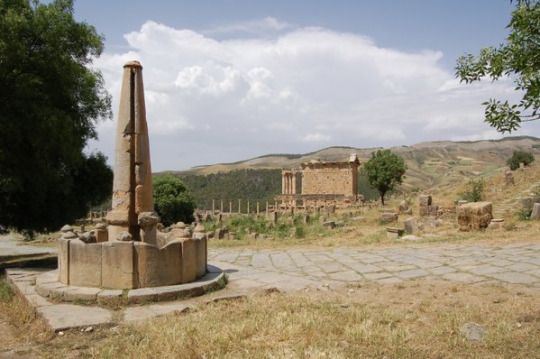
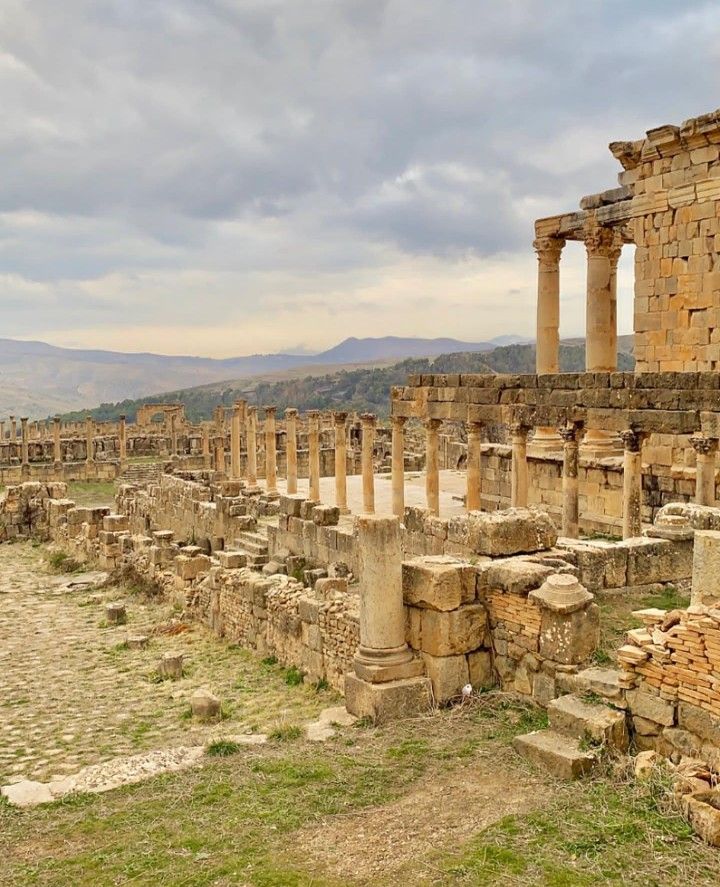
The original city is organised around a first rectangular forum with its cardo and decumanus. As the population grew, a second monumental complex — the Severan Forum — was built further south.
The Temple of the Severan Family
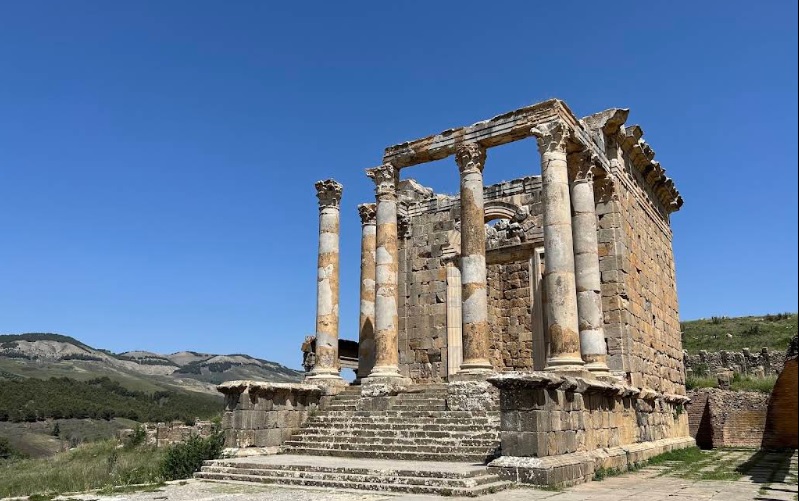
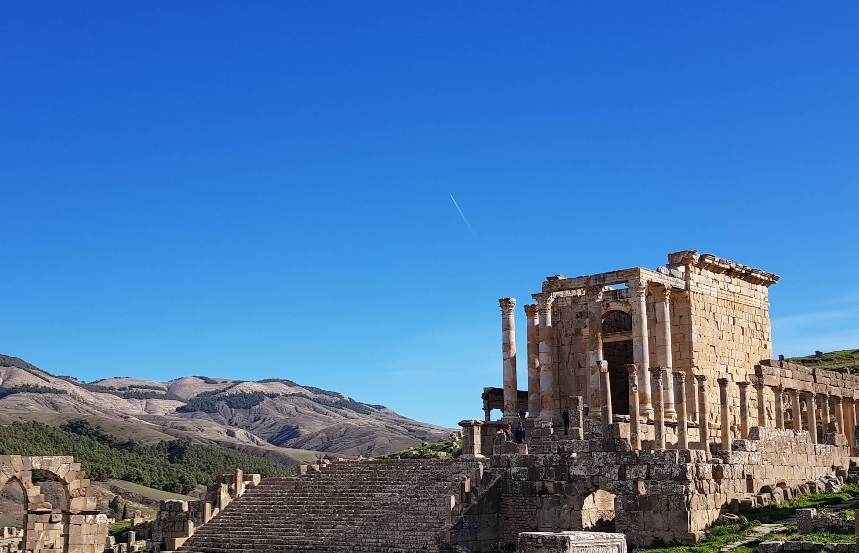
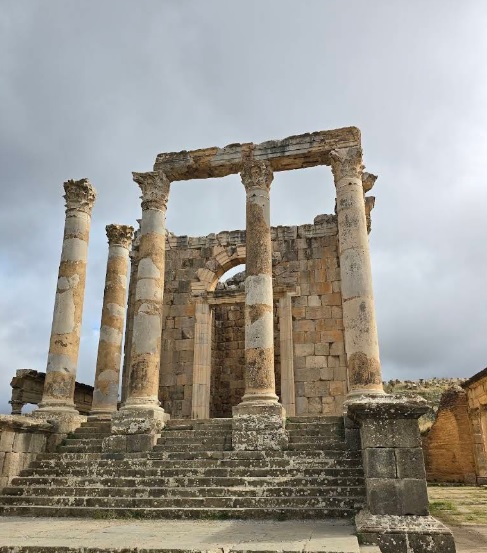
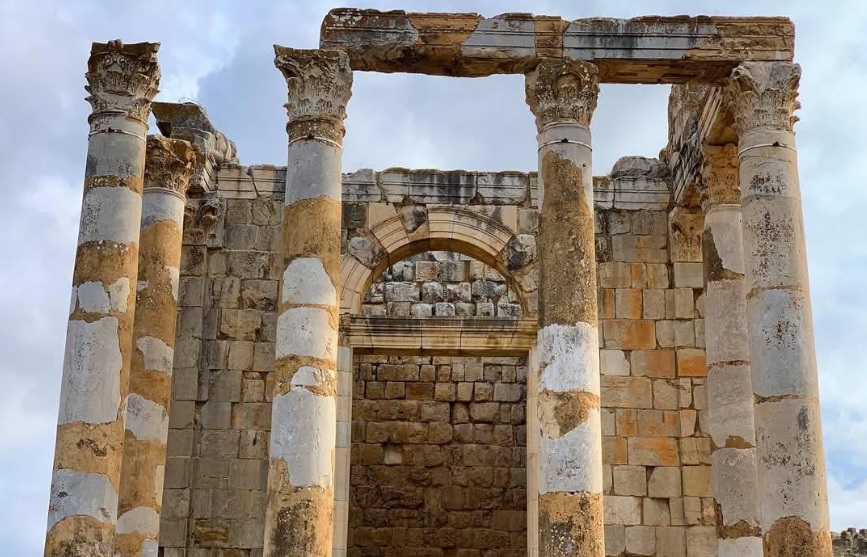
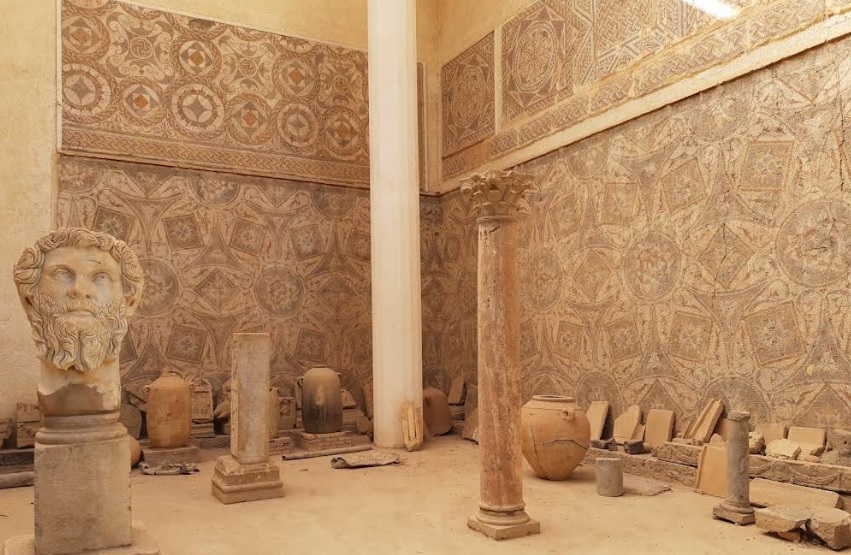
Built around 229 AD, it is the best-preserved temple on the site. A monumental staircase leads to a vast colonnaded platform, then a portico flanked by six columns ten metres high. The colossal heads of imperial statues found during excavations are displayed in the museum.
The Triumphal Arch of Caracalla
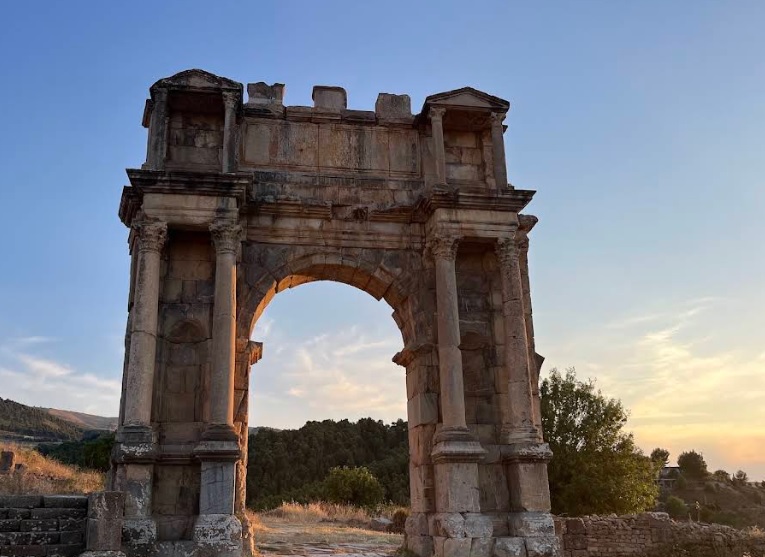
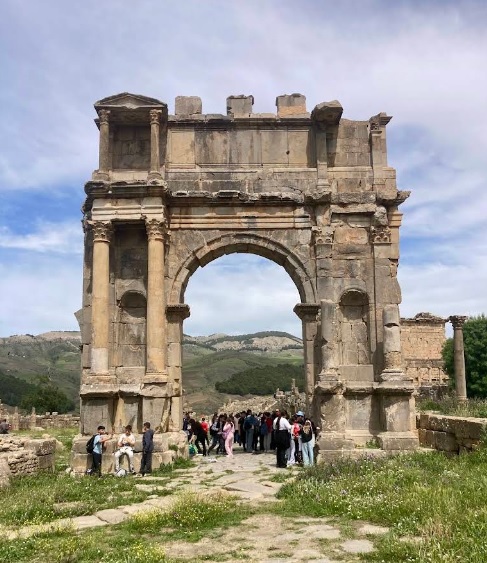
Erected in 216 AD by the municipality of Cuicul in honour of Emperor Caracalla, his mother Julia Domna and his father Septimius Severus, this single-bayed monumental arch measures 12.5 metres high and 11.6 metres wide. It marks the entrance to the Severan Forum from the Sétif road. Its grey limestone has acquired a beautiful golden patina over time. In 1839, the Duc d’Orléans conceived a plan to transfer it to Paris as a companion piece to the Arc de Triomphe du Carrousel — a project fortunately abandoned.
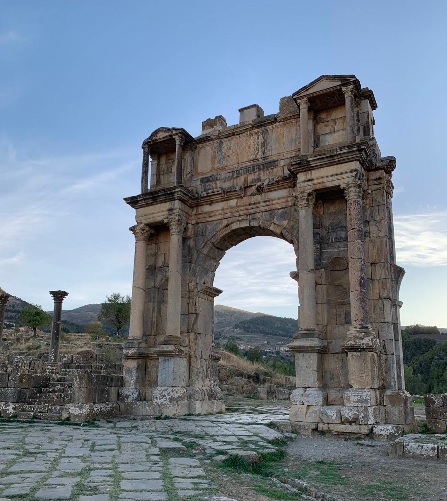
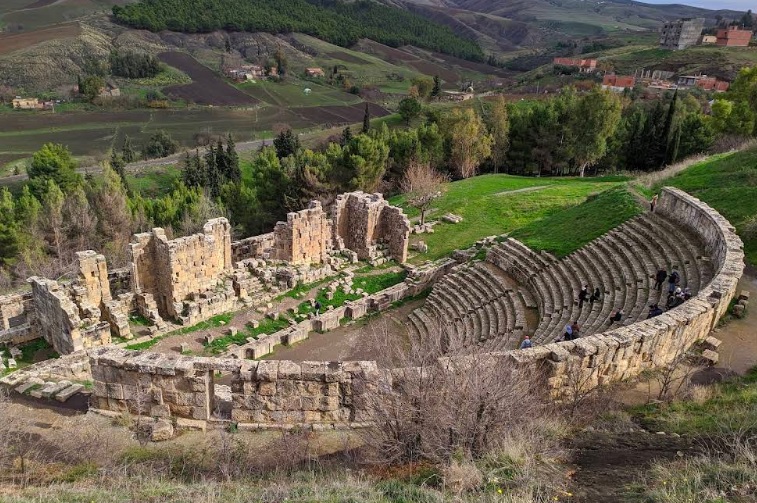
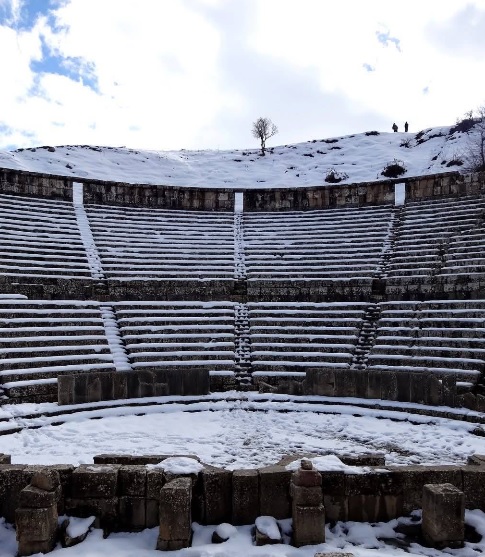
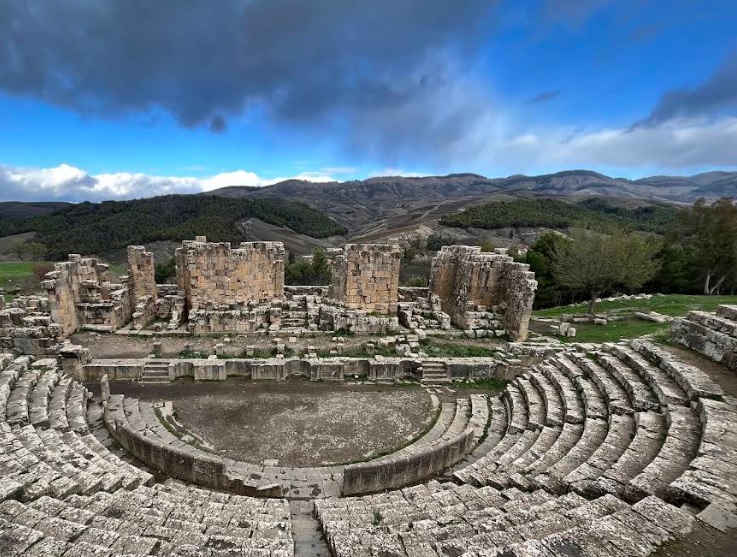
The Theatre
Built against the hillside, Cuicul’s theatre could seat around 3,000 spectators. Partially restored, it retains remarkable acoustics. Its integration into the mountain landscape makes it one of the most beautiful ancient theatres in Africa.
The Baths of Caracalla
The city’s large public baths, with their perfectly identifiable hot and cold rooms, illustrate the importance of bathing in Cuicul’s social life.
The Christian Quarter
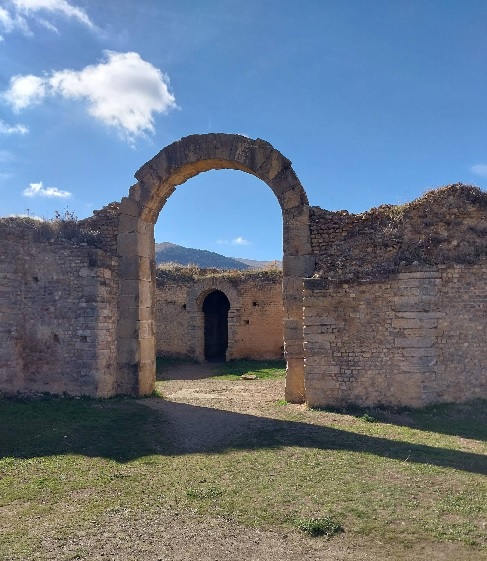
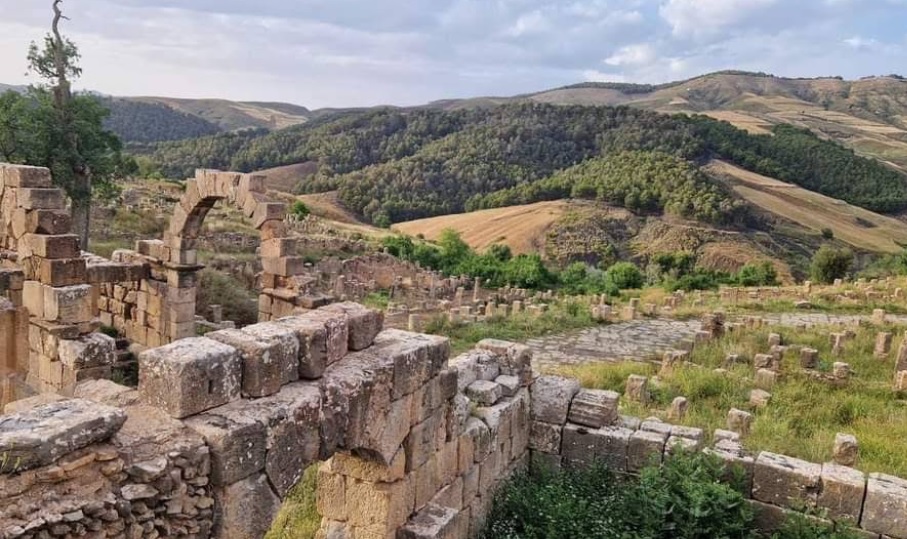
In the 4th century, the conversion to Christianity led to the construction of an episcopal quarter in the south of the city: a great basilica, a cathedral, and above all an octagonal domed baptistery whose ambulatory is hollowed with 36 niches. Considered among the most remarkable of the early Christian era, this baptistery is one of the jewels of the site.
The Djemila Museum
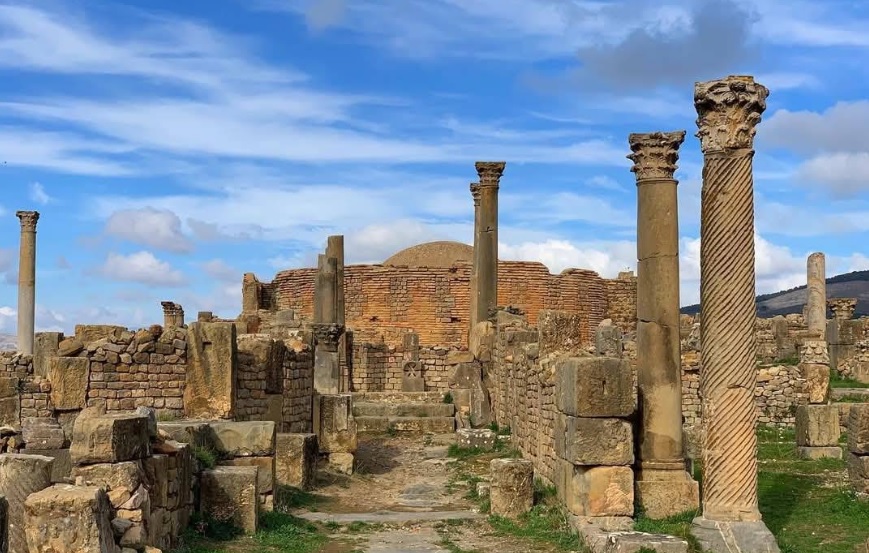
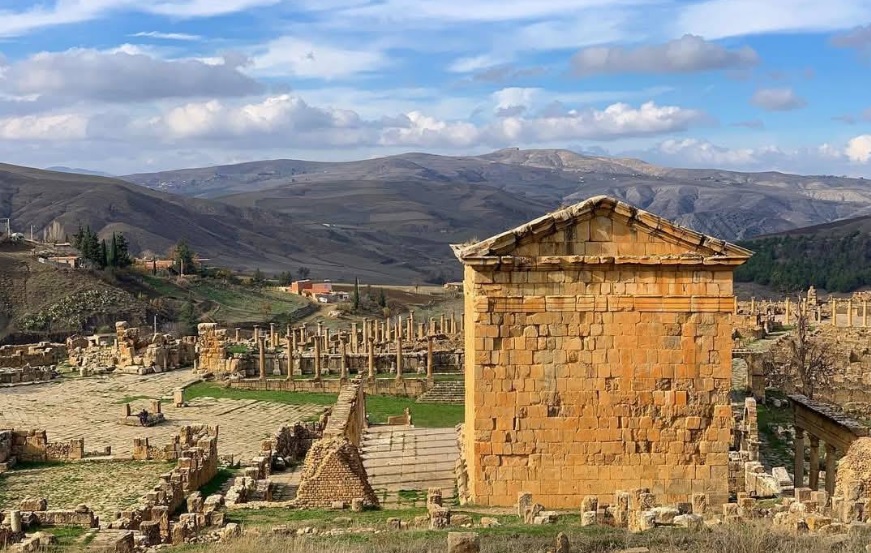
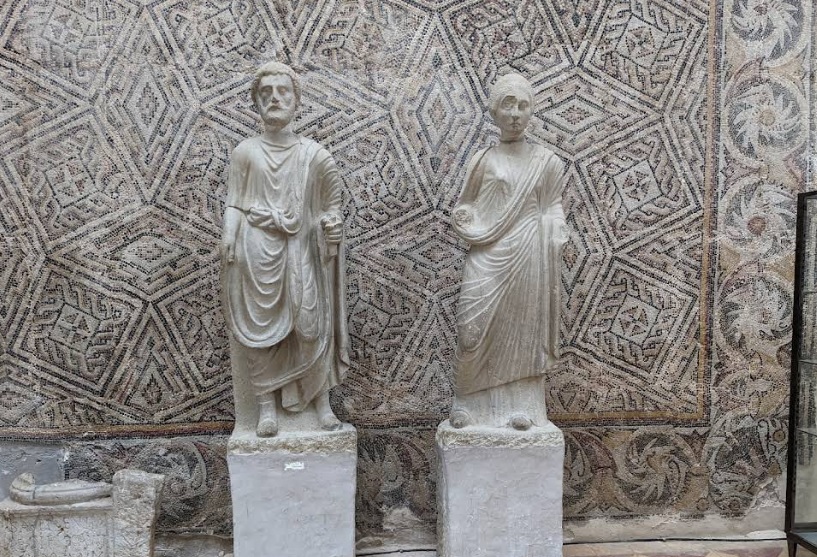
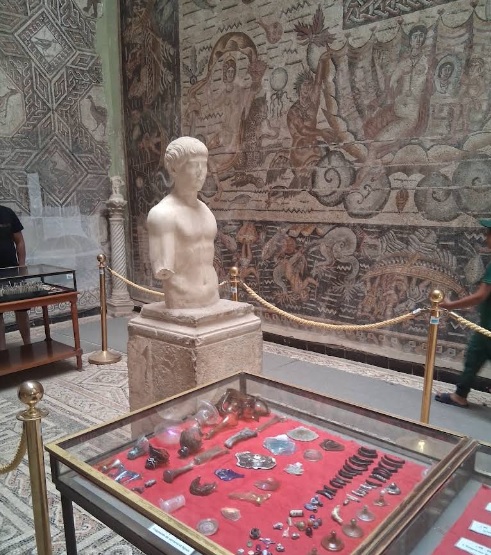
Located at the entrance to the park, it houses a collection of mosaics of universal quality, considered among the finest in Roman Africa. The Mosaic of the Seasons and Months and that of the Triumph of Bacchus are on display. Statues, capitals and inscriptions complete the visit in a lapidary garden.
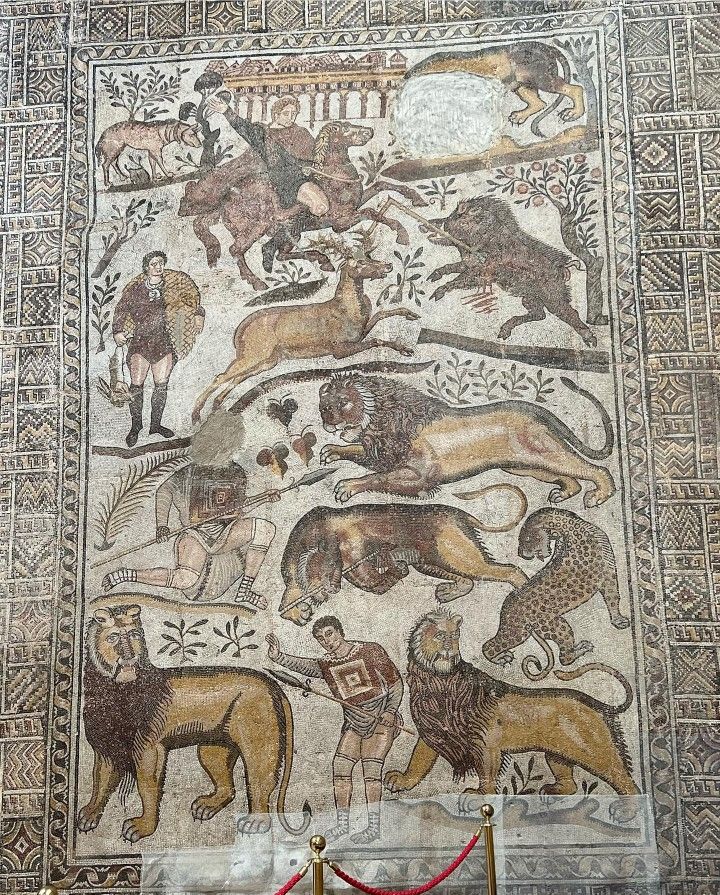
Approximately 40 hectares of the ancient city’s 75 remain buried underground, awaiting future excavation.
Practical Information — Djemila
- Address: Commune of Djemila, wilaya of Sétif
- Distance: ~350 km east of Algiers, ~50 km north-east of Sétif, ~130 km south of Constantine
- Access: By car from Sétif via the RN9 (approx. 50 km)
- Opening hours: Daily 8 am–6 pm (indicative — verify before visiting)
- Entry fee: Modest (~200 DZD)
- Recommended duration: 2 to 3 hours minimum; allow 4 hours for a complete visit including the museum
- Altitude: 900 metres
- Guide: Available at the ticket office, strongly recommended
- What to bring: Water, hat, good shoes, sunscreen (little shade)
- Tip: Start with the museum, then work through the site from the Christian quarter towards the Severan Forum. Late afternoon offers the finest light on the stones.
Timgad and Djemila: Comparison Table
| Timgad | Djemila (Cuicul) | |
|---|---|---|
| Ancient name | Colonia Marciana Traiana Thamugadi | Cuicul |
| Founded | 100 AD (Trajan) | Late 1st c. AD (Nerva/Trajan) |
| Area | ~90 ha at its height | ~75 ha (40 ha still buried) |
| Altitude | ~1,040–1,080 m | ~900 m |
| UNESCO | 1982 (criteria ii, iii, iv) | 1982 (criteria iii, iv) |
| Distinguishing feature | Perfect grid plan | Urban planning adapted to mountain terrain |
| Landmark monument | Arch of Trajan, library | Arch of Caracalla, Christian baptistery |
| Museum | Mosaics and ancient collection | World-renowned mosaics |
| Wilaya | Batna | Sétif |
| Distance from Algiers | ~480 km | ~350 km |
How to Organise Your Visit to Algeria’s Roman Ruins
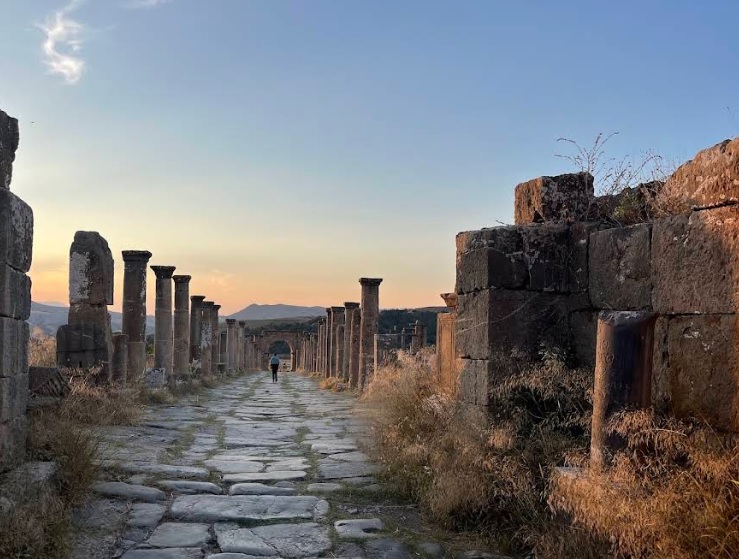
Timgad and Djemila in a Single Circuit
These two sites are ideally visited as part of an eastern Algeria circuit: Constantine (the suspended city), Ghoufi (Aurès gorges), Timgad, Djemila — a route that combines archaeology, nature and immersion in the Aurès landscapes. Our 7-day Roman Ruins of Algeria circuit covers both sites as well as Tipaza and Cherchell for a complete journey through the country’s ancient heritage. Our 6-day Annaba circuit covers eastern Algeria beyond these sites.
General Practical Tips
- Best period: Spring (March–May) and autumn (September–November). Avoid summer — heat on these exposed sites can exceed 40 °C.
- Early morning or late afternoon: softer light for photography, more bearable temperatures.
- Walking shoes: essential — both sites are vast, with paved and uneven surfaces.
- Water and hat: little shade on either site.
- Local guide: strongly recommended for a first visit, available on site at both.
- Photography: permitted at both sites.
- Before you travel, check the visa requirements for Algeria for your nationality. For a tailor-made stay, contact our local team.
FAQ — Algeria’s Roman Ruins: Timgad and Djemila
What is Timgad in Algeria?
Timgad is a Roman city founded in 100 AD by Emperor Trajan in the Aurès mountains (wilaya of Batna). Nicknamed the “Pompeii of North Africa”, it has been inscribed on UNESCO’s World Heritage List since 1982. Its perfect grid plan makes it one of the most complete examples of Roman urban planning in the world.
What is Djemila in Algeria?
Djemila (ancient Cuicul) is a Roman city founded at the end of the 1st century, perched at 900 metres above sea level in the mountains of Petite Kabylie (wilaya of Sétif). It has been UNESCO-listed since 1982 for its exceptional Roman urban planning adapted to mountain terrain, its monuments and its mosaics.
What are the best-preserved Roman ruins in Algeria?
Timgad and Djemila are considered Algeria’s two best-preserved Roman sites. Together with Tipaza, they form the unmissable trio of UNESCO-listed Algerian Roman ruins.
Can you visit Timgad and Djemila on the same day?
It is possible but ambitious — the two sites are approximately 100–120 km apart. Two days are preferable to fully appreciate both, with a night in Batna in between.
What is the best time to visit Algeria’s Roman sites?
Spring (March–May) and autumn (September–November) are ideal, with pleasant temperatures and beautiful light. Avoid July–August: heat on these exposed sites, at 1,000 to 1,100 metres of altitude, can exceed 40 °C.
Are Timgad and Djemila UNESCO-listed?
Yes — both sites have been inscribed on UNESCO’s World Heritage List since 1982.
One Comment