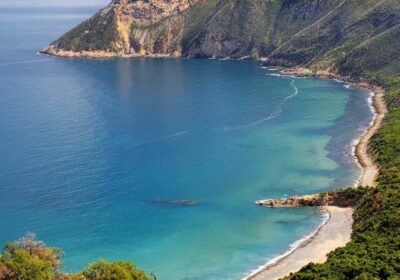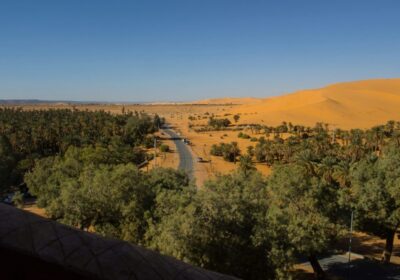
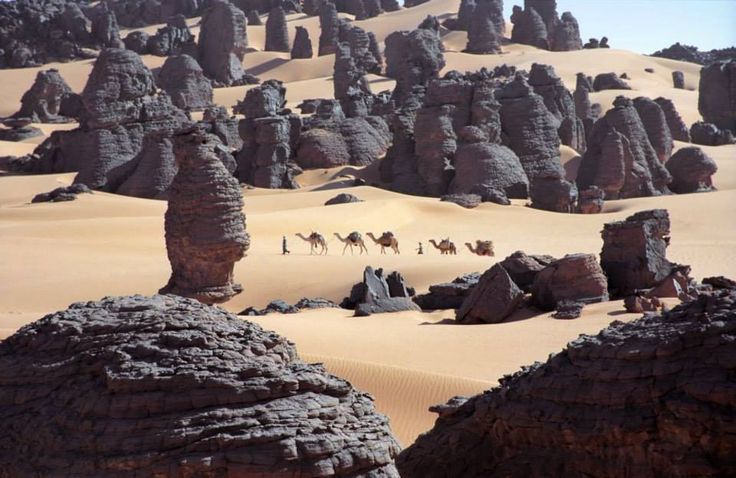
It is the question every traveller drawn to the Sahara asks: the Moroccan desert or the Algerian desert? Both belong to the same great desert — the Sahara, 9 million km² spread across eleven countries — yet they offer nothing like the same experience. One is well-trodden, accessible, signposted, with a mature tourist infrastructure. The other is immense, wild, little visited, with landscapes many consider among the most spectacular on the planet. This comparative guide helps you choose according to your profile, your budget and what you are really looking for.
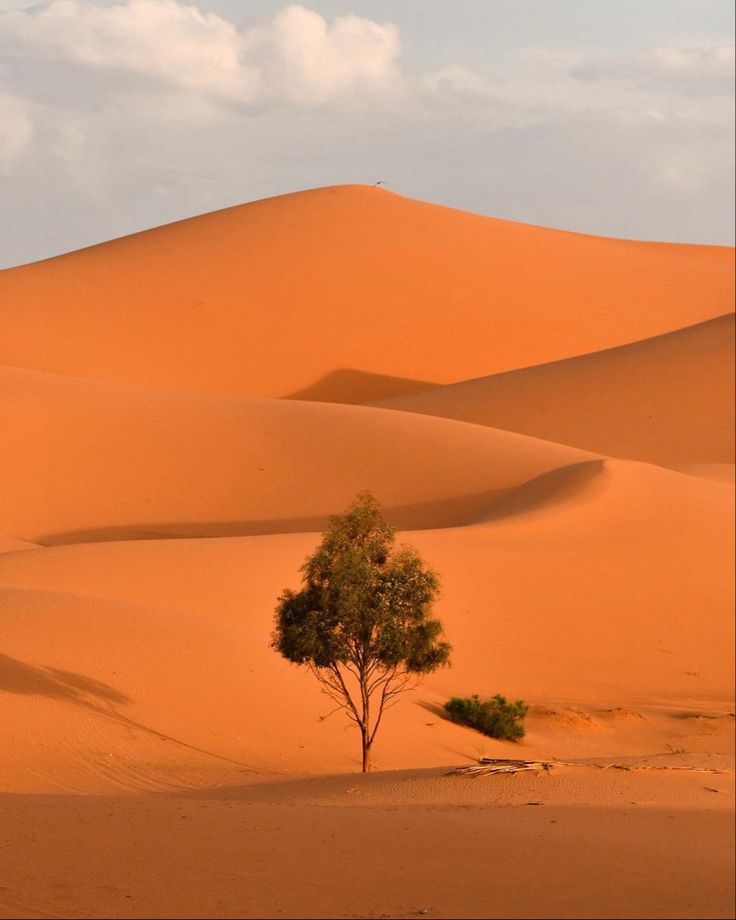
Table of Contents
What the Two Deserts Are
The Moroccan Desert: Merzouga and Zagora
The Moroccan Sahara accounts for a relatively modest portion of the great desert — the Sahara covers close to 90% of Algerian territory, against roughly 25% of Moroccan territory. But Morocco has managed to develop two emblematic desert destinations that welcome millions of visitors every year.
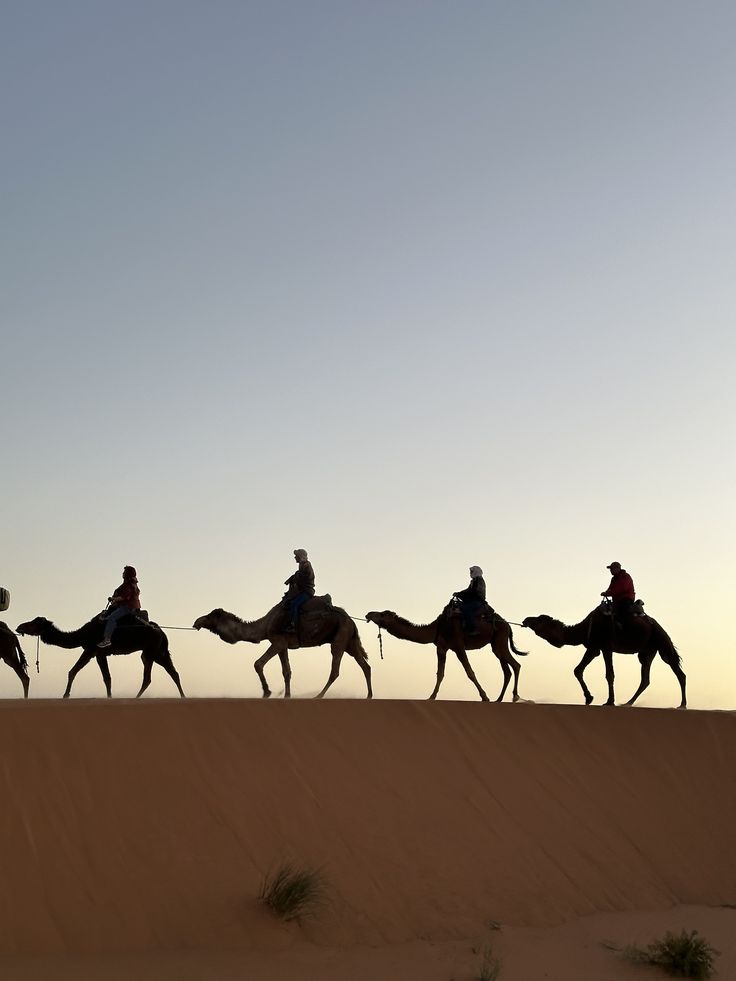
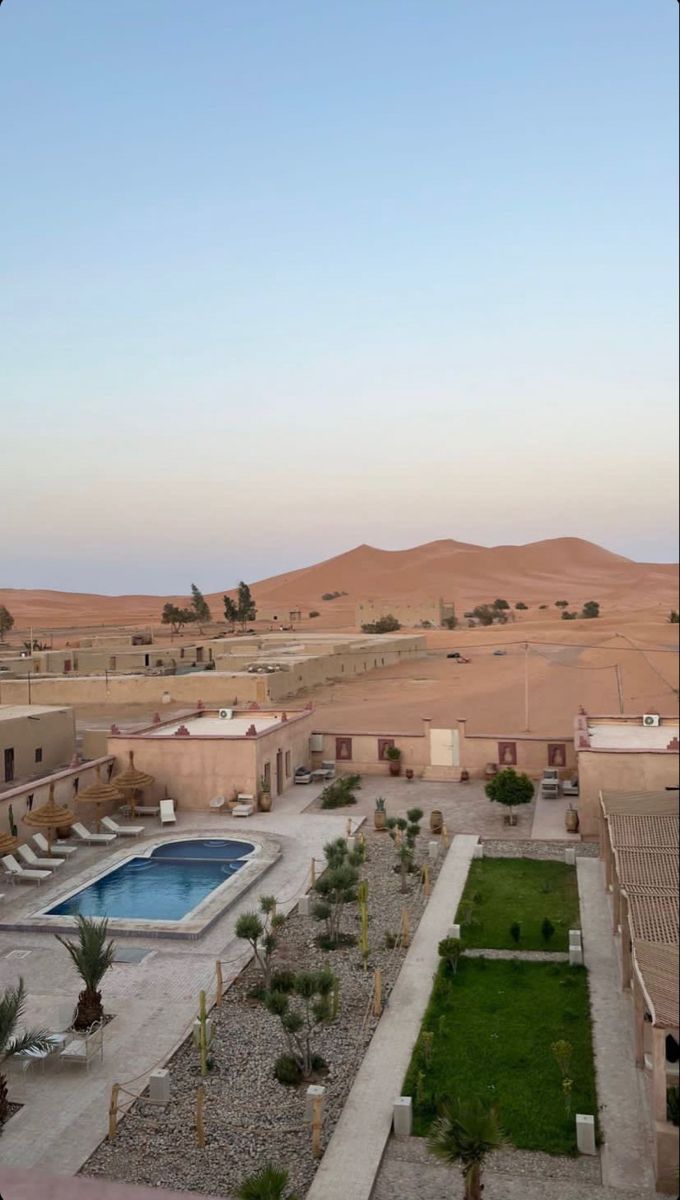
Merzouga is famous above all for Erg Chebbi, a range of majestic dunes reaching up to 150 metres high. This is the Sahara of the films, of the posters, the one you picture when you close your eyes. Reachable by tarmac road, with upmarket bivouacs and organised camel excursions — it is the ideal destination for anyone who wants the classic desert image with maximum comfort.
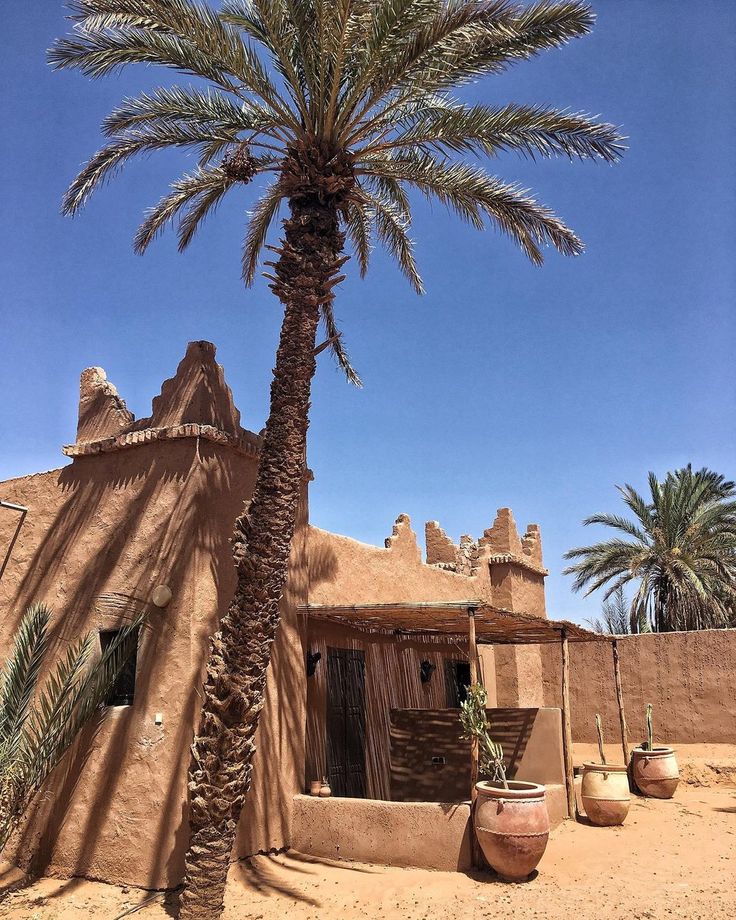
Zagora, for its part, is a genuine oasis town in the Drâa valley, keeper of a caravan past, closer to Marrakech and more rooted in everyday Moroccan life. More accessible (4-5 hours from Marrakech), less spectacular than Merzouga but more cultural.
There is also the Agafay, a stone desert 30 km from Marrakech — more a backdrop for high-end glamping than a genuine Saharan immersion.
The Algerian Desert: An Immensity Without Equal
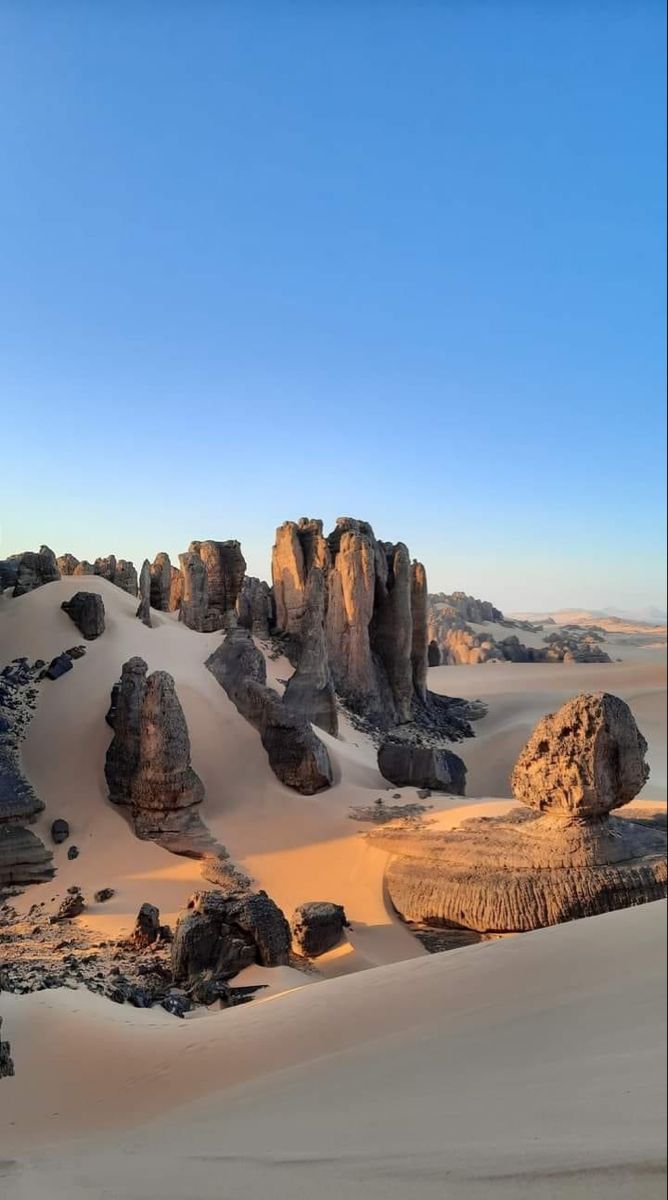
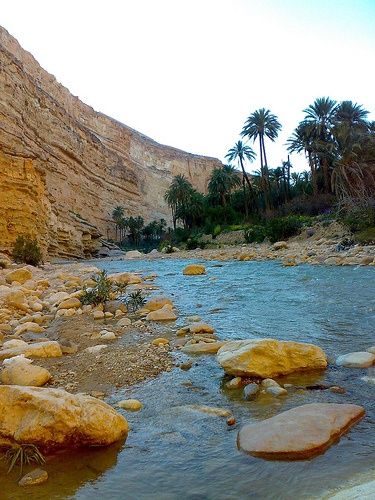
The desert occupies around 85% of Algeria’s total area, roughly 2 million km². The Algerian Sahara forms the largest portion of the Sahara belonging to a single state. This is not a desert — it is a continent of sand, stone and silence.
It is made up of several radically different regions:
- The Grand Erg Oriental (185,000 km², dunes up to 120 metres) and the Grand Erg Occidental (78,000 km²), around Taghit and Béni Abbès — the great sand seas of the north
- The Tassili n’Ajjer, a sandstone plateau inscribed on the UNESCO World Heritage List in 1982, home to some 15,000 rock engravings and paintings dating back 6,000 to 12,000 years
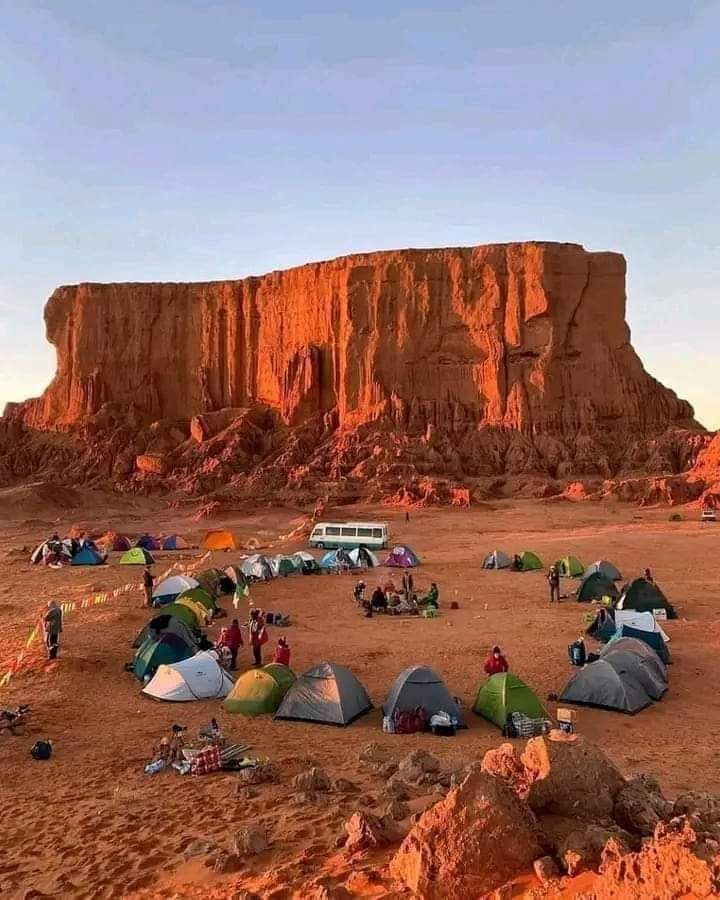
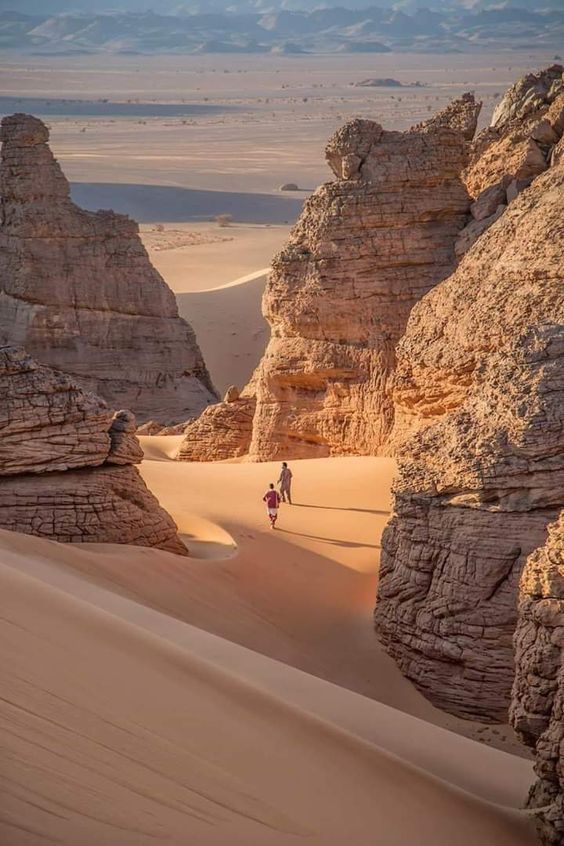
- The Red Tadrart, a sandstone massif south of Djanet, in burnt shades of red, ochre, orange and burgundy that shift through the hours as the light changes
- The Ahaggar (Hoggar) around Tamanrasset, with Mount Tahat rising to 2,908 metres, the highest point in Algeria
- The oases of the Gourara (Timimoun) and the ksour of the Saoura (Taghit, Béni Abbès)
The Key Differences
1. Scale and Diversity of Landscapes
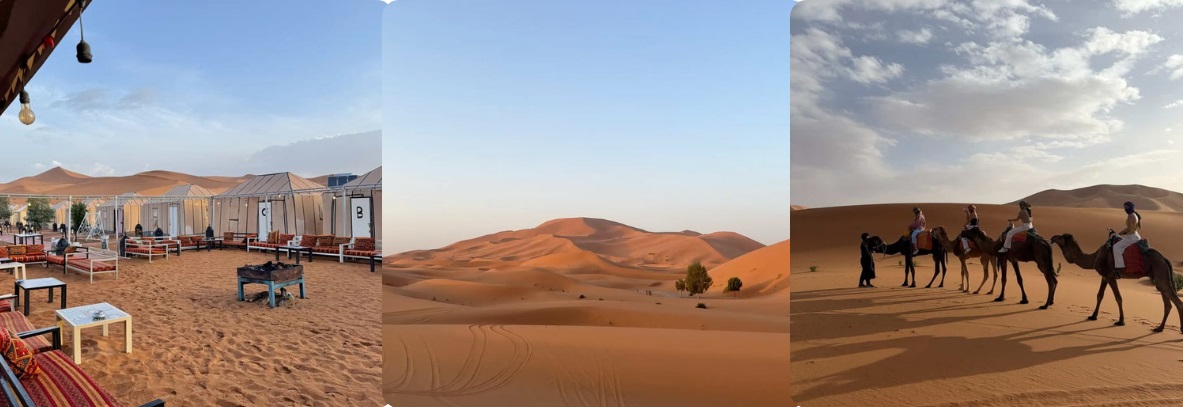
This is probably the most fundamental difference. The Moroccan desert is a clearly bounded destination: you go to Merzouga for Erg Chebbi, to Zagora for the Tinfou dunes. Magnificent — but predictable.
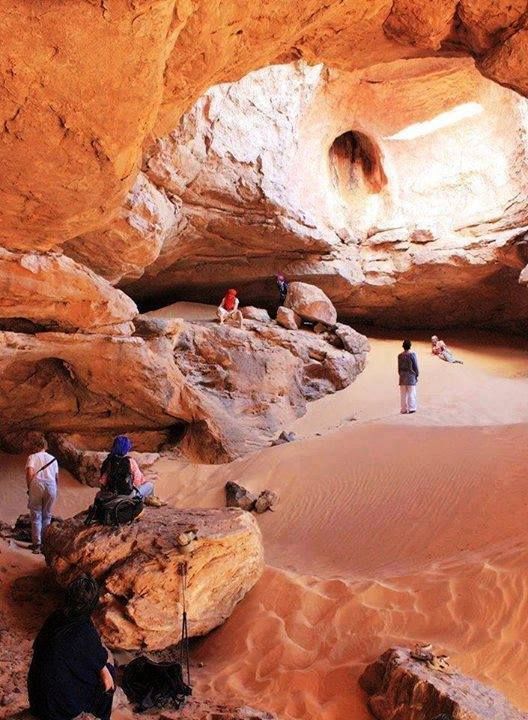
The Algerian desert is a world in its own right. The Tadrart stretches 150 km from north to south and between 15 and 30 km from east to west. There, dunes sit alongside canyons, natural arches, stone forests and rock paintings 8,000 years old. You will discover immense canyons with sculpted, sheer cliffs, a region where coloured sandstone with glints from yellow to red mingles with rocky pinnacles in the most varied shapes. And that is just one site among dozens.
Tourism in southern Algeria remains low-key compared with the Moroccan Sahara. That discretion is the main draw for travellers in search of vastness: no rows of camps, but bivouacs under a sky free of light pollution where the Milky Way traces its path from one horizon to the other.
2. Tourist Numbers
For many, this may be the deciding factor. Morocco welcomed 17.4 million tourists in 2024, a 20% increase on 2023. In high season, Merzouga can look like a village of camps lined up single file at the foot of the dunes — the beauty of the place is real, but the setting is touristy.
For travellers in search of raw authenticity, Algeria stands out as an immense country, spared mass tourism, where visitors move from one discovery to the next. The town of Djanet welcomed 24,000 tourists in the 2024-2025 season — against hundreds of thousands for Merzouga. The result: in the Algerian Sahara you can spend hours, sometimes days, without meeting another traveller.
3. Accessibility and Logistics
The Moroccan desert wins this round hands down. The Zagora desert is reachable in 4-5 hours by road from Marrakech, while Merzouga and Erg Chebbi are about 8-9 hours away. No visa for European nationals, tarmac roads right up to the dunes, dozens of agencies and riads offering turnkey tours, accommodation in every price range.
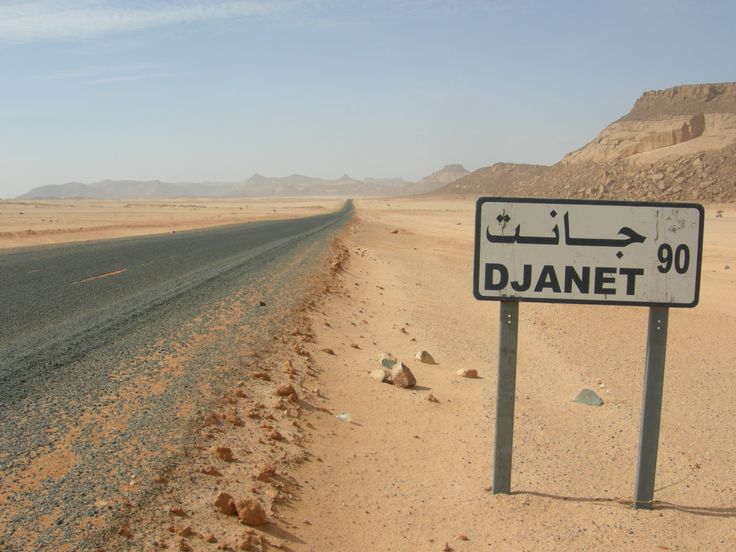
The Algerian desert takes more preparation. Air links connect Algiers to Tamanrasset (1,900 km) and to Djanet (1,700 km). An accredited local guide is mandatory for any excursion into desert areas — a safety rule, but also a guarantee of an authentic experience. The visa, long a complicated matter, has been simplified thanks to the visa-on-arrival procedure. Direct Paris-Djanet flights, launched in 2023, make the Tadrart easier to reach.
4. Cultural and Human Heritage
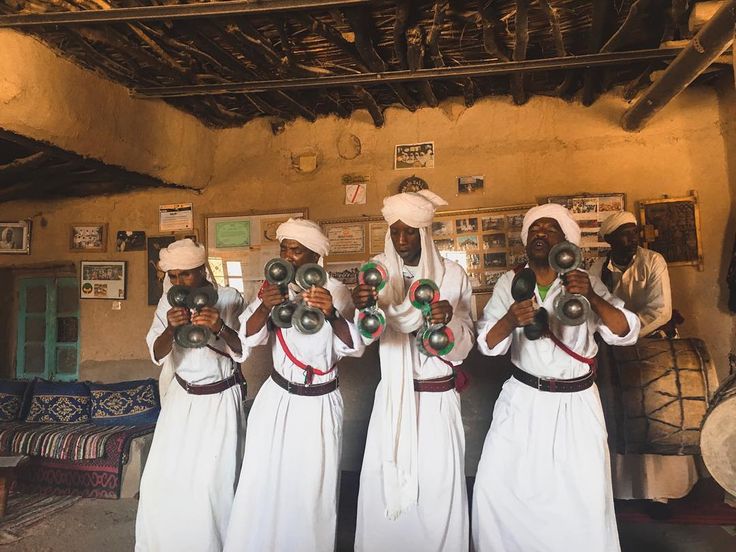
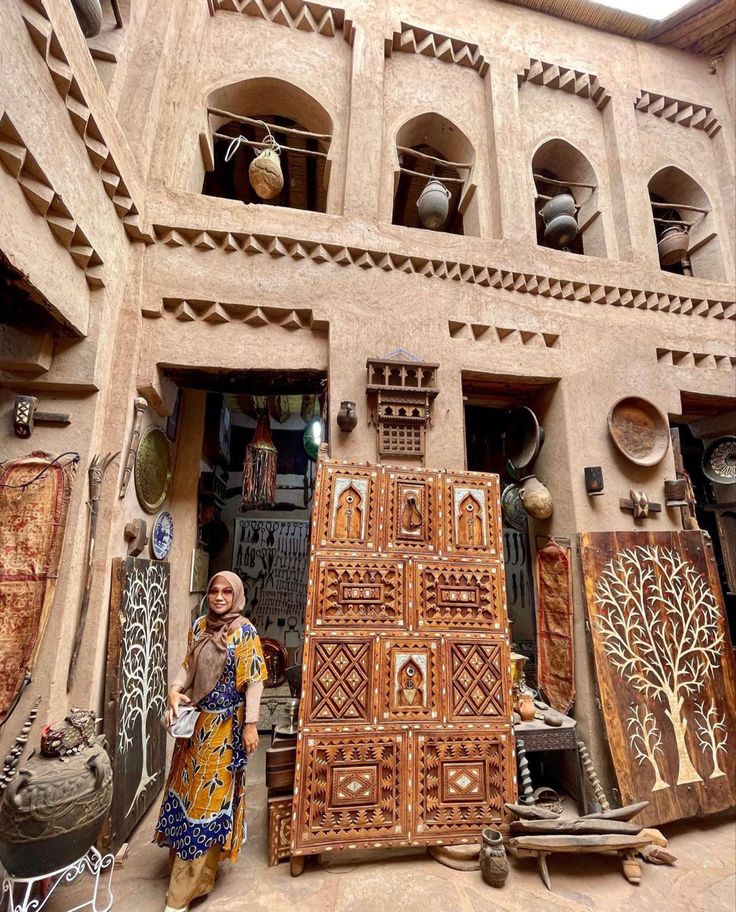
The Moroccan desert offers a rich cultural experience: Gnaoua music around the campfires at Khamlia, Berber villages in the Dadès valley, thousand-year-old kasbahs, the caravan tradition of Zagora.
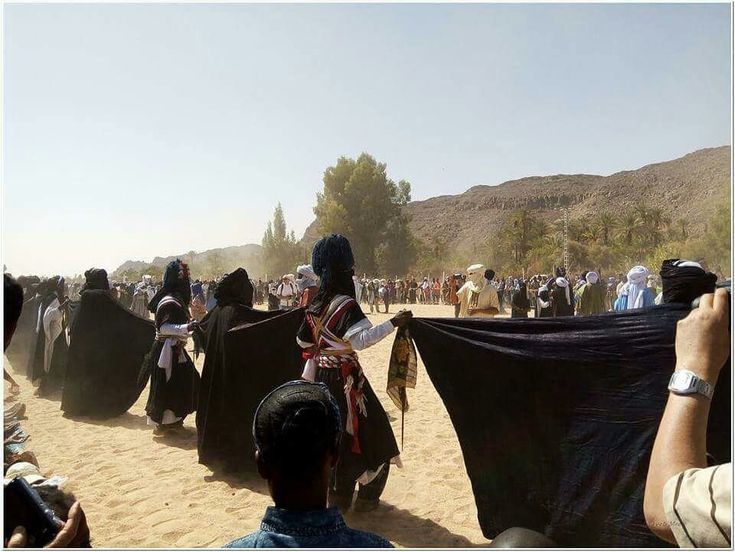
The Algerian desert adds to that a heritage dimension in a class of its own. The Tassili n’Ajjer is one of the greatest open-air museums of rock art on the planet — some 15,000 engravings and paintings bearing witness to a green Sahara 8,000 years ago, populated by hippopotamuses, giraffes and herders. The Sebiba of Djanet, a Tuareg festival inscribed on UNESCO’s Intangible Cultural Heritage list, is one of the most authentic celebrations in the Saharan world. The Tuareg culture of the Ahaggar and the Tassili is living, not staged for tourists.
5. Budget
The two destinations have different cost structures. Morocco offers a very wide range — from basic camping to luxury bivouacs at €300 a night. On average, a 3-day Morocco desert tour from Marrakech costs between €280 and €560.
In Algeria, a traveller can expect to spend around €70 a day, depending on the type of accommodation and the activities chosen. Domestic flights Algiers-Tamanrasset and Algiers-Djanet cost between €150 and €250 return. An organised 7-day tour in the Hoggar comes to between €800 and €1,500 per person. The mandatory local guide is an added cost but guarantees a level of safety and immersion that independent travel cannot offer.
Comparison Table: Moroccan Desert vs Algerian Desert
| Moroccan desert | Algerian desert | |
|---|---|---|
| Desert area | ~250,000 km² | ~2 million km² |
| Flagship destinations | Merzouga (Erg Chebbi), Zagora, Agafay | Djanet/Tadrart, Tamanrasset/Hoggar, Timimoun, Taghit |
| Dunes | Erg Chebbi: 150 m, 22 km | Grand Erg Oriental: up to 120 m, 185,000 km² |
| UNESCO heritage | Aït Ben Haddou (kasbahs) | Tassili n’Ajjer (rock art + geology) |
| Rock art | Limited | ~15,000 paintings and engravings (Tassili) |
| Visitor numbers | Very high (mass tourism) | Low-key (adventure travel) |
| Accessibility | Excellent (tarmac road, no EU visa) | Requires a domestic flight + mandatory guide |
| EU visa | Not required | Required (being simplified) |
| Mandatory guide | No | Yes (desert areas) |
| Average tour price | €280–560 (3 days) | €800–1,500 (7 days) |
| Accommodation | Highly developed (all ranges) | Developing (bivouacs + a few lodges) |
| Authenticity | Touristy | Very high |
| Ideal for | A first trip, comfort, classic dunes | Adventure, solitude, total immersion |
Which One to Choose for Your Profile?
Choose the Moroccan desert if:
- This is your first trip to the Sahara and you want an introduction without too much preparation
- You are short on time — Merzouga can be visited from Marrakech in 3 days
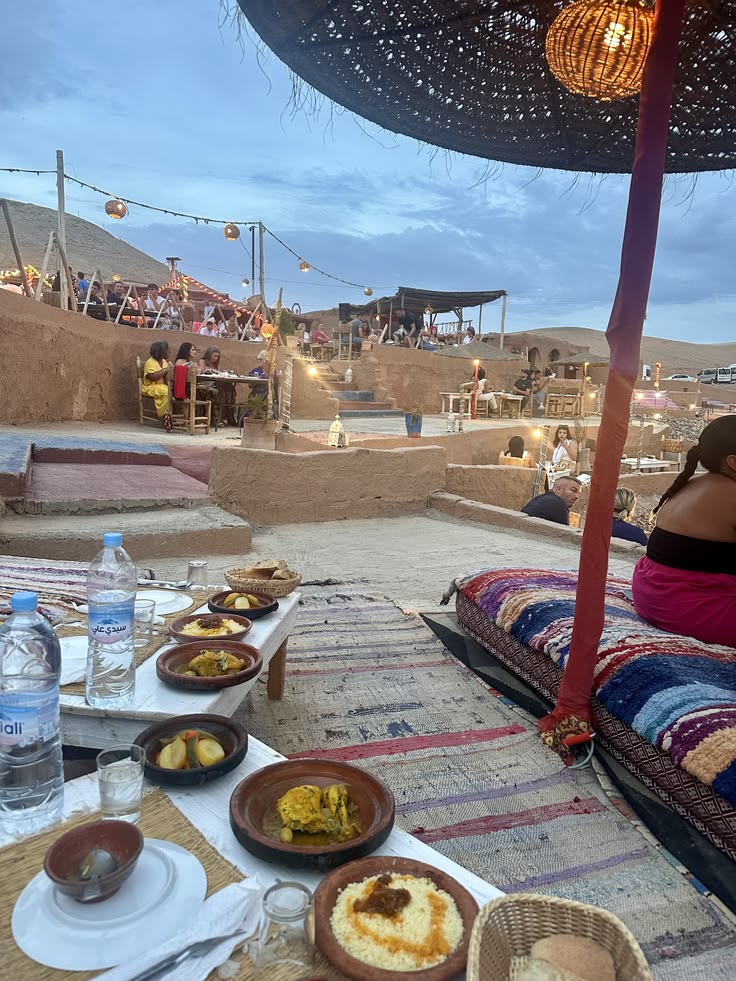
- You are looking for comfort — fitted-out bivouacs, hammams, good food
- You want to combine the desert with other attractions (the Marrakech medina, the Todra gorges, the Aït Ben Haddou kasbah)
- You are travelling as a family with young children — the logistics are simpler
Choose the Algerian desert if:
- You have already seen Merzouga and you are looking for something on another scale
- You dream of an empty desert — no rows of camps, no groups, no noise
- You are drawn to the Tassili n’Ajjer and its rock art — one of the archaeological wonders of the world
- You want the red dunes of the Tadrart — a landscape very few Western travellers have seen
- You are looking for a genuine encounter with Tuareg culture
- You are ready to invest time and preparation in exchange for a rare experience
If you have to choose one or the other in a single sentence:
The Moroccan desert is the perfect postcard. The Algerian desert is the experience that changes a traveller.
Can You Do Both?
The land border between Morocco and Algeria has been closed since 1994 — it is impossible to cross from one to the other by road. For both, you therefore need two separate trips, each with a return by air.
Some travellers combine the two within a single North African journey, using domestic flights: Marrakech → Casablanca → Algiers → Djanet, for example. It can be done, but the logistics are heavy. It is better to devote a whole trip to each.
Planning Your Trip to the Algerian Desert
For a tour in the Algerian Sahara — Djanet and the Tadrart, Tamanrasset and the Hoggar, or the oases of Timimoun and the Saoura — our complete guide to the Algerian Sahara helps you choose your destination. See also our Deep South vs oases comparison to refine your choice. Before you travel, check the visa requirements for Algeria for your nationality. For a tailor-made tour, contact our local team.
FAQ — Moroccan Desert or Algerian Desert?
Which is bigger, the Moroccan desert or the Algerian desert?
The Algerian desert is by far the larger: it covers around 2 million km², or 85% of Algerian territory. The Moroccan desert, concentrated mainly around Merzouga and Zagora, is a fraction of that area. Algeria holds the largest portion of the Sahara belonging to a single state.
Are Algerian dunes higher than Moroccan dunes?
The dunes of Erg Chebbi at Merzouga (Morocco) reach 150 metres. Algeria’s Grand Erg Oriental has dunes exceeding 120 metres in places, across an area of 185,000 km². The Tadrart and the Grand Erg Occidental round out a very varied dune landscape. In terms of spectacle the two are comparable — it is the immensity and the solitude of the Algerian desert that set it apart.
Do you need a visa to visit the Algerian desert?
Yes, a visa is required for most European nationalities to enter Algeria. Visa procedures have been simplified, with online applications available for several nationalities. An accredited local guide is also mandatory for any excursion into the deep desert areas.
When is the best time to visit the Moroccan or Algerian desert?
For both, the best period is October to April — mild daytime temperatures (20-28 °C) and cool to cold nights. Summer (June-August) should be avoided at all costs in both cases: temperatures regularly exceed 45 °C, and records of 51 °C have been recorded in the Algerian Sahara.
Why is the Algerian desert less well known than the Moroccan desert?
The Algerian desert is less well known for several historical reasons: Algeria long had a restrictive visa policy, its tourist infrastructure is developing gradually, and the country does not have Morocco’s tradition of mass tourism. That is precisely what makes it one of the last great unspoiled desert destinations in the world.