
| 📍 Location | Tamanrasset, southern Algeria — approximately 1,200 miles (2,000 km) south of Algiers. |
| 🏔️ Park status | Algeria’s second largest natural park and a protected cultural heritage site. |
| 📆 Best time to visit | October to April — mild daytime temperatures, cool nights. Avoid the summer months. |
| 🏕️ Activities | 4×4 excursions, camel trekking, hiking, rock climbing, prehistoric rock art discovery, wildlife observation. |
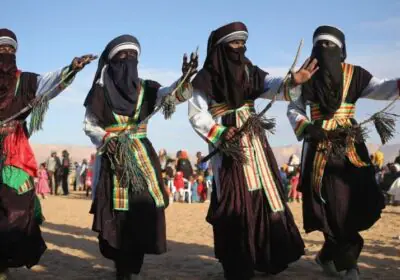
| 🎒 Travel tips | Always travel with an experienced Tuareg guide. Wear sun protection and warm layers for the night. Carry sufficient water. |
The Ahaggar — one of Tamanrasset’s most iconic landmarks — is Algeria’s second largest natural park. This vast desert expanse has accumulated, over the centuries, a wealth of archaeological and natural treasures that never cease to enchant visitors hungry for adventure and discovery. Every stone, every dune tells a fascinating story of the past and of Saharan life.
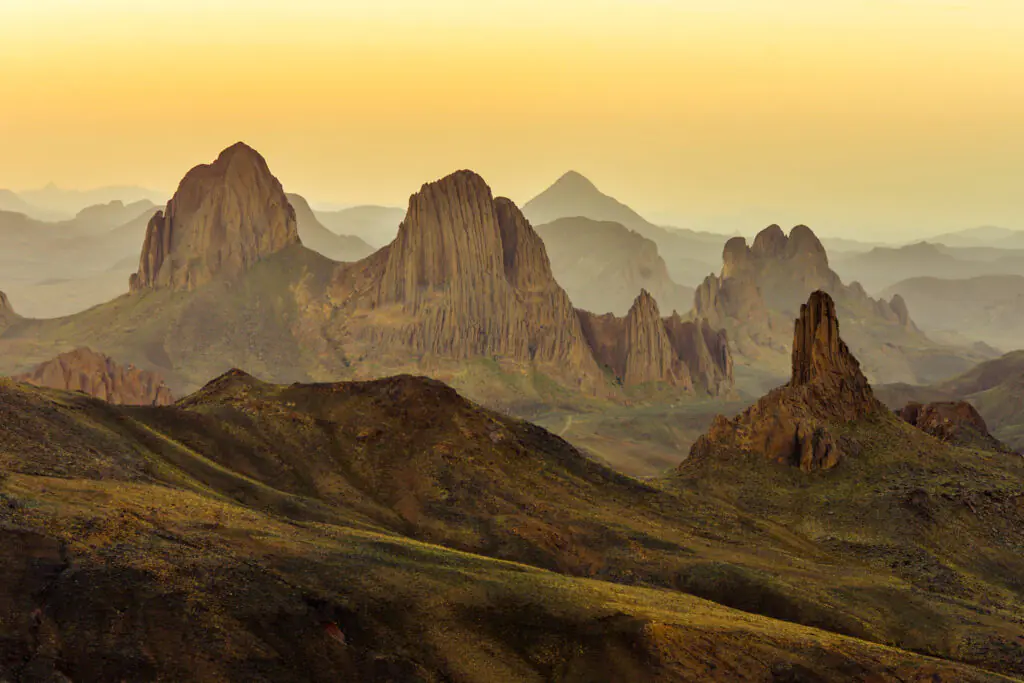
Table of Contents
A Dazzling Local Ecosystem
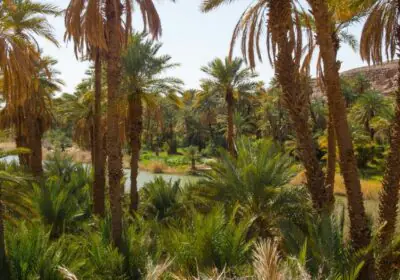
The flora and fauna nestled across every corner of this cultural reserve offer a quiet welcome to curious visitors. Olive trees, palm trees, and acacias frequently provide welcome shade from the desert sun, often clustered around miraculous oases.
The luckiest visitors will have the opportunity to spot the region’s remarkable wildlife. Terrestrial creatures include Barbary sheep (mouflons), fennec foxes, Saharan cheetahs, and the endearing rock hyrax. The skies, meanwhile, are traced by desert warblers, storks, and the majestic steppe eagles.

Heading Out: Adventures Toward the Sun
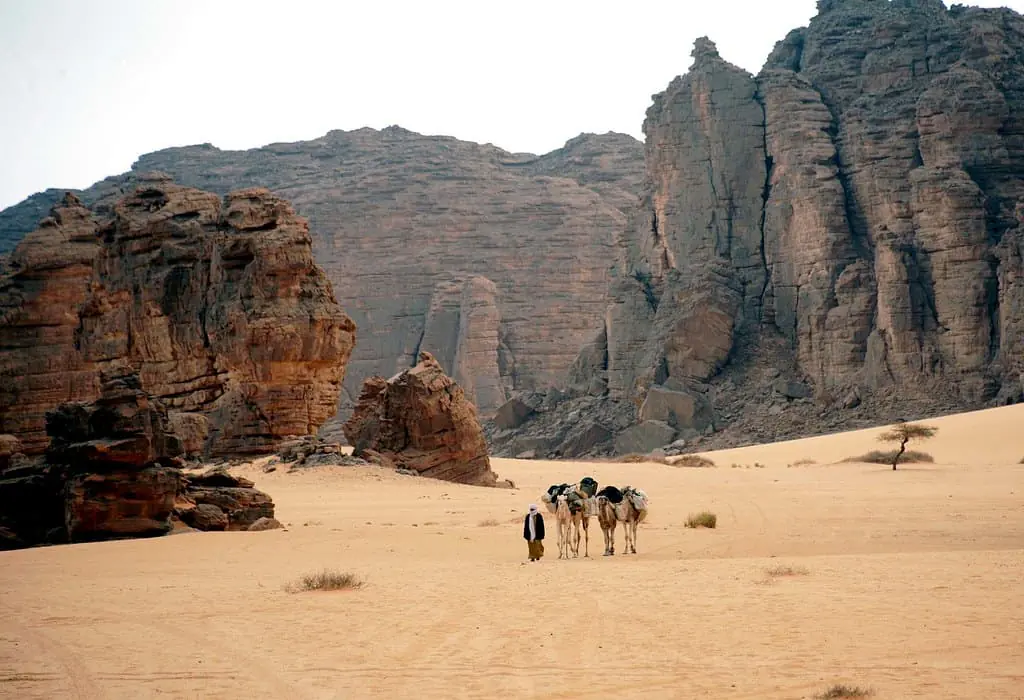
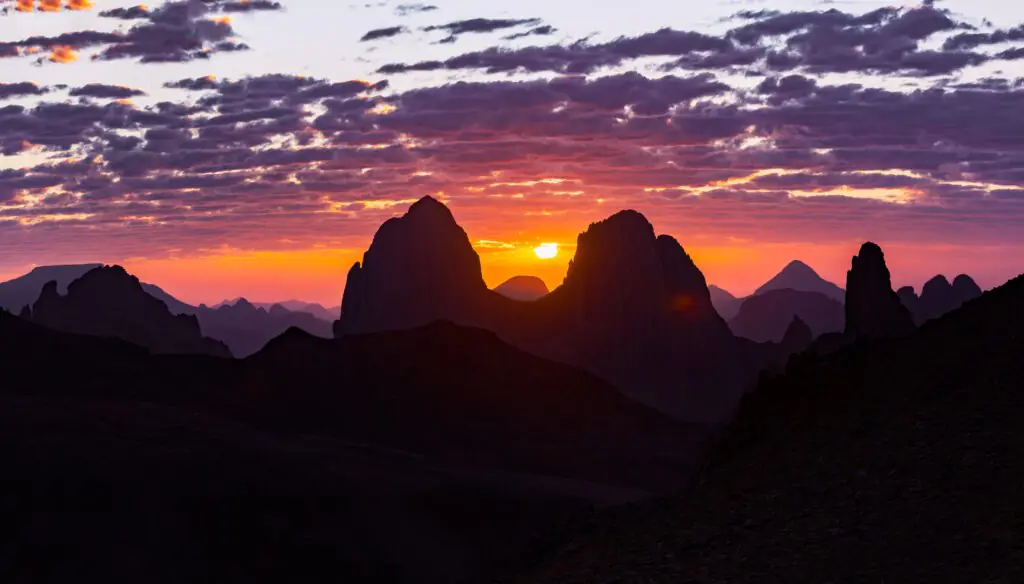
Excursions into the Ahaggar are adventures whose magic never fades. 4×4 vehicles and camel treks are the transport of choice across the vast desert expanses — perfect for taking in the rocky massifs scattered along the route. The most experienced Tuareg guides also lead rock-climbing ascents for those who wish to conquer the majestic summits, including Mount Tahat, and be left speechless by its spellbinding sunrises and sunsets.
A Journey Through History
The Ahaggar tells its rich history first and foremost through its geology: once a highly active volcanic region, it still bears basalt organ formations — rocky masses born from solidified magma dating back millions of years.
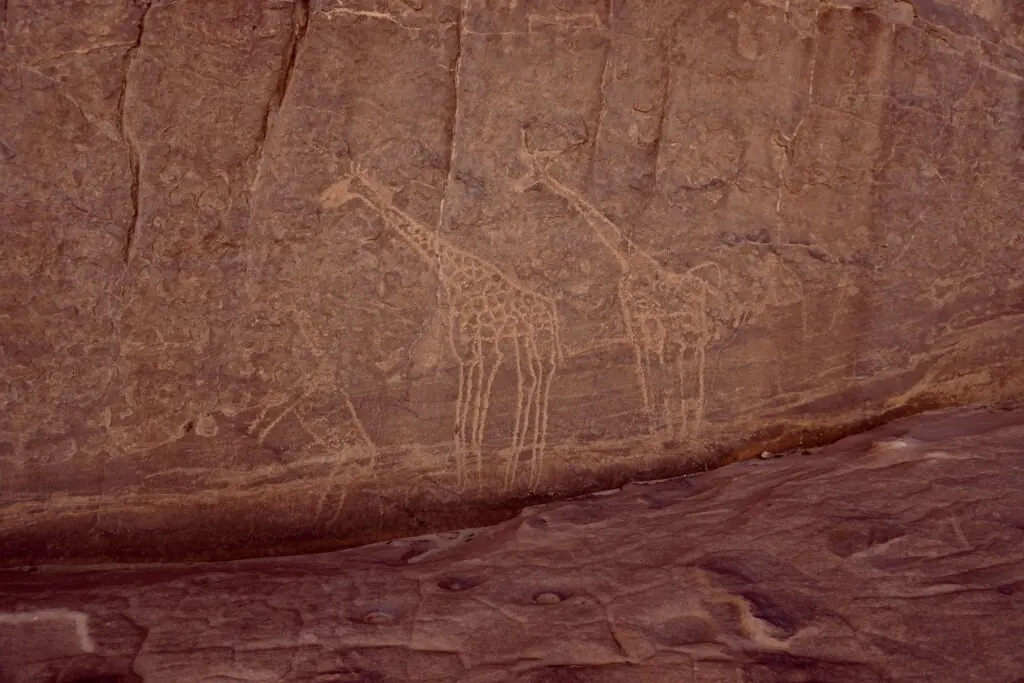
Carved into the surfaces of massifs and caverns are rock engravings, some dating back to prehistoric times, which attest to the region’s mysterious past and bear witness to the ecological transformations that have shaped it. Thousands of such sites have been recorded; the most significant are marked by stone structures at their entrance — guard posts underscoring the cultural heritage protection these sites enjoy, some of which date back an estimated 2.5 million years.
A Safe and Welcoming Experience
Visiting the Ahaggar is a carefree and fulfilling experience. Around fifty outposts are dispersed throughout the park, handling security, providing information, and offering first aid when needed. Add to this the expertise of Tuareg guides and equipment adapted to the demands of the desert, and the result is an adventure perfectly organized and free from unpleasant surprises.
In Conclusion
The Ahaggar Cultural Park magnificently earns its title as the heart of Tamanrasset. It serves up the complete experience of the Assekrem plateaus on a silver platter, leaving visitors dazzled by its landscapes, its wildlife, and the magic of its silence.
A carefully planned circuit organized by a local travel agency is the perfect way to experience, in complete serenity, what promises to be the most unforgettable journey of your life. Contact us to design your tailor-made Ahaggar expedition.